Parents packing a nursery lunch
An easy-to-pack portion still has to fit the child’s needs and the setting’s rules. The NHS advises checking the nursery’s food policies, including any restrictions on nuts.


A lower-calorie cereal bar can be a convenient nursery-lunch option, but its calorie count alone does not make it suitable. NHS snack guidance also suggests fruit, vegetable sticks and plain unsweetened yoghurt; if you pack a bar, compare energy and sugars for the portion you will give, then check the exact wrapper against the child’s needs and the nursery’s food policy.
An easy-to-pack portion still has to fit the child’s needs and the setting’s rules. The NHS advises checking the nursery’s food policies, including any restrictions on nuts.
The useful comparison is energy and sugars in the portion you would actually pack. Manufacturer labels give these figures for different serving sizes, so a whole-pack impression can be misleading.
The exact wrapper matters: the cereal bars considered here include products with gluten-containing cereals or nuts, as well as products carrying may-contain statements.
Start with the nursery’s policy and the child’s needs. Then compare the portion you intend to pack, rather than choosing by a calorie figure alone.
| Priority | What to check | Your needs |
|---|---|---|
| Nursery rules and allergens | Ask about the setting’s food policy. Read the current ingredient and allergen statements, including may-contain wording, for the exact bar. | I need something the nursery permits and that fits my child’s dietary requirements. The NHS notes that some nurseries may be peanut- or nut-free. |
| Energy and sugars | Check kcal, sugars and serving size together. A figure for one bar is not the same portion as a figure for a twin-bar pack. | If I’m comparing lower-calorie options, I want the numbers for the amount I would put in the lunchbox, not just the smallest number on a label. |
| Place in the lunch | Consider the bar alongside the other packed foods. For a child under 5, do not make high-fibre foods the only type offered. | I want some variety rather than relying on an oat or wholegrain bar every day. The NHS advises against giving only high-fibre foods before age 5. |
| Bar format | Check whether the stated serving is a single bar or more than one, and inspect nut or protein bars for their ingredients and per-bar energy. | A wrapped bar may be convenient, but I need to know what one pack contains before treating it as a nursery-lunch portion. |
The inspected Alpen Fruit & Nut figure is for a 28 g bar, Kellogg’s Corn Flakes square for a 31 g serving, and Nature Valley Oats & Honey for two bars totalling 42 g. Those portions are not the same size.
Compare energy and sugars for each stated serving, then decide which portion you would actually pack.
The NHS says high-fibre foods can fill a young child’s tummy before they have room for other calories and nutrients. It advises against giving only high-fibre foods before age 5.
Keep variety in the lunchbox rather than relying on a high-fibre bar as the recurring starchy item.
A bar can conflict with a nursery’s nut policy even when nuts are not its main ingredient. The inspected Alpen Fruit & Nut bar contains nuts, while the inspected Nature Valley Oats & Honey bar carries may-contain warnings for peanuts and tree nuts.
Check the current wrapper and ask the nursery how its policy applies to both ingredients and may-contain statements.
Nature Valley UK declares 196 kcal and 11.3 g sugars for its two-bar, 42 g Oats & Honey serving. The nutrition figure describes both bars together.
Decide whether you intend to pack one bar or the declared two-bar serving, and read the corresponding nutrition information.
These brand references describe particular ranges or inspected products; check the exact pack rather than assuming every bar from a brand has the same ingredients or nutrition.
Fruit & Nut is an individually portioned cereal-bar option.
Its Rice Krispies Squares and Corn Flakes range includes small square-style cereal bars.
Crunchy Oats & Honey is sold in twin-bar portions.
Oat Boost is a flapjack range; the exact flavour and pack determine the relevant label information.
Its range includes nut-led protein bars, which need a separate check from cereal bars.
Trek makes oat and protein flapjack formats, including named varieties in Joybuy’s oat-flapjack listings.
These packaged cereal and oat bars are options to consider when a bar is useful for a nursery lunch. Their pack sizes differ, and each exact wrapper still needs checking against the nursery’s rules and the child’s needs.
 No image available
The 21.5 g bars offer a defined portion to compare with other packs. Check the current wrapper for wheat, barley, oats, milk and soya, and confirm that it meets the nursery’s policy.
 No image available
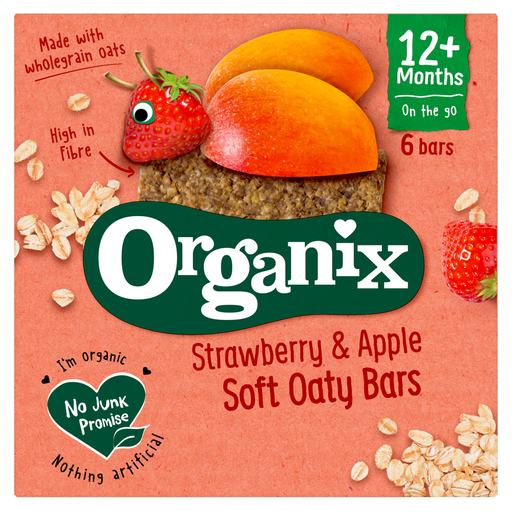
These soft oaty bars are labelled for ages 12 months and over. Check the current pack for oat gluten and may-contain statements covering tree nuts, soya and milk before packing one for nursery.
 No image available
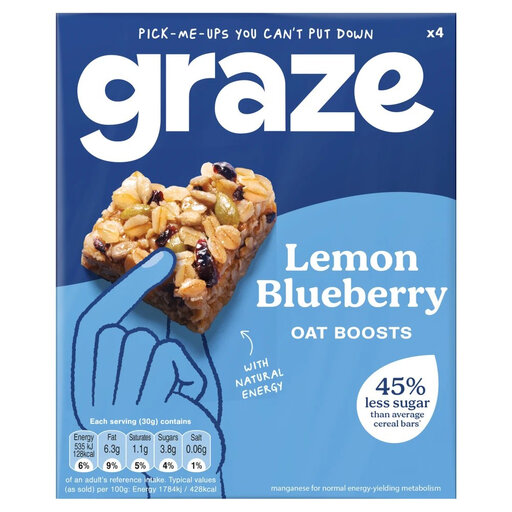
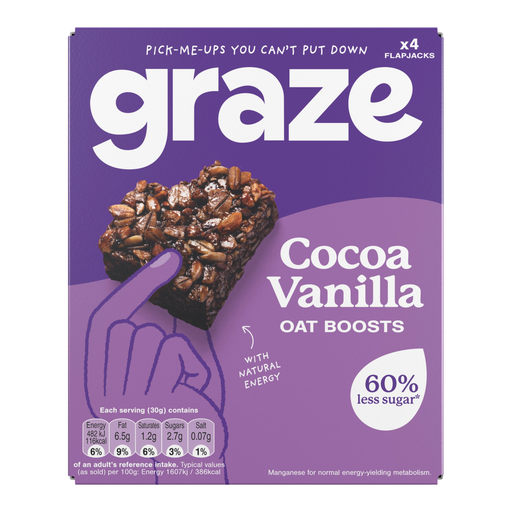
Each named bar is 30 g, so use that portion when comparing labels. Check the current pack for oat gluten, soya and its may-contain warnings, including nuts and peanuts, against the nursery’s policy.
 No image available
Compare the 30 g square’s label with the portion you intend to pack; a protein name alone does not answer the nursery-lunch question. Check the current wrapper for oat gluten, soya and may-contain allergens, particularly nuts and peanuts.
No. Energy per serving is only one consideration: the bar must also fit the nursery’s food policy and the child’s needs. NHS snack suggestions include fruit, vegetable sticks and plain unsweetened yoghurt, which offer alternatives when a packaged bar is unnecessary.
Yes. The NHS advises checking the nursery’s food policies because some settings may be peanut- or nut-free. Tell the nursery or childminder about the child’s food allergies and ask how its policy treats ingredients and may-contain labels.
The NHS says high-fibre foods can fill small tummies, leaving less room for other calories and nutrients. It advises against giving only high-fibre foods before age 5, so an oat or wholegrain bar should not be the sole recurring type of food in the lunchbox.
No. The inspected Nature Valley UK Oats & Honey product contains oat gluten and may contain wheat, peanuts, tree nuts and soya. Read the current wrapper of the exact product before packing it.
Protein branding does not establish that a bar suits a nursery lunch. Eat Natural UK lists 220 kcal per 40 g bar for its inspected dark-chocolate and peanut protein bar, which contains peanuts and carries other allergen warnings; check the portion, ingredients and nursery policy instead.