Parents comparing smaller snack portions
If calories are the starting point, compare the declared amount for one bar and its serving weight before considering the other information on the label.


For a school packed lunch, compare calories per individual bar, then check sugars and the current pack’s allergens against your child’s needs and the school’s policy; a lower calorie figure alone does not settle suitability. NHS lunchbox guidance suggests swapping cereal bars for options such as fruit or fruited teacakes and basing the main lunch item on foods such as bread, rice, pasta or potatoes.
If calories are the starting point, compare the declared amount for one bar and its serving weight before considering the other information on the label.
Bars with similar calories can have different ingredients. Check the exact pack’s allergen and “may contain” statements against your child’s requirements and the school’s policy.
A bar need not be the main lunch item. NHS lunchbox guidance recommends a main food based on ingredients such as bread, rice, pasta or potatoes, alongside fruit or vegetables.
Start with the portion you would actually pack, then check its ingredients and how it fits with the rest of lunch. An under-100-kcal category, such as Tesco’s, is a shopping filter rather than a measure of overall nutritional suitability.
| Priority | What to check | Your needs |
|---|---|---|
| Portion and calories | Read the declared kcal for one bar and its serving weight. Check whether the nutrition panel gives values per bar, per serving or per 100g. | I’m looking for a defined snack portion and want to know the calories in the bar I’ll actually pack. |
| Place in the lunchbox | Plan the main lunch item separately. NHS lunchbox guidance suggests fruit or fruited teacakes as alternatives to cereal bars. | A bar would be an optional snack, not the food my child relies on for lunch. |
| Allergens and school rules | Read the exact pack’s ingredients, allergen declarations and “may contain” statements. Check the school’s current packed-lunch policy. | I need a bar that fits both my child’s requirements and the school’s rules; the calorie figure cannot answer that. |
| Sugars and other ingredients | Compare sugars per bar alongside serving weight; read any declared fibre figure and the ingredient list. Do not use protein, fibre or reduced-sugar wording as a substitute for checking calories. | If two portions look similar on calories, I want to compare what each one contains rather than choose by a front-of-pack claim. |
Sainsbury’s lists the 25g Eat Natural Red Fruits bar at 87 kcal and 12g sugars per bar. Calories alone do not describe its other ingredients or make a small bar the main lunch item.
Read the per-bar nutrition panel, then plan the main food and fruit or vegetables separately, in line with NHS lunchbox guidance.
Kellogg’s lists barley, milk and soy in its 99-kcal Frosties Cereal Milk Bar and says it may contain gluten from other cereals. Sainsbury’s lists almonds in the 87-kcal Eat Natural Red Fruits bar.
Check the current pack’s ingredients and “may contain” statement against your child’s needs, then confirm the school’s policy before packing it.
Graze’s reduced-sugar comparison does not state the calories in every Oat Boost bar. Likewise, protein or wholegrain wording does not establish the calories in a particular portion.
Choose the exact flavour and pack size first, then compare its declared per-bar calories, ingredients and allergens.
Alpen’s UK FAQ lists several former bar products, including Alpen Light Bars, as no longer being made. Their old labels may not describe a product you can currently buy.
Identify the exact product being sold and use its current nutrition and ingredient declaration.
These examples show why the exact bar matters more than the brand name: portions, ingredients and allergens differ across products.
Sainsbury’s lists the Red Fruits Soft Fruit Bar multipack as four 25g fruit-and-nut bars, with 87 kcal per bar.
Kellogg’s declares 99 kcal per serving for its Frosties Cereal Milk Bar.
Nature Valley UK lists several bar formats, including products with oats, nuts, chocolate and protein.
Graze markets Oat Boost flapjacks using a reduced-sugar comparison with other cereal bars.
Trek protein flapjacks are a different portion to consider if you are comparing cereal-bar-style snacks.
Alpen’s UK FAQ lists several former bar products, including Alpen Light Bars, as no longer being made.
These individually portioned cereal and oat bars are options to assess for a school packed lunch. Check each current pack’s per-bar nutrition and allergens before deciding whether it fits your child’s needs and school rules.
 Image unavailable
The 21.5g bar is a defined snack portion. Read its current per-bar nutrition and allergen declaration, then check the school’s packed-lunch rules.
 Image unavailable
For a packed lunch, check the declared serving and calories per bar rather than using the 104g pack weight. Read the current allergen and “may contain” statements before packing one.
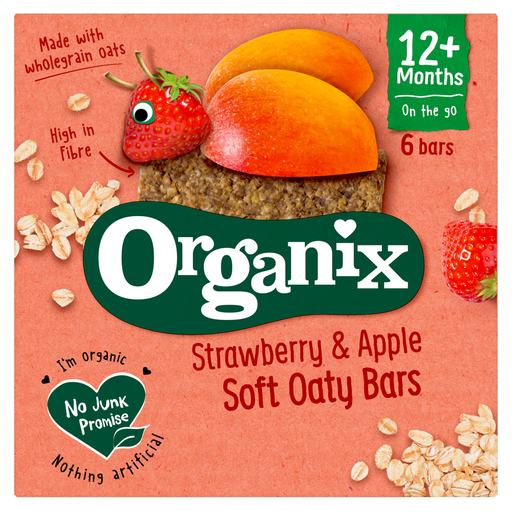 Image unavailable
These 23g bars are labelled for ages 12+ months. For a school packed lunch, compare the current per-bar nutrition and check the pack’s allergen statements against your child’s needs and school rules.
Comparing bars below 100 kcal each is one shopping screen, not a nutritional standard: Tesco, for example, has an under-100-calorie cereal-bar category. Read the kcal for the individual bar you would pack, then compare its serving weight, sugars, ingredients and allergens too.
A cereal bar is better considered as an optional snack than as the main lunch item. NHS lunchbox guidance recommends a main food based on ingredients such as bread, rice, pasta or potatoes and suggests fruit or fruited teacakes as alternatives to cereal bars.
Read the exact pack’s ingredients, allergen declaration and “may contain” statement, then check the school’s current policy against your child’s needs. The Department for Education’s school allergy guidance applies to England and addresses managing food-allergy risks; it does not establish one packed-lunch rule for every UK school.
No. Check other ingredients and precautionary allergen statements separately: Sainsbury’s lists almonds in Eat Natural Red Fruits bars, while Myprotein flags gluten-containing cereals and possible egg, peanuts and nuts for its cereal bar. Match the exact current pack to the child’s needs and the school’s policy.
Use a listing to narrow your options, but read the current physical pack before packing the bar. Kellogg’s advises checking pack ingredients and nutrition declarations because recipes can change.