Who is choosing a holiday snack?
The useful starting point is the snack occasion: a small bar for a journey and a larger flapjack are not interchangeable portions.
Travellers looking for a small snack
If one bar is what you expect to eat on an excursion, check its calories per bar rather than judging it by its size or front-of-pack wording. Ocado lists a 20g Kellogg's Special K Milk Chocolate bar at 78 kcal; Sainsbury's lists a 25g Eat Natural Apple bar at 86 kcal.
Travellers choosing a larger bar
A 50g flapjack is a different portion to a 20–25g bar. If protein or a larger oat-based snack matters more to you than the lowest calorie count per bar, Tesco lists TREK Original Oat at 10g protein and 219 kcal per 50g bar.
Travellers checking dietary suitability
Check the exact pack's ingredients and precautionary allergen statement before taking a bar away from home. Sainsbury's describes Eat Natural Apple as vegan and gluten-free; Tesco describes TREK Original Oat the same way but also states that it may contain peanuts, nuts and milk.
What should you compare?
Decide how much of the pack you expect to eat, then use the nutrition panel and ingredient list to compare bars that fit that portion.
| Priority | What to check | Your needs |
|---|
| Portion and calories |
Read kcal per bar or stated serving, and check whether a serving contains one or two bars. Ocado lists 78 kcal per 20g Kellogg's bar; Nature Valley UK lists 196 kcal per two-bar, 42g serving of its Crunchy Variety Pack. |
For a short stop on a travel day, I might want one small bar. For a longer outing, I may be planning to eat a larger serving; the calories need to match the amount I will actually eat. |
| Sugars and other nutrients |
Compare sugars, saturates and fibre per 100g, then check the values for your serving. NHS food-label guidance describes more than 22.5g sugars per 100g as high and 5g or less per 100g as low; a fibre or protein claim answers a different question. |
A low calorie figure matters to me, but I do not want it to stand in for a check of the rest of the nutrition panel. |
| Travel and storage |
Check how many bars are in the pack, whether each is wrapped for the way you plan to carry it, and the storage directions on the current packaging. Do not assume a bar is suited to a hot car or direct sun. |
When I am packing for a day out, I want a portion I can carry and store as its label directs. |
| Ingredients and allergens |
Read the exact ingredients and any ‘may contain’ statement, even when a bar is labelled vegan or gluten-free. Tesco's TREK Original Oat listing, for example, says it may contain peanuts, nuts and milk. |
If I am choosing for someone with an allergy or a dietary requirement, the wording on that particular pack matters more than the brand name. |
Which brand examples are relevant?
These examples illustrate differences between particular bars and portions; a brand name alone does not establish the nutrition or ingredients of every variant.
Kellogg's
Special K Milk Chocolate is an example of a small cereal-bar portion.
- Ocado lists 78 kcal and 2.8g fibre per 20g bar.
- Check the ingredients and allergens of the exact flavour; its calorie figure does not make it a meal replacement.
Eat Natural
Apple Soft Fruit Bars provide another small-portion comparison, with vegan and gluten-free labelling on the Sainsbury's listing.
- Sainsbury's lists 86 kcal per 25g bar.
- The same listing gives 13.8g sugars per bar; fewer calories per bar should not be read as a low-sugar claim.
Graze
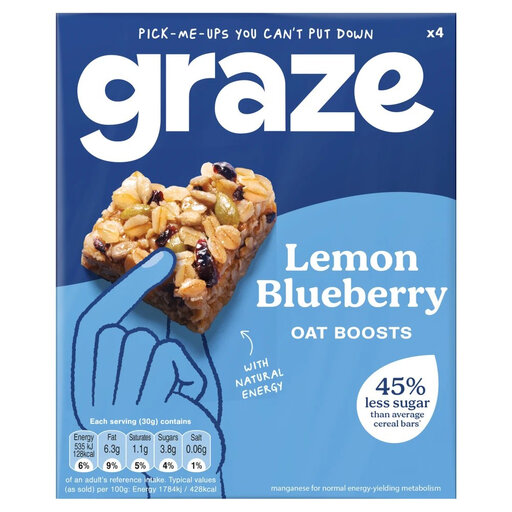
Oat Boost Lemon Blueberry illustrates why the weight of a flapjack matters when comparing it with a small cereal bar.
- Graze says its Oat Boost flapjacks have 45% less sugar than the more than 80 cereal bars in its own comparison.
- Sainsbury's lists 428 kcal per 100g for the 50g Lemon Blueberry bar, equivalent to about 214 kcal for that bar. Graze's sugar comparison does not make this 50g variant a lower-calorie portion than the small bars above.
TREK
Original Oat is a 50g protein flapjack to consider when a larger snack is the priority.
- Tesco lists 10g protein per 50g bar and describes it as vegan and gluten-free.
- Tesco also lists 219 kcal per bar and says it may contain peanuts, nuts and milk.
Nature Valley
The Crunchy Variety Pack is a useful example of a serving defined as two bars.
- Nature Valley UK lists 196 kcal for the stated two-bar, 42g serving.
- Its nutrition information also lists 11.3g sugars for that serving. Nature Valley advises checking the current pack because formulations can change.
Alpen
An older Alpen Light listing should be checked against the exact variant before it is used as a holiday-snack comparison.
- Alpen states that Alpen Light Bars Chocolate & Orange and several other named bar variants are no longer made. That statement concerns those variants, not every Alpen product.
Joybuy options to compare
These Joybuy listings include cereal bars, an oat bar and a fruit-and-nut bar that could be considered for holiday snacks. Compare the portion shown in each product title with the calories, sugars and allergen information on its current pack; the formats do not all represent the same serving size.
 No image available
Graze Oat Boosts Lemon Blueberry, 4 x 30g
If an oat bar appeals for a day out, compare the calories for this 30g portion with the smaller cereal bars you are considering. Check the current pack for sugars, ingredients and allergens; do not apply figures for a differently sized Lemon Blueberry bar to this pack.
View on Joybuy
 No image available
Cadbury Brunch Light Orange Cereal Bar, 4pk 104g
For a packed holiday snack, check the nutrition information for the bar you intend to eat, not just the 104g pack weight. Read the current ingredients and allergen statement as well; ‘Light’ in the product name does not establish a calorie or sugar comparison.
View on Joybuy
No image available
Special K Red Berry Cereal Bar, 6 x 21.5g
This 21.5g-bar format is worth comparing if you plan to take one small portion on an outing. Use the Red Berry pack's own kcal, sugars and allergen information rather than the figures for a different Special K flavour.
View on Joybuy
 No image available
Special K Dark Chocolate Snack, 6 x 21.5g
For a one-bar travel snack, compare the nutrition information for this 21.5g Dark Chocolate portion with other bars you might pack. Check its current sugars, ingredients and allergens separately from those of other Special K variants.
View on Joybuy
 No image available
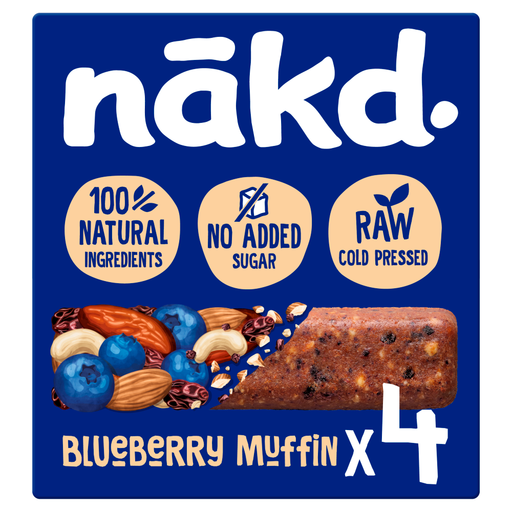
Nakd Blueberry Muffin Raw Fruit & Nut Bars, 4 x 35g
If a fruit-and-nut bar suits your plans, compare the nutrition information for one 35g bar with the cereal-bar portions above. Check the exact pack's ingredients and allergen statement before choosing it for someone with a dietary restriction.
View on Joybuy
Common questions
What counts as a lower-calorie bar for a holiday snack?
Compare calories for the portion you intend to eat rather than relying on a single cutoff. Ocado lists Kellogg's Special K Milk Chocolate at 78 kcal per 20g bar and Sainsbury's lists Eat Natural Apple at 86 kcal per 25g bar; Tesco lists the larger, 50g TREK Original Oat flapjack at 219 kcal. Those figures describe specific products and serving sizes, not every bar from those brands.
Does a fibre, wholegrain or protein claim mean a bar is low in calories or sugars?
No: the claim describes a particular attribute, so check kcal and sugars on the nutrition panel separately. NHS food-label guidance explains how to read nutrition values per 100g and, where given, per portion; the portion figure tells you what you will get from the amount you eat.
How can I compare a small cereal bar with a larger flapjack?
Start with calories for the serving you would actually eat, then use per-100g values to compare nutrients on the same weight basis. A two-bar serving or 50g flapjack is a different amount of food from a single 20g bar, even if all three products are described as snack bars.
Can I use an online listing to check allergens before travelling?
Use it to identify products to consider, then read the ingredients and precautionary allergen wording on the exact pack before use. Nature Valley UK cautions that formulations can change, and the Food Standards Agency explains that ‘may contain’ labelling signals possible unintended allergen presence; vegan or gluten-free wording does not answer every allergen question.


