Parents comparing smaller portions
If a lower-calorie single bar is the aim, compare the declared serving size as well as its energy and sugars. A smaller bar and a two-bar serving are not equivalent portions.


For an after-school snack, start with the calories in the bar or serving that will actually be eaten, then check sugars and allergens on that same pack. Kellogg’s UK lists 104 kcal for a 27 g Special K Red Berry Bar, while Weetabix Cereals lists 106 kcal for a 28 g Alpen Fruit & Nut Bar; those serving sizes matter, and neither figure establishes that a bar meets a child’s allergy requirements or a school’s policy.
If a lower-calorie single bar is the aim, compare the declared serving size as well as its energy and sugars. A smaller bar and a two-bar serving are not equivalent portions.
Check the exact flavour’s current ingredient and allergen declaration. If the bar will be taken to school, check that school’s allergy policy too; a cereal-bar category name cannot establish suitability.
Protein, vegan and gluten-free descriptions address different preferences or requirements from calories. Compare the stated portion and nutrition panel separately before choosing one for a snack.
Choose the portion you expect to pack or eat first. Then use the nutrition and allergen information for that exact bar, rather than transferring figures from another flavour or size.
| Priority | What to check | Your needs |
|---|---|---|
| Portion and energy | Check kcal for the actual bar or serving. Compare kcal per 100 g for a standardised view, but use the portion eaten for the snack decision. | I’m packing one bar, so I want its calorie figure—not a figure for two bars or a different-sized version. |
| Other nutrition values | Read sugars, saturated fat and salt on the same nutrition panel. Check whether each figure is per 100 g or per serving before comparing packs. | A smaller calorie figure isn’t my only consideration; I also want to see what the bar declares for sugars and other labelled nutrients. |
| Allergens and school arrangements | Read the current ingredients, allergen statement and any precautionary wording for the exact flavour. If the bar is going to school, check that school’s allergy policy. | Before putting a bar in a school bag, I need to know whether its ingredients and the school’s arrangements allow it. |
Kellogg’s UK declares 104 kcal for its 27 g Special K Red Berry Bar, while Nature Valley UK declares 196 kcal for a two-bar, 42 g serving of Crunchy Oats & Honey. The servings are different sizes.
Check kcal for the amount that will actually be eaten, then use the per-100 g figures if you want to compare energy across different bar sizes.
Those descriptions do not tell you the energy in a serving. Eat Natural UK declares 220 kcal for its 40 g Dark Chocolate & Peanut Protein Bar, compared with Kellogg’s UK’s 104 kcal for the smaller 27 g Special K example.
Choose a bar for the attribute you need, but check its own serving size, energy and sugars independently.
Ingredients and precautionary allergen wording differ between products and variants. The TREK Smooth Lemon Protein Flapjack listing at Tesco describes that particular variant as gluten-free; that does not describe all cereal bars.
Read the current pack for the exact bar. If it will be taken to school, check the school’s allergy policy as well.
These examples illustrate different serving sizes and bar types, not the availability or suitability of every product from each brand.
The Special K Red Berry Bar is an example of a smaller stated cereal-bar serving.
The Fruit & Nut Bar provides another small-serving example for comparison.
Crunchy Oats & Honey illustrates why a stated two-bar serving needs careful comparison with single bars.
Oat Boost is a flapjack range for shoppers considering an oat-based bar.
Its Dark Chocolate & Peanut Protein Bar is relevant when considering a protein bar rather than solely a smaller cereal-bar portion.
The Smooth Lemon Protein Flapjack is a distinct option for shoppers checking gluten-free or vegan labelling.
These Joybuy options include smaller cereal-bar packs and oat-based flapjack packs for after-school snacks. Compare the nutrition and allergen information for the exact flavour and portion before choosing.
 No image available
For a packed after-school snack, check the energy and sugars for the bar you intend to serve. This is a 104 g four-pack; read its current allergen statement before taking it to school.
 No image available
The 21.5 g bar size makes the per-bar nutrition panel relevant to a single after-school portion. Check this pack’s own figures rather than applying those for the separately listed 27 g Kellogg’s bar, and read its allergens.
 No image available
For a single-bar snack, compare the energy and sugars stated for this 21.5 g Dark Chocolate variant. Its flavour differs from the Red Berry bar, so check this pack’s ingredients and allergens separately.
 No image available
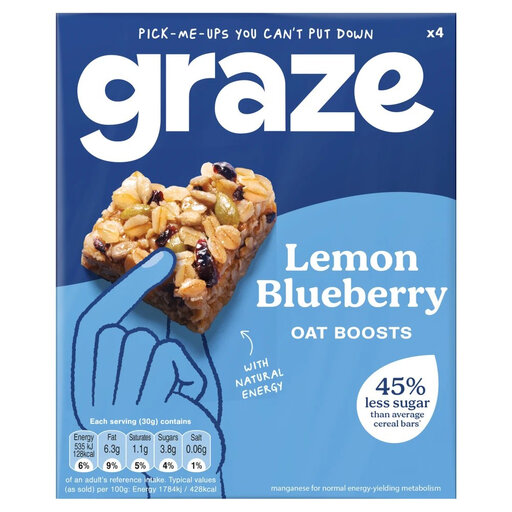
This oat-based option comes as four 30 g bars. Compare the calories and sugars for one bar with the portion you plan to pack, and check the Lemon Blueberry pack’s allergen declaration.
 No image available
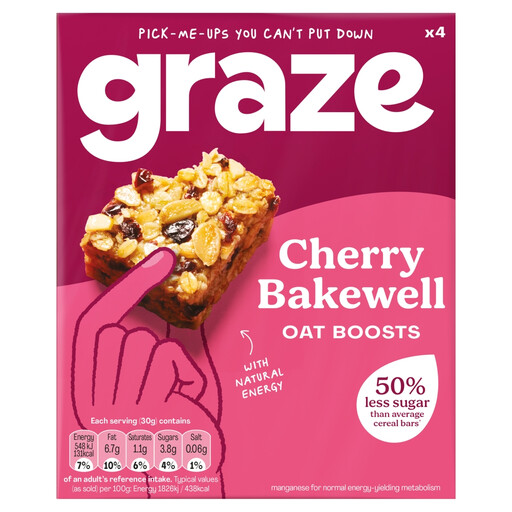
These four 30 g bars offer a different Oat Boost flavour for an after-school snack. Read this variant’s per-bar nutrition values and allergen statement rather than assuming they match the Lemon Blueberry pack.
Start with kcal for the bar or serving you expect to eat. Use kcal per 100 g to compare products on the same weight basis, then check sugars, saturated fat and salt on their nutrition panels; a stated serving may differ from the amount eaten.
No. Eat Natural UK declares 220 kcal for its 40 g Dark Chocolate & Peanut Protein Bar, and the Tesco listing declares 230 kcal for a 50 g TREK Smooth Lemon Protein Flapjack. These figures describe different-sized servings, so check the exact bar’s calories independently of its other labels.
No. The Tesco listing describes the TREK Smooth Lemon Protein Flapjack as gluten-free, but that does not establish the status of another flavour or brand. Read the current ingredient and allergen statement for the exact bar.
Check the exact pack’s ingredients and allergen wording, then the individual school’s allergy policy. The Department for Education’s guidance for England addresses school arrangements for reducing contact with pupils’ known allergens; it does not make a cereal bar suitable for every pupil or every school.