What should you check first?
Start with the amount you would actually eat, then compare its nutrition information and ingredients against what matters for your afternoon snack.
| Priority |
What to check |
Your needs |
| Calories and portion |
Check whether kcal are stated per bar or per pack, and count the bars you intend to eat. For a specific comparison, ASDA declares 83 kcal per 21.5 g Kellogg’s Special K Juicy Red Berry bar. |
I want to know the calories in my whole afternoon snack, not just the figure for one bar if I will eat two. |
| Time until the next meal |
Compare bar size, protein and fibre on the same per-bar basis as calories. Tesco lists 196 kcal and 10 g protein for a 40 g Nature Valley Protein Peanut & Chocolate bar; those figures do not establish how long it will satisfy an individual appetite. |
If dinner is late, I want to decide whether a small bar suits the gap or whether I would rather choose a different portion. |
| Other nutrition details |
Read sugar, saturated fat and fibre values for the exact serving. Wholegrain or reduced-sugar wording alone does not tell you its calories; traffic-light colours can help compare labelled products. |
Calories matter to me, but I also want to compare what the different bars contain. |
| Allergens and ingredients |
Check the current product’s ingredients, allergen declaration and any precautionary wording. Do this for each flavour, even if another bar in the range carries a dietary claim. |
I need the specific bar I buy to fit my ingredient or allergen requirements, not merely the brand’s general description. |
Brand and product-line references
These named products and ranges illustrate different label checks; the figures apply to the specified examples, not every bar made by each brand.
Alpen
Weetabix Cereals lists 65 kcal and 3.8 g fibre for one 19 g Alpen Light Summer Fruits bar.
- A stated per-bar serving makes its calories straightforward to compare.
- The specification is from an East Africa product page, not a current UK pack. It lists oats, wheat, milk and soya and says the bar is unsuitable for people with nut allergies; check the UK pack before purchase.
Kellogg’s
ASDA and Tesco list 83 kcal per 21.5 g Kellogg’s Special K Juicy Red Berry bar; Tesco states that this variant contains 41% wholegrains.
- The named variant has a stated UK retailer figure per bar.
- Its listed allergens include barley, oats, wheat, soya and milk. Check other flavours separately.
Graze
Graze describes its Oat Boost range as wholegrain oat flapjacks and makes a reduced-sugar comparison claim for the range.
- The range gives shoppers interested in oats or fibre another format to examine.
- Graze’s sugar comparison does not establish the calories or ingredients of a chosen variant. Check its current pack.
Nature Valley
Tesco lists a 40 g Nature Valley Protein Peanut & Chocolate bar at 196 kcal with 10 g protein.
- That named bar illustrates a different calorie-and-protein choice from the smaller cereal-bar examples.
- The named flavour contains peanuts; check its complete current allergen declaration and do not apply its nutrition figures to other variants.
Eat Natural
Tesco lists 198 kcal, 10.4 g protein and 2.2 g fibre for a 40 g Eat Natural Peanuts, Almonds & Salted Caramel bar.
- Its stated serving figures allow comparison with a smaller, lower-calorie bar.
- The listed ingredients include peanuts, almonds, soya and milk-derived ingredients; read the pack’s full allergen information.
Trek
Trek’s protein bars and flapjacks offer another format to compare when the snack decision extends beyond small cereal bars.
- Compare the selected bar’s serving size and protein with its calories.
- Do not assume a Trek bar fits a particular calorie amount from its range name; use the exact current product label.
Joybuy cereal-bar options
These options include smaller cereal-bar multipacks for comparing afternoon-snack portions and Nature Valley protein-bar multipacks for a different portion and protein comparison. Check each current product page and pack before buying.
 No image available
Kellogg’s Special K Red Berry Cereal Bars, 6 x 21.5 g
Consider this smaller bar when comparing calories for one afternoon serving.
ASDA and Tesco list 83 kcal per 21.5 g bar for the matching Special K Juicy Red Berry variant. Their product information lists barley, oats, wheat, soya and milk as allergens; check the current pack.
View on Joybuy
 No image available
Special K Dark Chocolate Snack Bars, 6 x 21.5 g
This is another small-bar multipack to consider for an afternoon portion.
Compare calories per bar on the Dark Chocolate pack itself; the Red Berry figures do not describe this flavour. Check its ingredients and allergen information too.
View on Joybuy
 No image available
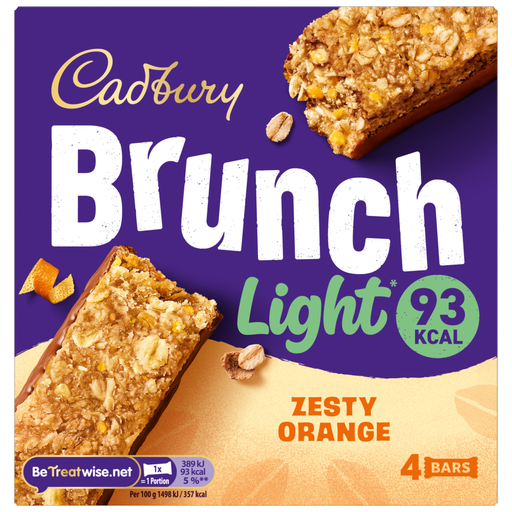
Cadbury Brunch Light Orange Cereal Bars, 4-pack, 104 g
Check the serving information if you are comparing this four-pack with individually listed bars.
The pack name states 104 g in total. Use the current nutrition panel to establish kcal for the amount you intend to eat; “Light” alone is not a calorie figure.
View on Joybuy
 No image available
Nature Valley Protein Salted Caramel Nut Bars, 4 x 40 g
Consider this larger bar format if portion size and protein matter more to you than choosing a small cereal bar.
Compare its own per-bar kcal and protein figures with the smaller options. Check the Salted Caramel Nut variant’s full ingredient and allergen information rather than applying figures from another Nature Valley flavour.
View on Joybuy
 No image available
Nature Valley Protein Peanut & Chocolate Bars, 4 x 40 g
This is a larger protein-bar option to compare against a smaller afternoon cereal bar.
Tesco lists a 40 g Nature Valley Protein Peanut & Chocolate bar at 196 kcal with 10 g protein. Confirm the nutrition information for this multipack’s current bars, and check the full allergen declaration: a peanut flavour is not suitable for someone avoiding peanuts.
View on Joybuy
Questions about choosing a bar
How do I compare calories when bars come in different pack sizes?
Compare kcal for the complete amount you plan to eat, checking whether the label’s serving is one bar or an entire pack. For reference, ASDA lists 83 kcal per 21.5 g Kellogg’s Special K Juicy Red Berry bar; use the current label for any other flavour or size.
Will a smaller, lower-calorie bar suit a long wait until dinner?
A calorie figure cannot tell you how a bar will suit your appetite. Compare portion size, protein and fibre per whole bar alongside kcal: Tesco lists a 40 g Nature Valley Protein Peanut & Chocolate bar at 196 kcal and 10 g protein, while its Special K Juicy Red Berry listing gives 83 kcal for a 21.5 g bar.
Does “gluten free” mean a cereal bar is suitable for a nut allergy?
No. A gluten-free label does not answer whether a bar contains nuts. Tesco labels its Eat Natural Peanuts, Almonds & Salted Caramel bar gluten free, but lists both peanuts and almonds in its ingredients; check the complete allergen information on the current pack.
Are wholegrain or reduced-sugar bars necessarily lower in calories?
No conclusion about a particular bar’s calories follows from those descriptions alone. Compare kcal for the exact serving, then use its nutrition panel to consider sugar, saturated fat and fibre. Graze’s Oat Boost sugar comparison is a brand claim, not a calorie figure for every variant.
What can traffic-light labels add to the comparison?
They offer a quick way to compare labelled nutrition details, but they do not replace the serving information or allergen declaration. NHS family guidance describes traffic-light labels as a comparison aid for packaged snacks; for a cereal bar, also read kcal per whole bar and the ingredients on the exact pack.


