Hosts handing out individual bags
If each visitor receives one sealed bag, its whole-pack calorie figure and weight are more useful for planning than the per-100g figure alone.


For car boot sale refreshments, compare the declared calories for the whole bag if each person will receive one sealed pack. Smaller potato-snack bags can have fewer calories per pack than larger bags of conventional potato crisps, but pack weights differ: check the per-100g figures, salt and exact flavour’s allergen statement before choosing.
If each visitor receives one sealed bag, its whole-pack calorie figure and weight are more useful for planning than the per-100g figure alone.
If a conventional potato crisp matters more than the smallest snack bag, compare calories alongside the weight of each bag. An 18g potato snack and a 40g crisp pack are different portions.
Keep the original packaging available for ingredient and allergen checks. If your activity is a food business, check the applicable registration and labelling duties with your local authority before trading.
Start with the amount someone will actually receive, then compare products on a consistent weight basis and check the information needed to offer them.
| Priority | What to check | Your needs |
|---|---|---|
| Calories per bag | Read kcal and weight for the entire sealed bag. Use kcal per 100g when comparing different bag sizes; NHS food-label guidance distinguishes per-100g and per-portion information. | I’m handing out one bag at a time, so I want to know the calories in that bag—not just in a suggested serving. |
| Crisp or snack format | Check whether the product is a conventional potato crisp, a potato snack or another savoury snack. Compare pack weights alongside calories. | If I want recognisable potato crisps, I’ll compare those bags separately from smaller crisp-like snacks. |
| Salt | Read salt per bag and per 100g. NHS guidance describes more than 1.5g salt per 100g as high; the per-bag figure shows the amount in the portion offered. | A lower calorie figure is not my only consideration, so I want to see how much salt comes with each bag. |
| Ingredients and allergens | Check the exact flavour’s ingredients, highlighted allergens and any ‘may contain’ statement. Do not apply one flavour’s label to another. | I need guests to be able to check the pack themselves, particularly if they have an allergy or a dietary requirement. |
| Serving format | Decide whether to distribute sealed individual bags or portion a larger pack. Keep the original packaging and follow its storage instructions. | For a busy stall, separate bags are straightforward to hand out; for a group, I would plan portions rather than treat a sharing bag as one serving. |
Seabrook lists Sea Salted Crunchies at 82 kcal for an 18g bag, but 453 kcal per 100g. The smaller whole-bag figure describes a smaller portion, not its calorie concentration.
Use whole-bag kcal to plan what you will hand out and the per-100g figure to compare products of different sizes.
Tyrrells lists 208 kcal for a 40g Lightly Sea Salted pack and 156 kcal for a 30g serving from its larger bags. Those figures describe different amounts of crisps.
Put the weight beside every calorie figure, then compare either the whole bags you intend to offer or an equal weight of each product.
Walkers lists French Fries Ready Salted at 2.5g salt per 100g for its 21g pack. NHS food-label guidance describes more than 1.5g salt per 100g as high. Allergen statements can also differ by flavour.
Read salt per bag as well as per 100g, and check each exact flavour’s ingredients and allergen statement before offering it.
Repacking can separate food from the ingredient and allergen information visitors need. Food Standards Agency guidance sets specific labelling requirements when a food business produces food prepacked for direct sale.
Keep factory packaging available. If you prepare or repack food for sale, ask your local authority which registration and labelling requirements apply to your activity.
These examples show why the exact product and pack matter more than a brand name alone.
Its individually portioned range includes potato and maize snacks as well as conventional crisps.
Its examples include both smaller potato snacks and bags of conventional potato crisps.
Lightly Sea Salted potato crisps offer a conventional crisp in individual and larger formats.
KETTLE Lightly Salted is a hand-cooked potato crisp offered in a sharing format.
McCoy’s Salted is an option to examine if ridged potato crisps are the preferred format.
REAL describes its range as hand-cooked crisps and makes range-wide dietary-suitability statements.
These multipacks offer individual portions for handing out at a car boot sale. They include potato and wheat-based snacks, so check each pack’s nutrition and ingredients rather than assuming they are all conventional potato crisps.
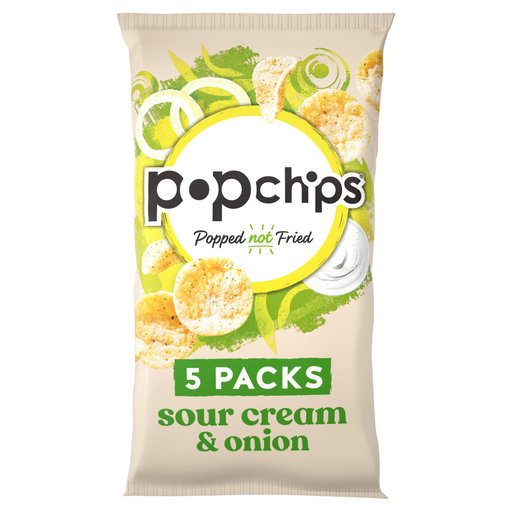 No image available
The five 17g bags provide individual portions to hand out. Check the pack’s kcal per bag and allergen statement before offering this flavour.
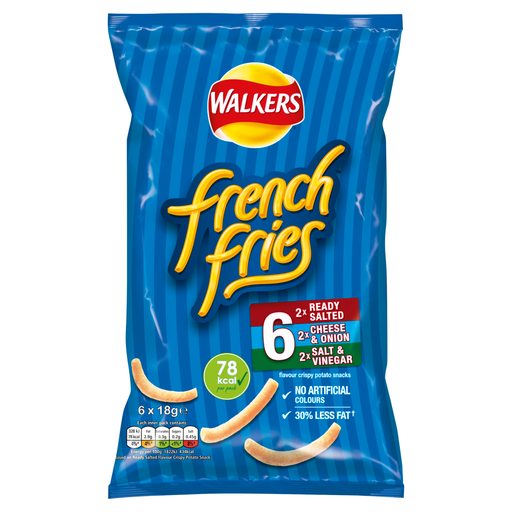 No image available
Six 18g bags offer a choice of flavours in individual portions. Read the nutrition and allergen information for each flavour rather than applying one flavour’s figures to the whole pack.
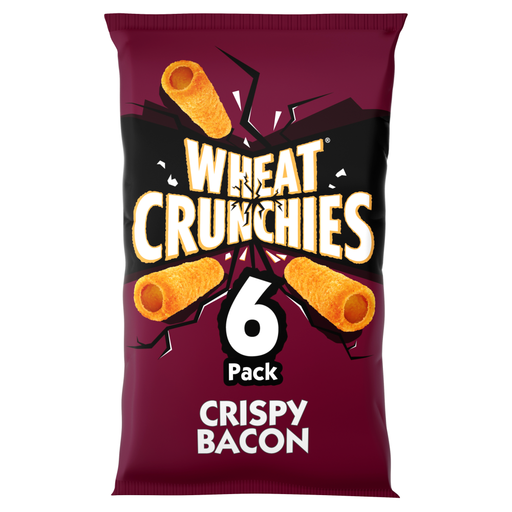 No image available
This wheat-based snack comes in six 20g bags. It is a different format from potato crisps; check its calorie figure and wheat and other allergen information on the exact pack.
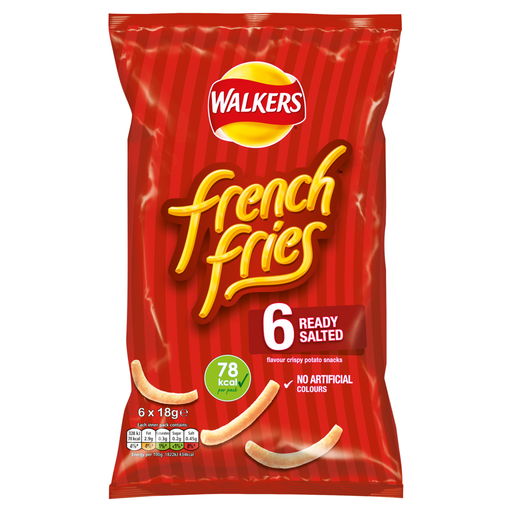 No image available
The six 18g bags suit one-bag-at-a-time distribution. Joybuy lists 78 kcal per bag for this pack; do not substitute the 91 kcal figure Walkers UK gives for its different 21g pack. Check the exact bag’s salt and allergen statement too.
 No image available
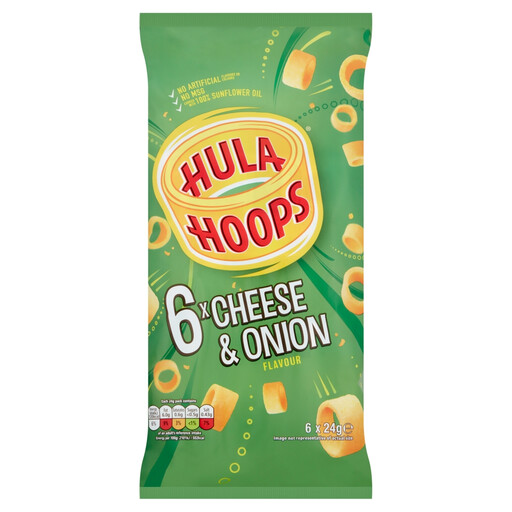
Six 24g bags provide individual portions in a different shape and size from the smaller snack packs above. Compare the kcal for a complete bag and check the cheese-flavoured product’s allergen label.
Use kcal for the whole bag when that is the amount you will hand someone. Use kcal per 100g to compare products with different bag weights; NHS food-label guidance notes that a stated portion can differ from the amount actually eaten.
Not necessarily: check the figures for both products. Seabrook lists Sea Salted Crunchies at 82 kcal per 18g bag and 453 kcal per 100g, illustrating why a whole-bag comparison and an equal-weight comparison answer different questions.
Yes, read salt per bag and per 100g on the exact product. NHS guidance describes more than 1.5g salt per 100g as high; Walkers UK lists 2.5g per 100g for its 21g French Fries Ready Salted pack.
Keep the original labelled packaging available and ask guests with food allergies or intolerances to read the exact flavour’s ingredients and allergen statement. Food Standards Agency guidance for community and charity events recommends retaining prepacked-food packaging so people can check ingredients.
If the stall operates as a food business, GOV.UK food-business-registration guidance says registration with the local authority is required and includes temporary premises such as stalls. Ask your local authority whether your planned activity qualifies before trading.