Shoppers comparing calories
If you want a lower-calorie dried-fruit option, the fruit name alone will not tell you how products compare. Check kcal per 100g alongside the amount you intend to eat.


To choose dried fruit with fewer calories, compare the labelled kcal per 100g, then work out the calories in the amount you expect to eat. Asda Groceries lists its partially rehydrated apricots at 182 kcal per 100g and 61 kcal per one-sixth-pack serving, but they contain sulphur dioxide. For an online order, check ingredients and allergy warnings as well as the nutrition panel, and review any proposed substitution before accepting it.
If you want a lower-calorie dried-fruit option, the fruit name alone will not tell you how products compare. Check kcal per 100g alongside the amount you intend to eat.
A replacement product may have different nutrition, ingredients or allergy warnings. Substitution preferences and a check of the delivered item matter when those details determine your choice.
Ingredients and may-contain warnings differ between dried-fruit products. Check the particular item you order and read its label when it arrives, especially if sulphites or cross-contact warnings matter to your household.
Start with a like-for-like energy comparison, then check whether the portion, ingredients and delivery arrangements still suit your plans.
| Priority | What to check | Your needs |
|---|---|---|
| Calories and portions | Compare kcal per 100g across products. Then use the stated serving size and the amount you plan to eat to assess calories per portion. | I want to compare packs fairly, even when retailers use different serving sizes. Asda Groceries lists 182 kcal per 100g for its apricots, while Tesco Groceries lists 296 kcal per 100g for Mixed Raisins. |
| Sugar and ingredients | Read the ingredients for added sugar, syrup or candied peel. Check sugars per 100g alongside kcal; total sugars do not tell you how much sugar was added. | If I do not want added sugar, I need to check the ingredients rather than assume a fruit snack is unsweetened. Sainsbury’s Groceries lists 303 kcal per 100g for BEAR Fruit Dried Pineapple despite its no-added-sugar statement. |
| Allergy information | Check the specific product for sulphites and may-contain warnings. Read the delivered pack before eating because product information can change. | For my household, the replacement must meet the same ingredient and allergy requirements as the item I chose. |
| Substitutions | Set substitution preferences where offered. Check any replacement’s nutrition panel, ingredients and label before accepting or using it. | I would rather decline an unsuitable substitute than receive a different fruit or formulation. Tesco says shoppers can leave substitution notes; Sainsbury’s says shoppers can ask not to receive substitutes and may refuse one at delivery. |
Asda Groceries lists its partially rehydrated apricots at 182 kcal per 100g, whereas Sainsbury’s Groceries lists its mixed dried fruit at 324 kcal per 100g. The products also have different ingredients and intended uses.
Compare kcal per 100g first, then check the calories for the portion you will actually use.
Asda Groceries lists sugar after cranberries in its dried cranberry ingredients. Sainsbury’s mixed dried fruit contains candied peel made with syrup and sugar.
Read the ingredient list if you want plain fruit rather than a sweetened product or baking blend.
Sainsbury’s Groceries lists BEAR Fruit Dried Pineapple as having no added sugar, but its nutrition information gives 303 kcal per 100g.
Use the no-added-sugar statement to understand the formulation; use the kcal figure to compare energy.
A different dried-fruit product can change the calories, ingredients or allergy warnings that informed your order.
Set preferences before checkout where possible, then check any proposed replacement and the delivered label. Sainsbury’s says customers may refuse a substitute at delivery.
These examples illustrate differences between particular products and delivery arrangements, not characteristics shared by every item from a brand or retailer.
Asda Groceries provides a useful contrast between its partially rehydrated apricots and sweetened cranberries.
Tesco Mixed Raisins offer a stated 30g serving for portion comparisons.
Sainsbury’s mixed dried fruit is a blend containing candied peel, rather than an example of plain single-fruit dried fruit.
Whitworths Extra Juicy Snacking Raisins are described on Tesco Groceries as partially rehydrated raisins.
M&S Chopped Apricots are another product to compare if chopped fruit suits your intended use.
These Joybuy options include portioned raisins and dates, prunes and dried pineapple. Compare each product’s current nutrition and ingredient label against your intended portion before ordering; this selection is not a ranking by calories.
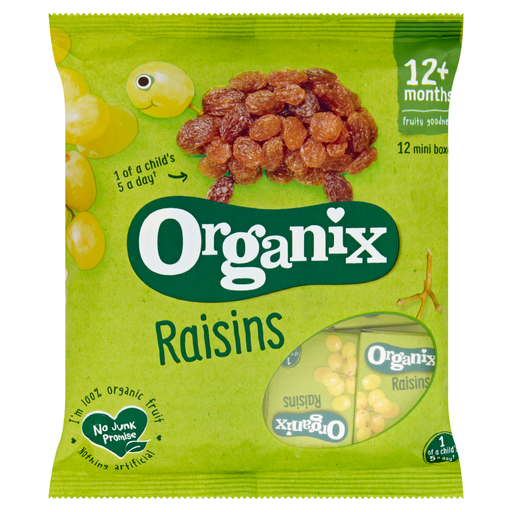 No image available
The 14g boxes provide a stated amount per box for portion planning. Check the nutrition and ingredient information for the amount you expect to eat; the product is labelled for ages 12 months and over.
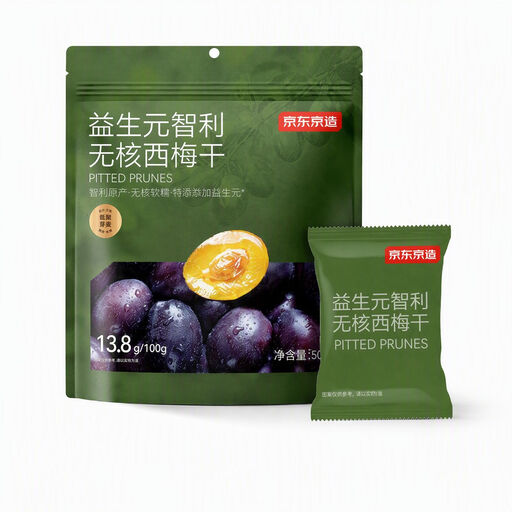 No image available
Individual wrapping may help you plan how many prunes to use from the 500g pack. Check the weight per wrapper, nutrition panel and ingredients before comparing a portion with another dried fruit.
 No image available
Each sachet has a stated weight of 30g, making it possible to compare calories for that amount with other packs. Check the nutrition panel and any stone warning on the delivered product.
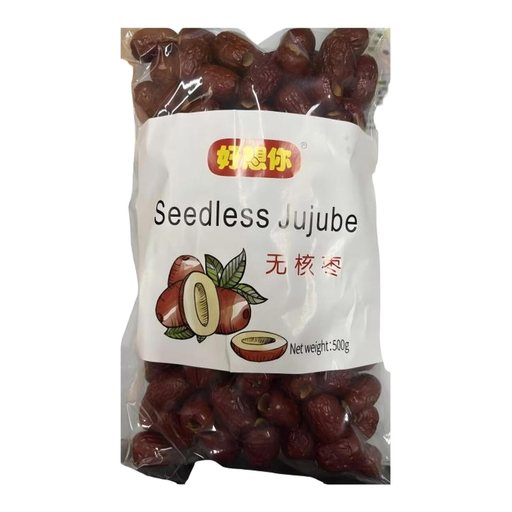 No image available
If you prefer pitted dates, compare this pack’s kcal per 100g with the portion you plan to use. Check the delivered label for ingredients and any stone warning.
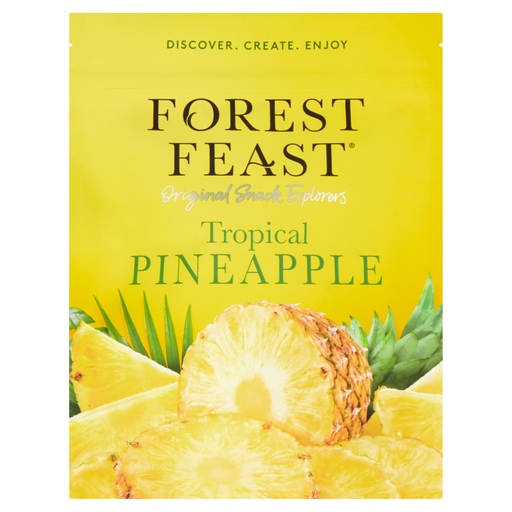 No image available
If pineapple is the flavour you want, use the nutrition panel to compare this 120g pack with other dried fruit by kcal per 100g. Check its ingredients and allergy information, including whether sulphites are listed.
Compare kcal per 100g first, then calculate the calories for the amount you expect to eat. The serving printed on one pack may differ from another: Asda Groceries lists 182 kcal per 100g for its apricots, Tesco Groceries lists 296 kcal per 100g for Mixed Raisins, and Sainsbury’s Groceries lists 324 kcal per 100g for its mixed dried fruit.
No. Sainsbury’s Groceries lists BEAR Fruit Dried Pineapple as having no added sugar, alongside 303 kcal and 57g sugars per 100g. Check the energy figure for a calorie comparison and the ingredients for added sugar.
The NHS says 30g of dried fruit counts as one 5 A Day portion, equivalent to around 80g of fresh fruit. It advises having dried fruit at mealtimes rather than between meals to reduce the risk of tooth decay.
Check the replacement’s calories, ingredients and allergy warnings before accepting it. Tesco says you can leave substitution preferences, although they may not always be met; Sainsbury’s says you can ask not to receive substitutes and may refuse one at delivery.
Check the label on the delivered product before eating it. Dried-fruit ingredients and warnings vary by item, and an accepted substitute needs its own check rather than relying on the listing for the product originally ordered.