Who needs which checks?
Your most useful comparison depends on whether energy per portion, opened-pack storage or the ingredient label is the deciding factor.
Campers comparing calories
Start with kcal per 100g so that different pack sizes do not obscure the comparison. Then look at the amount you would actually take for a day, rather than assuming that a smaller stated serving makes one fruit lower in energy.
Campers without a fridge
Check what the packet says to do after opening, not just how to store it before your trip. A pack that requires refrigeration once opened calls for a different plan from one labelled for cool, dry storage.
Shoppers checking allergens and stones
Read the current packet’s ingredients, allergen declaration and safety warnings. The Food Standards Agency identifies sulphur dioxide and sulphites as ingredients used in some dried fruit; individual apricot labels may also warn that stones remain.
What should you compare?
Compare energy on the same weight basis first, then choose a portion and a pack whose storage instructions fit the length of your trip. Ingredient and allergen checks answer separate questions that a calorie figure cannot.
| Priority |
What to check |
Your needs |
| Energy and portions |
Compare labelled kcal per 100g, then check kcal for the portion you intend to pack. Whitworths lists Favourites Prunes at 141 kcal per 100g and 42 kcal per 30g; ASDA lists its 500g apricots at 182 kcal per 100g and 55 kcal per 30g. |
I want to compare fruits fairly, then put aside an amount I can carry for each festival day rather than eating directly from a large bag. |
| Ingredients and sugars |
Read the ingredient list alongside energy and total sugars per 100g. Tesco lists BEAR Dried Mango as having no added sugar, yet its label states 319 kcal per 100g; Tesco’s sweetened Dried Blueberries list 338 kcal per 100g. |
A no-added-sugar claim matters to me, but I do not want to mistake it for a lower-calorie claim. |
| Opened-pack storage |
Check whether the pack calls for cool, dry storage or refrigeration after opening, and note any time limit. ASDA’s 200g Apricots label instructs refrigeration once opened; Marks & Spencer says to reseal its Collection Apricots and eat them within seven days. |
With no dependable fridge at the campsite, I need a pack I can store as instructed for as long as I plan to keep it open. |
| Allergens and stones |
Check the current sulphite declaration and other relevant ingredients on the packet. Read any warning that fruit stones may remain, even when the product is described as pitted. |
I need the actual pack information before choosing fruit that fits my allergen requirements or deciding where and how to eat it. |
Brand and retailer references
These references help identify the particular fruit and pack labels discussed above; they do not imply that every product from a brand has the same ingredients or nutrition values.
Whitworths
The Favourites Prunes label provides a useful comparison point for festival snack portions.
- Whitworths states 141 kcal per 100g and 42 kcal per 30g for Favourites Prunes.
- Do not apply those figures to other Whitworths fruit: its Golden Apricots listing, for example, states 184 kcal per 100g and includes sulphur dioxide in the ingredients.
Sunsweet
A prune-focused reference for shoppers comparing prune formats and serving information.
- Sunsweet Europe describes four to five prunes as one serving in its FAQ.
- Use the nutrition and storage instructions on the particular pack you are considering rather than treating a general serving description as its product label.
Tesco
Its listings illustrate why ingredient claims and energy values need separate checks.
- Tesco lists BEAR Dried Mango as having no added sugar, with 319 kcal per 100g.
- Tesco Dried Blueberries are described as sweetened and list 338 kcal per 100g; neither product’s figure describes dried fruit generally.
Sainsbury's
Its dried-apricot listings offer an ingredient-list comparison between different products.
- Sainsbury's SO Organic Dried Apricots list dried apricots as their ingredient and state 228 kcal per 100g.
- The separately listed Whitworths Golden Apricots contain sulphur dioxide; check the exact product rather than transferring an ingredient claim between packs.
Asda
Its 500g and 200g apricot packs show why pack format and storage matter alongside nutrition.
- ASDA lists 182 kcal per 100g for both apricot packs, and 55 kcal per 30g for the 500g pack.
- The 200g pack instructs refrigeration after opening. Both apricot listings declare sulphites, so read the chosen pack’s storage and allergen information.
M&S
Collection Apricots provide another labelled apricot comparison.
- Marks & Spencer lists 217 kcal per 100g for Collection Apricots.
- Its listing declares sulphites, warns that stones may remain, and says to reseal the pack and eat it within seven days of opening.
Joybuy dried-fruit options
These prune and fig packs are options to consider for festival camping. They are separate products from the Whitworths Favourites Prunes and ASDA Apricots used in the label comparison above, so do not transfer those products’ nutrition figures to them.
 No image available
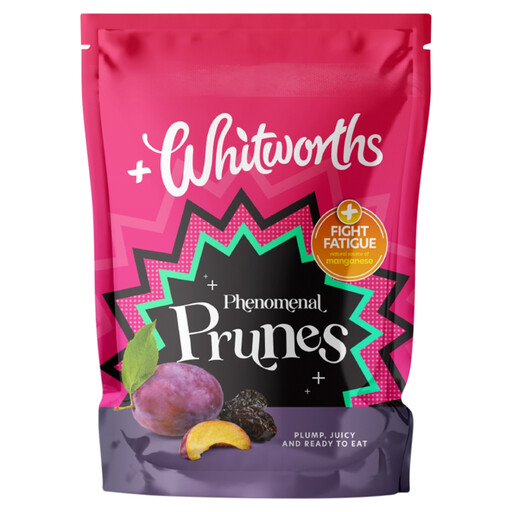
Whitworths Snacking Prunes 190g
The 190g pack offers a smaller prune format to portion for a trip. Check this product’s own nutrition panel rather than using the figures for Whitworths Favourites Prunes.
Read the current on-pack allergen information and any stone warning before packing.
View on Joybuy
 No image available
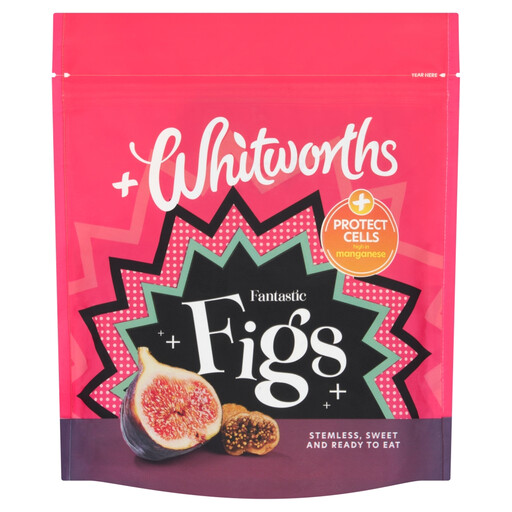
Whitworths Figs 175g
Choose this 175g pack if you prefer figs, but compare its own kcal per 100g with the prunes and apricots you are considering.
Plan how to keep the fruit in an airtight container after opening, and check the packet’s allergen information.
View on Joybuy
 No image available
J.ZAO Prebiotic Pitted Chilean Prunes 500g
Individual wrapping could make it easier to set aside portions for separate festival days. Compare the packet’s energy and ingredients with other prunes if those are your main criteria.
Check the current ingredient and allergen declarations rather than relying on the shortened product title.
View on Joybuy
 No image available
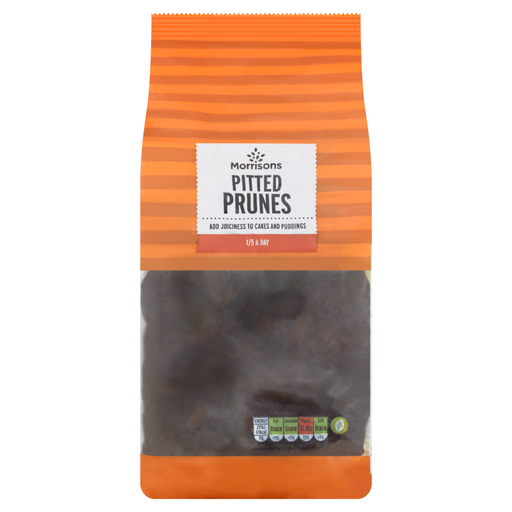
Morrisons Dried Pitted Prunes 500g
A 500g pack may call for portioning before a short trip. Compare this product’s own energy per 100g if calories are the deciding factor.
Check the instructions for storing the fruit in an airtight container after opening, along with the current allergen declaration.
View on Joybuy
 No image available
Three Squirrels Prebiotic Dried Prunes 400g
Individual wrapping may help when packing portions for a festival. If you are avoiding added sweeteners, check the current ingredients before choosing this product.
Follow the packet’s instructions for storing and eating each opened portion.
View on Joybuy
Festival dried-fruit questions
Which compared dried fruit has the lowest energy per 100g?
Whitworths Favourites Prunes have the lowest labelled figure among the products compared here: Whitworths states 141 kcal per 100g and 42 kcal per 30g. That is a comparison of these particular products, not a claim about every dried fruit or every prune pack.
Does “no added sugar” mean fewer calories?
No. Tesco lists BEAR Dried Mango as having no added sugar, while its nutrition panel states 319 kcal per 100g and 96 kcal per 30g. Check energy for a comparable weight and your intended portion separately from the ingredient claim.
Can I keep an opened pack in a festival tent?
Follow that pack’s storage instructions. ASDA’s 200g Apricots instruct refrigeration after opening, so they require a storage plan other than an unchilled tent once the pack is open. Check the instructions before choosing a pack for a trip without a fridge.
Should I check dried fruit for sulphites?
Yes, if sulphites are relevant to your allergen requirements. The Food Standards Agency identifies sulphur dioxide and sulphites as ingredients used in some dried fruit; check the declaration on the current packet rather than assuming that all packs of a particular fruit have the same ingredients.
Is an online product title enough to choose a pack?
No. Use the current pack to check ingredients, allergens, nutrition per 100g, storage instructions and any stone warning. Those details determine whether the particular dried fruit fits your festival plans more reliably than its fruit name alone.


