What should you check first?
Start with energy per 100g for comparison, then look at the quantity your dish or serving will use. Ingredients and allergen declarations can change which product is suitable even when its portion size works for you.
| Priority |
What to check |
Your needs |
| Comparable energy |
Compare kcal per 100g, then check kcal and weight for the amount you will use. Keep differences in fruit type and preparation in mind. |
I want to compare ingredients for a festival dish without mistaking a smaller stated serving for a lower-energy product. |
| Portion size |
Check the pack or recipe weight. The NHS says 30g of dried fruit counts as one 5 A Day portion and advises eating dried fruit at mealtimes rather than between meals to reduce tooth-decay risk. |
For a shared table, I would rather set out measured amounts than leave an open bag for repeated grazing. |
| Recipe ingredients |
Read the ingredients and nutrition panel for candied peel, syrup or sugar. Tesco Dried Mixed Fruit contains candied peel made with glucose syrup and sugar. |
My bake may need mixed fruit and citrus peel; if it does not, I can compare a plain-fruit ingredient instead. |
| Allergen information |
Check the current pack’s ingredients and allergen statement, including for sulphur dioxide or sulphites. Do not assume another pack size has the same formulation. |
Before serving guests with ingredient restrictions, I need to check the exact pack going into the dish. |
Brand and retailer references
These product-line examples help with label comparisons; they do not establish the energy value or ingredients of every product from a brand.
Whitworths
Its prune range includes both a larger pack and a stated 30g portion format.
- Whitworths lists Favourites Prunes at 141kcal per 100g and 42kcal per 30g; its 1DERS Gut Friendly Prunes are listed at 50kcal per 30g.
- The two prune products have different stated energy values, so check the exact variant and serving weight.
Asda
Asda Prunes are a 200g plain-prune option for comparing pack and serving information.
- Asda lists 162kcal per 100g and 54kcal per stated one-sixth-pack serving; the listed ingredients are dried prunes and water.
- Asda advises reading the current pack because ingredients and nutrition information can change.
Tesco
Tesco lists several dried-fruit types, including fruit for baking as well as single-fruit options.
- Tesco describes its Dried Mixed Fruit as a baking and cooking ingredient and lists it at 349kcal per 100g.
- That mix contains candied peel with glucose syrup, sugar and sulphur dioxide; check whether the recipe calls for those ingredients.
M&S
M&S lists dried-fruit formats including prunes, apricots, dates, raisins and mixed fruit.
- The range gives shoppers different fruit formats to consider for a snack or recipe.
- Compare the nutrition and ingredients on the particular M&S pack before deciding whether it meets your energy or recipe requirements.
Joybuy dried-fruit options
These options include individually wrapped prunes, 30g sachets of red dates and a 10g freeze-dried mango pack. Their fruit types and pack sizes serve different festival-food uses; compare each pack’s nutrition panel before choosing on the basis of calories.
 No image available
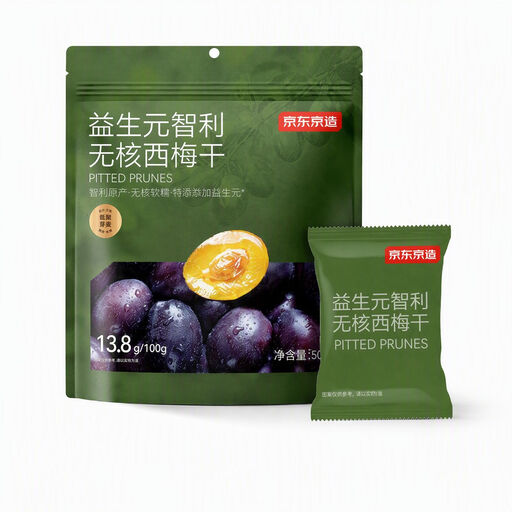
J.ZAO Prebiotic Pitted Chilean Prunes 500g
The individually wrapped format may help when setting out prunes for a shared table. Check the weight of each wrapped piece and the pack’s kcal per 100g before deciding how many to serve.
View on Joybuy
 No image available
Hao Xiang Ni Ready-to-Eat Red Dates 900g (30 × 30g)
The 30g sachets give a defined quantity for a packed meal or shared table. Red dates are different from the prunes in the energy comparison above, so check this product’s kcal per 100g rather than assuming the portioned format makes it lower in calories.
View on Joybuy
 No image available
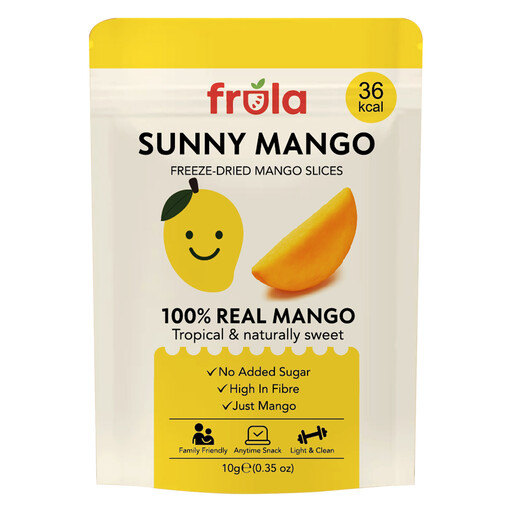
Frula Freeze-Dried Mango 10g
The 10g pack is a small quantity to carry or set out with other festival food. Its pack size alone does not indicate its energy per 100g; check the nutrition panel when comparing it with other dried fruit.
View on Joybuy
Questions about portions and labels
How can I compare dried fruit by calories?
Compare kcal per 100g, then check the weight of the amount you will eat or add to a recipe. Whitworths lists Favourites Prunes at 141kcal per 100g, Asda lists its Prunes at 162kcal per 100g, and Whitworths lists 1DERS Gut Friendly Prunes at 168kcal per 100g. That comparison covers those specific prune products, not every dried fruit.
How much dried fruit counts as a 5 A Day portion?
The NHS says 30g of dried fruit counts as one 5 A Day portion, equivalent to around 80g of fresh fruit. It advises eating dried fruit at mealtimes rather than between meals to reduce tooth-decay risk; for a festival dish, measure the amount being served rather than relying on the size of an open bag.
What if my festival bake calls for mixed fruit?
Use the fruit mix the recipe requires, but check its quantity and ingredients rather than treating it as interchangeable with plain prunes. Tesco Dried Mixed Fruit is described for baking and cooking, lists 349kcal per 100g, and contains candied peel made with glucose syrup and sugar.
Should I check dried fruit for sulphites?
Yes, particularly when serving someone with sulphite sensitivity or a relevant ingredient restriction. The Food Standards Agency says sulphur dioxide and sulphites are used in some dried fruit and can pose a risk to people with sensitivity. Read the ingredients and allergen statement on the exact pack before serving it.
Is an online grocery label enough when preparing food for guests with allergies?
Use it for an initial comparison, then check the physical pack before preparing the food. Asda advises that product ingredients, nutrition and allergy information can change, so an earlier online listing should not replace the current pack label.


