What should you check?
Start with energy for the same portion size, then check what is in the pack and how guests will serve it. A fruit type alone does not establish the nutrition of every product made from it.
| Priority | What to check | Your needs |
|---|
| Energy per portion |
Compare kcal per 30g, or multiply kcal per 100g by 0.30. The cited M&S labels give approximately 65 kcal for soft apricots, 66 for soft prunes and 74 for soft figs per 30g; Tesco lists 88 kcal per 30g for Whitworths Extra Juicy Snacking Raisins. |
I want to compare the fruit I might actually serve in equal-sized portions, rather than assume all apricots, prunes or figs have the same energy value. |
| Ingredients |
Read the full list for candied peel, syrups and added sugar, then compare the serving panel. Sainsbury’s cited mixed dried fruit contains candied peel made with glucose-fructose syrup and sugar; it lists 97 kcal and 22.2g total sugars per 30g. |
A plain-fruit option may suit my platter better than a mix, but I still want to judge the particular packs by their labels. |
| Allergen information |
Check the pack’s ingredients and precautionary statements, including for sulphur dioxide or sulphites. UK government guidance says allergens required to be declared on relevant pre-packed food must be emphasised in the ingredients list. |
Guests should be able to identify what is in each bowl before serving themselves, especially if several fruits look similar. |
| Serving format |
Look at the pack size and whether you will need small bowls, cups or a serving spoon. The NHS identifies 30g of dried fruit as one 5 A Day portion and advises eating dried fruit at mealtimes rather than between meals to reduce tooth-decay risk. |
I would rather put out measured portions with the food than leave an open bowl for all-afternoon grazing. |
| Texture and stones |
Choose a texture that works with the platter, and read any warning about fruit stones. The cited M&S soft apricots and soft prunes both carry a possible-stones warning. |
For a self-serve board, I want fruit guests can recognise and take easily, with relevant pack warnings still available. |
Relevant brand and retailer ranges
These references help compare labelled examples; they do not mean that every product in a range has the same ingredients or energy value.
Whitworths
A dried-fruit brand with a cited Extra Juicy Snacking Raisins product listed by Tesco.
- Tesco lists 88 kcal per 30g serving for that raisin product.
- Its ingredients include partially rehydrated raisins, sunflower oil and potassium sorbate; do not treat it as identical to plain raisins.
M&S
Its cited soft-fruit labels allow a comparison between specific apricot, prune and fig products.
- The cited labels state 217 kcal per 100g for apricots, 220 for prunes and 246 for figs.
- The apricots declare sulphites; the apricot and prune listings warn of possible fruit stones. Check the pack you buy.
Tesco
Its cited dried-fruit range includes prunes, raisins, dates, mango and mixed fruit.
- The range lets shoppers consider different fruit types and pack sizes.
- Use each product’s own nutrition panel and ingredients list rather than its category name to make a comparison.
Sainsbury’s
Its cited range includes single-fruit products and mixed dried fruit.
- The cited mix lists 97 kcal and 22.2g total sugars per 30g, giving a clear serving basis for comparison.
- That mix contains candied peel made with glucose-fructose syrup and sugar; its recipe does not describe the range’s plain-fruit products.
Asda
Its cited dried mango pack illustrates an ingredient-label check for a shared platter.
- The cited listing declares sulphur dioxide or sulphites and says it may contain nuts and peanuts.
- Check the mango pack’s energy and serving information separately before comparing it with other fruit.
Dried-fruit options on Joybuy
These prunes, apricots, raisins and figs offer different pack formats for a garden-party platter. Compare the label on the product you choose, particularly if you are planning 30g portions or catering for ingredient needs.
 No image available
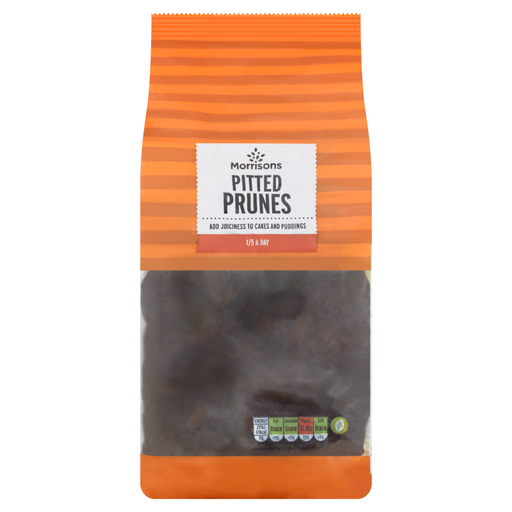
Morrisons Dried Pitted Prunes 500g
A 500g pack of pitted prunes for hosts who plan to portion fruit into smaller bowls. Check the pack’s nutrition and any fruit-stone warning before serving.
 No image available
J.ZAO Prebiotic Pitted Chilean Prunes 500g
Another pitted-prune option for a platter where you want to compare prune packs directly. The stated pack size is 500g; check its serving information, ingredients and any fruit-stone warning on the pack.
 No image available
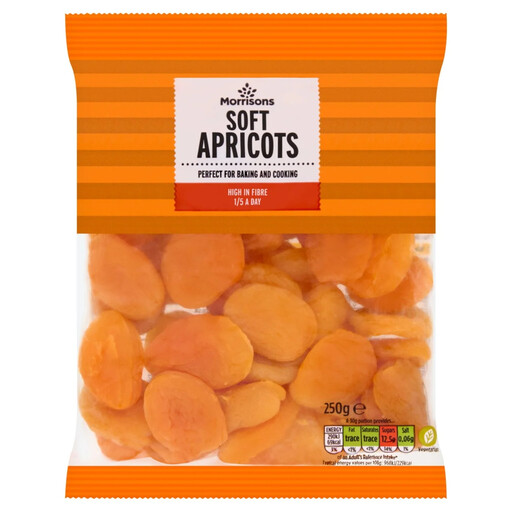
Morrisons Soft Apricots 250g
A 250g soft-apricot pack to consider if you want to serve smaller portions alongside other fruit. Check this pack’s own energy figure, sulphite declaration and any warning about stones; the M&S apricot figures elsewhere in this article do not describe this product.
 No image available
Organix Goodies Raisins 12+ Months, 12 x 14g
The 12 x 14g format offers separate small boxes instead of a communal serving bowl. Each box is 14g, not the 30g comparison portion used in this article; check the pack’s nutrition, ingredients and allergen information before putting it out for guests.
 No image available
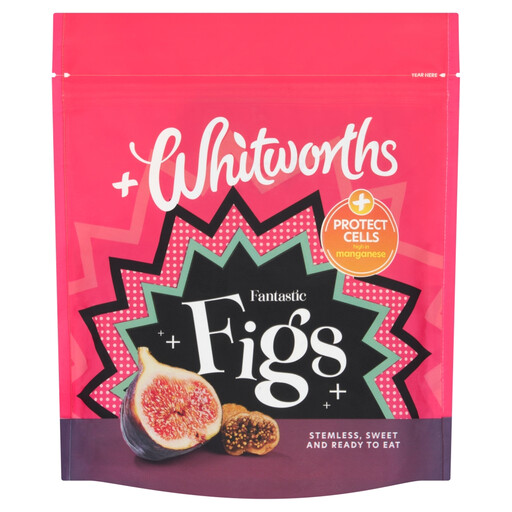
Whitworths Figs 175g
A 175g fig pack to consider for a mixed-fruit or cheese platter. Compare its own per-30g energy figure with the other packs, rather than applying the cited M&S fig figure to it, and inspect the fruit before serving.
Garden-party dried fruit questions
How much dried fruit should I put in each serving?
A measured 30g portion is a useful starting point for comparing labels and filling small bowls or cups. The NHS says 30g of dried fruit counts as one 5 A Day portion; adjust how many portions you put out to your gathering rather than leaving one large bowl for repeated handfuls.
Which of the cited apricots, prunes, figs and raisins has fewer calories?
For the named products, the cited M&S soft apricots provide approximately 65 kcal per 30g and its soft prunes 66 kcal, calculated from their per-100g labels. Its soft figs provide approximately 74 kcal per 30g, while Tesco lists 88 kcal per 30g for Whitworths Extra Juicy Snacking Raisins. Compare the actual packs you are considering because these figures are product-specific.
Can I treat a dried-fruit mix like plain fruit?
Not without reading its ingredients and nutrition panel. Sainsbury’s cited mixed dried fruit contains candied peel made with glucose-fructose syrup and sugar, and lists 97 kcal and 22.2g total sugars per 30g; that recipe should not be assumed to match a plain apricot or prune pack.
What should guests be able to check before taking dried fruit?
Make each product’s ingredients and allergen information accessible, for example by keeping its original pack next to the bowl. UK government guidance says allergens required to be declared on relevant pre-packed foods must be emphasised in the ingredients list; sulphites are declared in the cited M&S soft apricots.
Should I leave dried fruit out for all-afternoon grazing?
The NHS advises eating dried fruit at mealtimes rather than as a between-meal snack to reduce tooth-decay risk. For a garden party, you could serve measured portions with the main food or a meal-style platter instead of making dried fruit the ongoing snack.


