Holiday snack packers comparing calories
If you are packing dried fruit for a journey or picnic, compare the calories in the amount you intend to eat. A large bag and a small snack pack are not comparable portions.


For a lower-calorie dried-fruit snack, compare energy for the same 30g amount rather than judging by pack size or a ‘no added sugar’ claim. Marks & Spencer lists 198 kcal per 100g for its Collection Soft Peach and Nectarine, equivalent to about 59 kcal per 30g, but the right choice also depends on ingredients and allergen information. The NHS advises having dried fruit at mealtimes rather than grazing on it between meals.
If you are packing dried fruit for a journey or picnic, compare the calories in the amount you intend to eat. A large bag and a small snack pack are not comparable portions.
If you prefer fruit without added sugar, read the ingredients as well as the nutrition table. ‘No added sugar’ does not tell you how many calories or total sugars a portion contains.
Check the current pack for sulphites and any stated allergen or cross-contact warnings, particularly when dried fruit will be shared on a trip.
Start with a consistent portion, then check the ingredients and warnings on the exact product you plan to pack.
| Priority | What to check | Your needs |
|---|---|---|
| Calories and portion | Compare kcal per 30g. If the label gives kcal per 100g, multiply that figure by 0.3; check how much fruit the pack contains before portioning it. | I want to know what my planned portion contributes, rather than compare bags of different sizes. The NHS counts 30g of dried fruit as one 5 A Day portion. |
| Ingredients and sugars | Read total sugars and energy for the same quantity, then look for ingredients such as sugar, glucose syrup, candied peel or sweetened fruit. Do not use a ‘no added sugar’ claim as a calorie figure. | For a straightforward fruit snack, I would rather know whether a mix contains added sweetening ingredients. Tesco lists candied peel containing glucose syrup and sugar in its Dried Mixed Fruit. |
| Allergen information | Check the current ingredients and any ‘may contain’ statements for the exact pack. The Food Standards Agency identifies sulphur dioxide and sulphites as ingredients often used in dried fruit. | If I am packing food for someone with a relevant sensitivity or allergy, I need to check that product’s label rather than assume all fruit of one type has the same ingredients. |
| When it will be eaten | Plan a portion alongside a meal and consider whether a large bag needs dividing before travel. NHS guidance says dried fruit should be eaten at mealtimes. | For a picnic, I can set aside the amount I plan to eat instead of repeatedly taking fruit from an open bag throughout the day. |
The claim concerns added ingredients, not the energy or total sugars in the fruit. Tesco Groceries lists BEAR Fruit Dried Mango as having no added sugar and 96 kcal per 30g.
Compare kcal for the portion you will eat, then read the ingredients if avoiding added sugar matters to you.
Some mixes include sweetened or candied ingredients. Tesco Dried Mixed Fruit lists candied peel containing glucose syrup and sugar, alongside 105 kcal per 30g.
Check the ingredient list before choosing a mix for snacking; a product intended for baking may not match your ingredient preferences.
The Food Standards Agency notes that sulphur dioxide and sulphites are often used in dried fruit. Allergen statements can differ between products, even within the same fruit category.
Read the current pack’s ingredients and warnings when buying for someone with a relevant sensitivity or allergy.
A pack can contain several 30g portions, so its total contents should not be mistaken for a single serving.
Set aside the amount you intend to eat and include dried fruit with a meal, in line with NHS guidance.
These product-label examples show why it helps to compare individual packs rather than make assumptions about a whole range.
Marks & Spencer publishes per-100g energy and ingredient information for the dried-fruit products compared here.
Tesco Groceries gives per-30g figures for both a dried mango product and a mixed-fruit product.
Whitworths provides dried-fruit portion guidance and lists an apricot-and-mango variety pack in 30g packs.
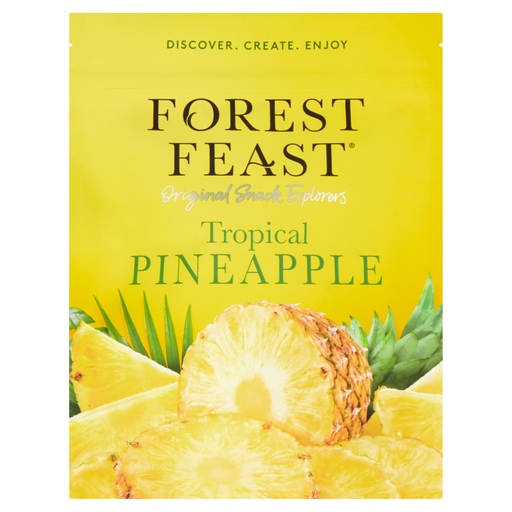
These prunes, raisins and pineapple offer different pack formats for holiday food. Compare the portion you intend to eat and check each current label for ingredients and allergen information.
 No image available
Individually wrapped prunes can be packed separately from the 500g main pack. The product information also lists low-polymer isomaltose, so check the ingredients if you want a fruit-only product.
 No image available
The 12 x 14g format provides smaller packs to take on a journey. Each pack is 14g rather than the 30g comparison amount used above; check the current label for energy, ingredients and allergen information.
 No image available
This 120g bag needs dividing if you want a measured portion for a trip. Its product information lists sulphur dioxide and possible nut cross-contact, so check the current pack when buying for someone with a relevant sensitivity or allergy.
Use the same 30g quantity for each product. The NHS counts 30g of dried fruit as one 5 A Day portion; a larger bag can contain several such portions, so check how much you plan to eat.
No. The claim does not give the product’s energy or total sugars. Tesco Groceries lists BEAR Fruit Dried Mango as having no added sugar and 96 kcal per 30g, so compare the nutrition table as well as the ingredients.
Of the specific examples compared here, Marks & Spencer’s Collection Soft Peach and Nectarine lists the lowest energy: 198 kcal per 100g, equivalent to about 59 kcal per 30g. Its Orchard Fruits Medley lists 231 kcal per 100g, or about 69 kcal per 30g. These are product-specific figures, not a ranking of every dried fruit; check the current label.
Yes, particularly when buying for someone with a relevant sensitivity. The Food Standards Agency says sulphur dioxide and sulphites are often used in dried fruit, and some of the products discussed here list sulphur dioxide. Read the ingredients and allergen information on the exact pack.
The NHS advises eating dried fruit at mealtimes rather than between meals. For a picnic or packed lunch, set aside the portion you intend to eat with the meal instead of grazing from an open bag.