For an office that wants to keep dried-fruit servings modest, choose individual packs or portion a larger pack before putting it out, and compare the stated kcal alongside each serving’s weight. Dried fruit is not a like-for-like replacement for biscuits left out for all-day snacking: the NHS advises eating it at mealtimes rather than between meals to reduce tooth-decay risk. Check sugars, added ingredients and allergen information before sharing it.
Who is this for?
Office snack organisers
If you are replacing some biscuits with dried fruit, individual packs or prepared servings make the amount offered clearer than an open communal bag. The NHS advises having dried fruit at mealtimes, so consider where and when colleagues will take it.
People comparing serving calories
A small pack can have fewer kcal than a larger serving without being lower in energy at the same weight. Whitworths lists 47kcal for a 14g box of Sunny Raisins; Tesco lists 83kcal for a 30g serving of Seedless Raisins.
Offices keeping ingredients visible
Keep the current pack available when fruit is shared or decanted. The Food Standards Agency says sulphur dioxide and sulphites are often used in dried fruits, including raisins, apricots and prunes, making the ingredient information important to colleagues who need to check for them.
What should you check?
Start with the amount each person would take, then compare labels on that serving basis. Ingredients and the timing of the snack matter as well as kcal.
| Priority | What to check | Your needs |
|---|
| Serving size |
Read kcal and weight together. Whitworths Sunny Raisins are labelled 47kcal per 14g box; Tesco Seedless Raisins are 83kcal per 30g serving. Decide how servings from a larger pack will be measured. |
I want colleagues to be able to take a defined amount without estimating a handful from an open bag. |
| Ingredients and sugars |
Read both the ingredient list and sugars per serving. Sainsbury’s Mixed Dried Fruit lists 22.2g sugars per 30g and contains candied peel made with glucose-fructose syrup and sugar; that figure alone does not separate added from naturally occurring sugars. |
If avoiding added sweetening ingredients matters to our office, I need to check the particular mix rather than assume all dried fruit is plain fruit. |
| When it is eaten |
The NHS says 30g of dried fruit counts as one 5 A Day portion. It advises eating dried fruit at mealtimes, not between meals, to reduce tooth-decay risk. |
A tin left open for repeated snacking throughout the day would not fit that NHS advice; offering a measured portion with lunch would be a different arrangement. |
| Ingredient access |
Keep the original packaging or an accurate, current ingredient record with decanted fruit. Check the declaration for sulphur dioxide or sulphites where relevant; the Food Standards Agency notes their use in some dried fruits. |
Colleagues need to be able to see what is in the shared snack before taking it. |
What can go wrong with a shared tin?
-
Treating dried fruit as an unlimited biscuit replacement
An open tin makes serving size hard to judge. The NHS also advises having dried fruit at mealtimes rather than as a between-meal snack to reduce tooth-decay risk.
Put out individual packs or measured servings with a meal instead of presenting the tin as an all-day grazing option.
-
Assuming a fruit mix has no added sweetening ingredients
Sainsbury’s Mixed Dried Fruit contains candied peel made with glucose-fructose syrup and sugar. Its label lists 22.2g sugars per 30g serving.
Check the current ingredients and serving figures for each mix. If avoiding those additions is the aim, compare it with plainer products rather than relying on the words “dried fruit”.
-
Throwing away the pack after filling the tin
Colleagues then lose access to the ingredient information. The Food Standards Agency says sulphur dioxide and sulphites are often used in some dried fruits.
Keep the original pack accessible, or place accurate information from its current label beside the fruit.
Brand and retailer references
These examples show how formats and labels can differ; each figure applies to the named product and stated serving.
Whitworths
Sunny Raisins are sold in 14g boxes, a format that gives an office organiser a defined serving to put out.
- Whitworths lists 47kcal and 9.3g sugars per box; the ingredients are raisins (99%) and sunflower oil.
- The boxed format controls the amount offered, but it does not change the NHS advice to eat dried fruit at mealtimes.
Tesco
Seedless Raisins 1kg provides an example of a larger pack that an office could divide into servings.
- Tesco lists 83kcal and 18.8g sugars per 30g serving; its ingredients are raisins and sunflower oil.
- A 1kg pack needs separate measuring if the office wants defined portions.
Sainsbury’s
Its Mixed Dried Fruit 500g provides a variety-led example to compare with plainer fruit products.
- The mix contains sultanas, raisins, currants and candied peel.
- Sainsbury’s lists 97kcal and 22.2g sugars per 30g serving; the candied peel contains glucose-fructose syrup and sugar.
M&S
The fruit-snack range listed by M&S includes several fruit types and raisin snack boxes.
- Listed formats include soft apricots, figs and prunes alongside raisin boxes, giving shoppers different pack types to examine.
- Check the label of the particular product for its serving weight, nutrition and ingredients before comparing it with another option.
Joybuy dried-fruit options
These Joybuy options include small raisin boxes and larger packs of raisins, figs and prunes. Compare the serving you plan to put out and the current pack label rather than treating pack size alone as a calorie comparison.
 No image available
Organix Goodies Raisins 12+ Months, 12 x 14g
The 12 individual 14g boxes provide a defined amount to offer each person. Check the pack’s kcal and ingredients before choosing it for the office, and follow the NHS advice to have dried fruit at mealtimes.
 No image available
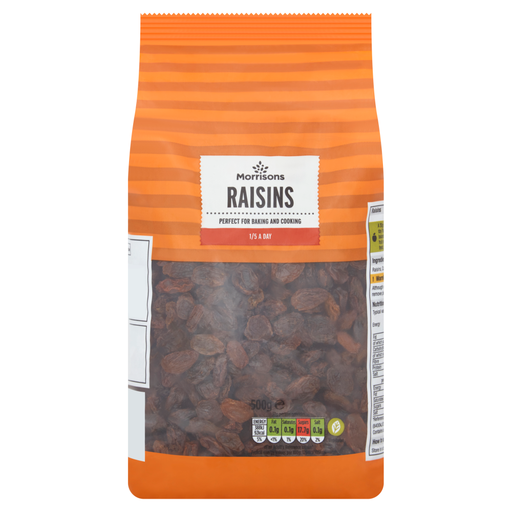
Morrisons Raisins 500g
This 500g pack suits an office prepared to measure servings before sharing the raisins. Check its current nutrition panel for kcal at the amount you intend to offer.
 No image available
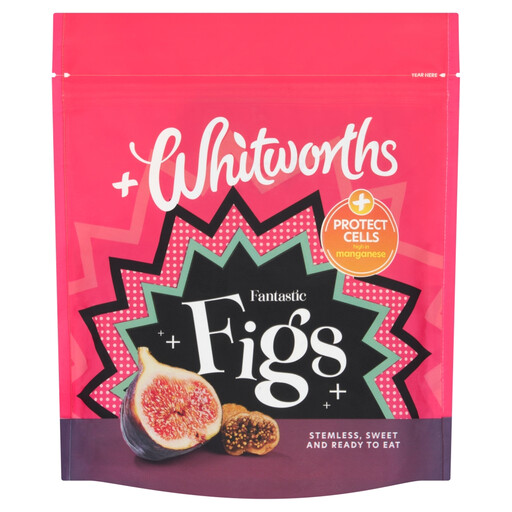
Whitworths Figs 175g
These figs offer a different fruit choice from raisins. Divide the 175g pack into the servings you intend to offer, and check this product’s label for the corresponding kcal and allergen information.
 No image available
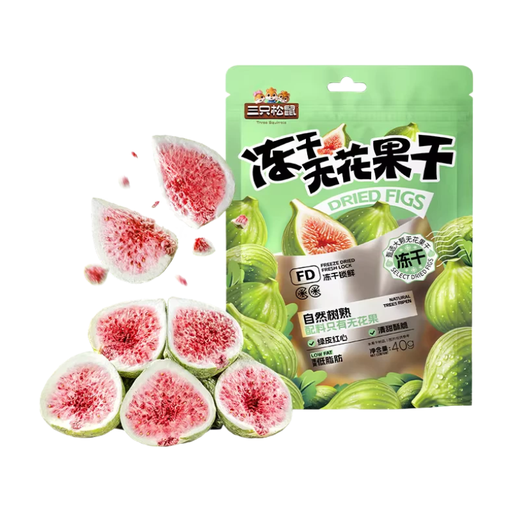
Three Squirrels Freeze-Dried Figs 40g
This is a 40g pack of freeze-dried figs, not a 30g serving. Read its kcal for the amount you would offer before comparing it with other dried-fruit packs.
 No image available
J.ZAO Prebiotic Pitted Chilean Prunes 500g
For an office considering prunes instead of raisins or figs, check the ingredients and kcal for the amount that would be shared. Keep the pack information available to colleagues.
Common questions
How do I compare the calories in two dried-fruit packs?
Compare kcal alongside the weight of each stated serving, then consider the amount you would actually put out. Whitworths lists 47kcal per 14g box of Sunny Raisins, while Tesco lists 83kcal per 30g serving of Seedless Raisins; those are different-sized servings, not an equal-weight comparison.
Should an office leave dried fruit out for all-day snacking?
That would conflict with NHS advice to eat dried fruit at mealtimes rather than between meals to reduce tooth-decay risk. If you offer it at work, consider measured servings alongside a meal instead of an open tin for repeated snacking.
Does dried fruit count towards 5 A Day?
Yes. The NHS says 30g of dried fruit counts as one portion of 5 A Day and advises having it at mealtimes rather than as a between-meal snack.
Why keep the packaging beside a shared dried-fruit tin?
It lets colleagues check the current ingredients and allergen information before taking any fruit. The Food Standards Agency notes that sulphur dioxide and sulphites are often used in dried fruits such as raisins, apricots and prunes, so do not assume a decanted product is free of them.


