New parents comparing convenient fruit portions
If dried fruit is going into breakfast or another meal, comparing the same serving size helps you distinguish the fruit from the convenience of its packaging.


Compare the calories in the portion you intend to eat, rather than choosing the pack with the smallest calorie figure: Tesco Groceries lists Crazy Jack Organic Soft Apricots at 47kcal per 30g, while Sainsbury's lists Whitworths Golden Apricots at 55kcal and its Ready To Eat Apricots at 68kcal per 30g. Those figures compare three apricot products, not every dried fruit. For routine between-meal fruit snacks, the NHS advises choosing fresh fruit and having dried fruit at mealtimes to reduce tooth-decay risk; ingredients and child-appropriate preparation need separate checks.
If dried fruit is going into breakfast or another meal, comparing the same serving size helps you distinguish the fruit from the convenience of its packaging.
Apricot products can differ in their preservative ingredients. Check the declaration on the exact pack if sulphur dioxide or sulphites matter to your household.
An adult-sized dried-fruit snack is not automatically suitable for a baby or young child. Size, shape, texture, possible stones and supervision all matter when serving it.
Start with a comparable portion, then decide when the fruit will be eaten and who will eat it before checking the exact ingredients.
| Priority | What to check | Your needs |
|---|---|---|
| Comparable calories | Compare kcal for the same weight, such as 30g, or use the per 100g label. Tesco Groceries lists Crazy Jack Organic Soft Apricots at 47kcal per 30g; Sainsbury's lists Whitworths Golden Apricots at 55kcal and its Ready To Eat Apricots at 68kcal per 30g. | I want to compare what I would actually serve, not assume a smaller pack contains lower-calorie fruit. Tesco Groceries lists its raisin mini-box at 40kcal, but that box contains 14g rather than 30g. |
| When it is eaten | The NHS says 30g of dried fruit counts as one 5 A Day portion and advises eating dried fruit at mealtimes rather than between meals to reduce tooth-decay risk. | For a routine fruit snack between meals, I would choose fresh fruit; dried fruit could instead go with a meal. |
| Ingredients and sugars | Read the ingredients and sugars for the stated serving. Sainsbury's lists 20.6g sugars in its 30g Dried Pineapple pack; Tesco Groceries lists 8.4g sugars in a 14g raisin box. Check whether a mix contains sweetened fruit. | I want to know whether I am buying plain fruit, a sweetened mix or a portion of a different size. |
| Sulphites | Check the ingredient and allergen declaration on the exact pack. The Food Standards Agency identifies sulphur dioxide and sulphites as ingredients used in dried fruit; the Whitworths and Sainsbury's apricot listings include sulphur dioxide. | If someone in my household needs to avoid sulphites, the fruit name alone is not enough to choose a pack. |
| Serving a child | Check size, shape and texture, and inspect fruit for stones. NHS guidance on preparing food safely for babies says to avoid round shapes and firm foods and to supervise children while they eat. | I need to assess a child's serving separately from a convenient portion intended for an adult. |
Tesco Groceries lists 40kcal for a 14g raisin box. That number cannot be compared directly with calories listed for 30g of apricots.
Compare equal weights first, then decide whether a small box is the portion format you want.
Preservatives differ between products, and the checked Whitworths and Sainsbury's apricot listings include sulphur dioxide.
Read the current ingredient and allergen declaration for the exact product, particularly if sulphites are a concern in your household.
The NHS advises having dried fruit at mealtimes rather than between meals to reduce tooth-decay risk.
Consider dried fruit with a meal and fresh fruit for a routine fruit snack between meals.
A convenient pack does not establish that its contents have the right shape or texture for a young child, and fruit should be checked for stones.
Follow NHS guidance on preparing food safely for babies, adapt the serving to the child and supervise them while eating.
These product-specific examples help illustrate label differences; a figure for one product does not describe everything sold under that brand.
Tesco Groceries lists Crazy Jack Organic Soft Apricots with a 30g serving figure.
Sainsbury's lists Whitworths Golden Apricots with nutrition information for a 30g serving.
Its own-label apricots and pineapple show why the fruit and serving size both matter.
Tesco Seedless Raisins come in boxes with a stated 14g serving.
Its plain raisins and mixed fruit have different ingredient lists and energy figures.
These options cover small raisin boxes, pitted prunes and a 10g freeze-dried peach pack. Their pack formats differ, so compare labels on a common weight before making a calorie-based choice.
 No image available
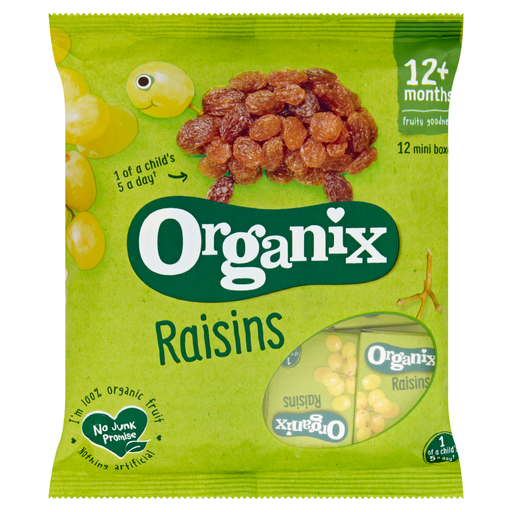
The individual 14g boxes offer a defined amount when planning a meal or lunchbox. The 12+ Months designation does not replace a check of the serving's size and texture or supervision while a child eats; one box is also smaller than the NHS 30g dried-fruit portion.
 No image available
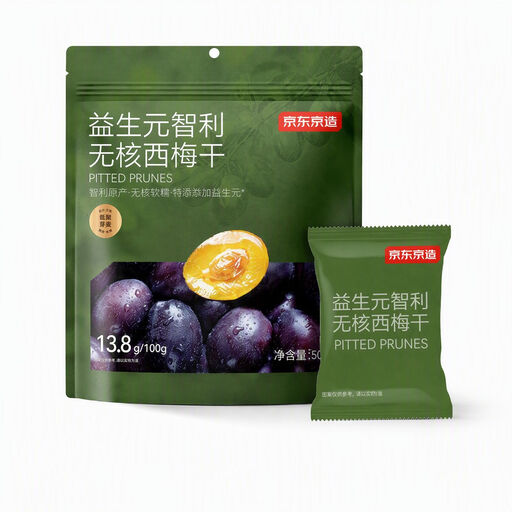
Individually wrapped prunes may suit a household that wants to take out a planned amount from a 500g pack. Check the nutrition label for the weight you intend to serve, and inspect fruit despite the pitted description before offering it to a child.
 No image available
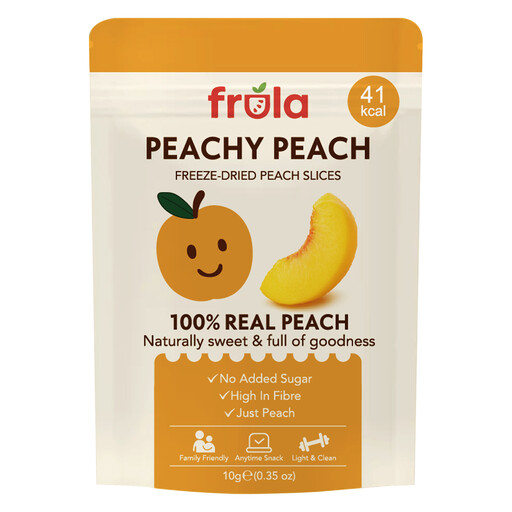
The 10g peach pack provides a small, fixed amount, but its pack size alone does not establish how its calories compare with other dried fruit. Check the per 100g nutrition figure for a like-for-like comparison and assess the pieces' texture before serving them to a young child.
The NHS says 30g of dried fruit counts as one 5 A Day portion. It is also a useful common weight for comparing calorie labels, although the amount in a mini-box may be different.
For tooth health, the NHS advises eating dried fruit at mealtimes rather than between meals. Fresh fruit is an alternative for a routine between-meal fruit snack.
No. The Sainsbury's listings for Whitworths Golden Apricots and Sainsbury's Ready To Eat Apricots both include sulphur dioxide. Check the current ingredient and allergen declaration of whichever exact pack you intend to buy.
Do not assume an adult snack pack is ready to serve to a baby. NHS guidance says solids can be introduced from around 6 months and advises adapting food size, shape and texture, avoiding round shapes and firm foods, and supervising children while they eat. Inspect fruit for stones before serving it.