Travellers comparing calories
If you are choosing dried fruit by its listed energy, compare kcal per 100g alongside the amount you plan to eat. A fruit label alone does not tell you either figure.


For a lower-calorie dried-fruit snack on a road trip, compare the listed kcal per 100g, then decide how much you will actually pack. ASDA Prunes and M&S Collection Soft Apricots have lower listed figures than the fig and mixed-fruit examples examined here, but their moisture content makes this an imperfect comparison with drier fruit. A divided pack can make portions easier to plan, while ingredients and allergens still need checking on the current packet.
If you are choosing dried fruit by its listed energy, compare kcal per 100g alongside the amount you plan to eat. A fruit label alone does not tell you either figure.
Small packs or a serving measured before departure offer a defined amount to take, rather than leaving the whole bag open for repeated snacking.
Ingredient lists, carbohydrate figures and allergen statements matter when deciding whether a particular pack fits your requirements. Check the packet you buy, especially for products containing sulphites.
Start with the nutrition panel, then look at the portion and recipe. Pack format matters most when it changes how much you are likely to take on the trip.
| Priority | What to check | Your needs |
|---|---|---|
| Listed energy | Compare kcal per 100g and the grams you intend to eat. Check whether water or partial rehydration affects comparisons with drier fruit. | I want a lower listed calorie figure without mistaking a soft, moist product for a like-for-like comparison with every dried fruit. ASDA Groceries lists 162 kcal per 100g for ASDA Prunes; Marks & Spencer lists 217 kcal per 100g for Collection Soft Apricots. |
| Portion format | Check the amount in each small pack, or measure some from a larger bag before travelling. The NHS identifies 30g as one dried-fruit portion for 5 A Day. | A divided pack would help me set aside an amount for the journey. Tesco Groceries lists Whitworths Sunny Raisins as six 30g packs; that format alone does not establish their calorie content. |
| Ingredients | Read the full list for sweetened fruit, syrups and other added ingredients. Compare the nutrition panels rather than assuming all mixed-fruit bags have the same recipe. | If I am choosing a simpler fruit snack, I want to know what else is in the bag. Sainsbury's Mixed Dried Fruit includes candied peel made with glucose-fructose syrup, while a Marks & Spencer mix includes sweetened fruit. |
| Allergens | Check the current ingredient and precautionary allergen statements for sulphites, nuts and peanuts where relevant. | I need a pack that meets my own allergen requirements. Marks & Spencer lists sulphites in Collection Soft Apricots, and ASDA Groceries lists sulphites plus a may-contain nuts and peanuts statement for its Dried Mango. |
| Carbohydrate | Read carbohydrate per serving as well as per 100g, using the amount you expect to eat. | If carbohydrate figures affect my food choices, I need the value for my planned portion. Diabetes UK notes that a 30g serving of dried fruit can contain as much as 20g carbohydrate; that is not a figure for every product. |
The listed energy of dried-fruit products differs, and moisture in soft or rehydrated fruit complicates a comparison based only on kcal per 100g.
Compare the per-100g figures, note any water or rehydration in the description, and work out how many grams you will pack.
Some mixed-fruit products contain sweetened fruit or candied peel, so the recipe may differ from a single-fruit pack.
Read the ingredients and nutrition panel for the particular mix before choosing it for a lower-calorie snack.
A large pack does not define how much you will eat during a journey. The NHS uses 30g as a dried-fruit portion for 5 A Day, while the pack's own nutrition panel may use a different serving size.
Set aside a measured amount before leaving, or check the weight of each individually packed portion.
Sulphites appear in some dried-fruit ingredient lists, and precautionary nut or peanut statements can also affect the choice.
Read the packet you are taking, rather than relying solely on an earlier online description.
These examples illustrate different nutrition figures, recipes and pack formats; they are not a list of products available from Joybuy.
ASDA Groceries lists 200g packs of prunes and figs with different energy figures.
Marks & Spencer lists both soft apricots and mixed-fruit products with distinct recipes.
Sainsbury's lists a 1kg mixed dried-fruit pack that may suit sharing or use in recipes.
Tesco Groceries lists Whitworths raisins in both divided and larger-bag formats.
Tesco Groceries also lists its own-label Seedless Raisins as a 12-pack weighing 168g in total.
Sunsweet Growers describes a prune-focused dried-fruit range.
These raisin and prune packs offer different ways to plan dried-fruit portions for a road trip. Compare each pack's current nutrition and ingredients before choosing by its format.
 No image available
The 12 x 14g format provides separate packs to set aside for a journey. Check the packet's nutrition and ingredients if listed energy or additives matter to your choice.
 No image available
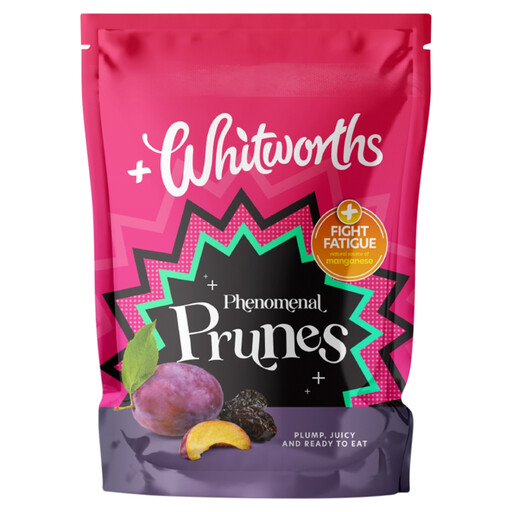
This 190g prune pack is an option if you prefer to measure an amount before travelling. Compare its own nutrition panel with other prunes, and check the current ingredient and allergen statements.
 No image available
The prunes are described as individually wrapped within a 500g pack, so you can set aside a chosen number for the trip. Check the current ingredients and nutrition panel rather than treating wording on the product title as a nutritional conclusion.
 No image available
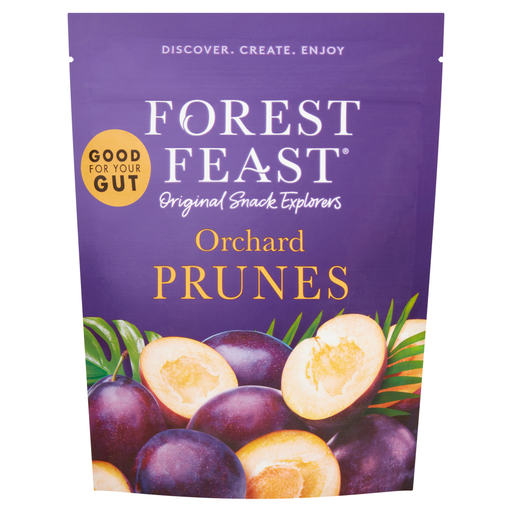
With a 200g pack, decide how much to take rather than using the full pack as a serving. Read its current nutrition and ingredient information when comparing it with other prune products.
 No image available
This 400g prune pack is another format to consider when planning how much to bring. Check its ingredient list for syrups and sweeteners if you want to distinguish it from a plain-fruit product; the name alone does not establish a health benefit.
Compare listed kcal per 100g, then calculate what your planned serving represents. ASDA Groceries lists 162 kcal per 100g for ASDA Prunes and 237 kcal per 100g for ASDA Figs; Marks & Spencer lists 217 kcal per 100g for Collection Soft Apricots. The prunes contain water and the apricots are partially rehydrated, so those figures are not a direct dry-matter comparison with drier fruit.
The NHS says 30g of dried fruit counts as one portion of 5 A Day. A 30g pack gives you that defined quantity, but it does not by itself tell you the pack's calories, sugars or ingredients.
Sulphites are used in some dried fruit, according to the Food Standards Agency. If sulphites are relevant to your requirements, read the current pack's allergen statement; Marks & Spencer lists them in Collection Soft Apricots, and ASDA Groceries lists them in its Dried Mango.
Use the carbohydrate figure for the product and the amount you intend to eat, rather than assuming all dried fruit has the same value. Diabetes UK notes that a 30g serving can contain as much as 20g carbohydrate.
Use it to identify what to compare, but check the packet you buy for the current ingredients, nutrition and allergen information. Tesco notes that food products can be reformulated and those details may change.