People comparing a small dried-fruit portion
If energy per portion is your main consideration, compare plain products at the same weight. A coated snack and a partially rehydrated prune product need not have similar values.


For a lower-energy dried-fruit portion, compare labels at the same weight rather than assuming all dried fruit is alike: Sainsbury's lists Whitworths Prunes at 48 kcal per 30g, while ASDA lists its prunes at 162 kcal per 100g, or about 49 kcal per 30g. Neither is automatically the right pre-workout snack. Consider whether you need food before that session, how much you intend to eat and the NHS advice to have dried fruit at mealtimes rather than as a between-meal snack.
If energy per portion is your main consideration, compare plain products at the same weight. A coated snack and a partially rehydrated prune product need not have similar values.
An individual pack can make the amount easier to take with you. Check its weight and energy value rather than treating portioned packaging as a lower-calorie claim.
Read the current label if you need to avoid sulphites or milk ingredients, and check whether the pack warns that fruit stones may remain. The Food Standards Agency identifies sulphites as an ingredient used in some dried fruit.
Start with a like-for-like portion, then decide whether dried fruit suits the timing of your workout and any ingredient restrictions.
| Priority | What to check | Your needs |
|---|---|---|
| Energy per portion | Compare kcal per 100g, or convert stated values to the same 30g amount. Check whether the fruit is plain, partially rehydrated or coated. | I want to compare the amount I would actually eat, not packets of different sizes. Sainsbury's lists Whitworths Prunes at 48 kcal per 30g; ASDA lists its prunes at 162 kcal per 100g, equivalent to about 49 kcal per 30g. |
| Workout timing | Consider the time since your last meal, the intended portion and whether you find dried fruit comfortable to eat before activity. A pre-workout snack is not necessary for every session. | If I have already eaten, I may not need another snack. If I do take one, I want an amount that fits the session and my usual eating routine. |
| Eating occasion | The NHS says 30g of dried fruit counts as one 5 A Day portion and advises eating it at mealtimes rather than as a between-meal snack. | I often train between meals, so I need to consider whether dried fruit fits that routine or whether another snack format would work better. |
| Ingredients and warnings | Read the current allergen statement for sulphites or milk ingredients. Check any warning about remaining stones, especially if eating on the move. | I need to know what is in this particular pack before choosing it; the fruit name alone does not tell me whether it has a coating or contains sulphites. |
| Portion format | Check the weight of an individual pack or the serving shown on a larger bag. Compare the nutrition values for that amount. | A measured pack would be convenient on my journey, but I still want to know how its portion compares with loose fruit. |
A coated-raisin bag and a serving of prunes can have different weights as well as different formulations. Their whole-pack figures do not show which has less energy for the same amount.
Use the labels' kcal per 100g figures, or calculate both products at a common weight such as 30g.
The NHS advises having dried fruit at mealtimes rather than between meals. That distinction matters if your pre-workout snack would regularly be eaten on its own.
Consider the timing of your meal and workout before making dried fruit your usual choice.
Some apricot products list sulphites, coated raisins can contain milk ingredients, and prune or apricot packs may warn that stones remain.
Check the current pack's ingredients, allergen statement and warnings for the exact product you intend to eat.
Tesco's listing for Sunsweet Amazin Prunes and Sunsweet's own pitted-prunes page give different energy values for a 40g serving. A brand name alone is not enough to identify the nutrition values of a particular pack.
Compare the exact product and serving size on the current physical label.
Whitworths has prune, apricot and portion-packed raisin products in the cited UK retailer listings.
Sunsweet offers pitted-prune products; check which particular pack a nutrition figure describes.
ASDA's listed prune and apricot products provide per-100g figures that can be compared at an equal weight.
Sainsbury's listing for Whitworths Prunes gives a stated 30g serving, useful when comparing portions.
Tesco's listed yoghurt-coated raisins illustrate how a coating changes the choice from plain dried fruit.
M&S Collection Apricots provide another labelled apricot example for a per-100g comparison.
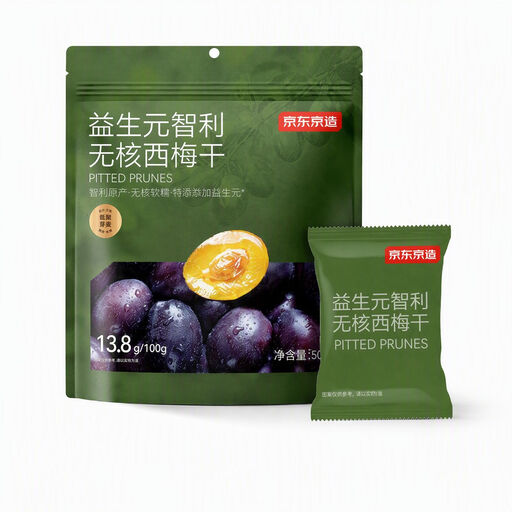
This prune option is relevant if you want dried fruit to carry before a workout. Compare the amount you plan to eat with the energy values on its current pack; it should not be assumed to match the values of other prune products.
 No image available
The prunes are individually wrapped, which may be useful when taking a measured amount with you. Check the current pack's nutrition panel and ingredients for the amount you intend to eat; do not treat the sugar-free wording in the longer product title as an established nutrition claim.
Of the cited products with comparable figures, Sainsbury's lists Whitworths Prunes at 48 kcal per 30g and ASDA lists its prunes at 162 kcal per 100g, or about 49 kcal per 30g. Those values describe the specified products, not prunes in general.
No particular dried-fruit snack is necessary for every workout; consider your preceding meal, the session and what you prefer to eat before activity. The NHS advises eating dried fruit at mealtimes rather than as a between-meal snack, so think about whether that fits your training schedule.
Check both formulation and portion weight. Tesco lists its yoghurt-coated raisins at 119 kcal per bag, and the coating makes them a different product from plain raisins; compare equal weights before drawing an energy comparison.
Yes, if an ingredient affects your choice. The Food Standards Agency identifies sulphites as an ingredient used in dried fruit, and the listed ASDA and Whitworths apricot products contain sulphites. Check the current pack's allergen statement rather than relying on the type of fruit alone.