Parents planning a snack before dinner
If food will be eaten on its own between meals, timing matters more than finding the smallest dried-fruit pack. The NHS advises serving dried fruit at mealtimes to reduce the risk of tooth decay.


For a standalone snack between school and dinner, choose something other than dried fruit: the NHS advises eating dried fruit at mealtimes rather than between meals to reduce the risk of tooth decay. If you serve dried fruit with a meal, compare calories for the same 30g amount and check whether the fruit is coated; a small pack is not automatically lower in calories for its weight.
If food will be eaten on its own between meals, timing matters more than finding the smallest dried-fruit pack. The NHS advises serving dried fruit at mealtimes to reduce the risk of tooth decay.
When dried fruit is part of a meal, compare equal amounts rather than the calories printed for differently sized packs. Check the ingredient list as well as whether the fruit has a coating.
Some dried apricots contain sulphur dioxide, while coated raisins can contain milk or soya. Check the product’s current allergen information and any stone or pit warning before serving it to a child.
Decide whether the food is a between-meal snack or part of a meal before comparing dried-fruit labels.
| Priority | What to check | Your needs |
|---|---|---|
| Eating occasion | Is the fruit being served with a meal or eaten alone before dinner? The NHS says 30g of dried fruit counts as one 5 A Day portion, but advises eating it at mealtimes rather than between meals to reduce the risk of tooth decay. | If I need a standalone after-school snack, I’ll choose another type of food. Dried fruit can instead be considered when it is part of a meal. |
| Calories and amount | Compare energy for the same 30g of fruit, not for different pack sizes. Tesco lists Crazy Jack Organic Soft Apricots at 47 kcal per 30g and Whitworths Dried Golden Malatya Apricots at 55 kcal per 30g; check the portion you actually serve. | A 14g box and a 30g serving tell me different things. I want to measure an amount and compare like with like when dried fruit is served with a meal. |
| Coatings | Read the ingredients and the energy declaration. Tesco lists a 64% yoghurt-flavoured coating on its coated raisins and 119 kcal per 25g bag; Whitworths lists 118 kcal per 25g for its yoghurt-coated raisins. | When lower calories are my priority, I’d compare an uncoated fruit option before choosing a coated raisin product. |
| Ingredients and warnings | Check highlighted allergens, preservatives and any stone or pit warning on the current pack. Tesco lists sulphur dioxide in Whitworths Golden Malatya Apricots; coated raisin ingredients can include milk or soya. | I need to know what is in this particular product and check for a stone warning before giving it to a child. |
Counting towards 5 A Day does not change the NHS advice to eat dried fruit at mealtimes, rather than between meals, to reduce the risk of tooth decay.
Decide when the child will eat first. For a standalone snack before dinner, choose another type of food; keep dried fruit for a meal.
A 14g raisin box and a 25g coated-raisin bag cannot be compared by their printed per-pack calorie figures alone. Tesco lists Crazy Jack Soft Apricots at 47 kcal per 30g and Whitworths Golden Malatya Apricots at 55 kcal per 30g.
Use the same weight when comparing labels, then measure the amount served with the meal.
Coating changes the ingredients and the nutrition figures. Tesco lists its yoghurt-flavoured coated raisins as 64% coating, with 119 kcal per 25g bag.
Compare the full ingredient list and energy declaration with an uncoated product rather than relying on the fruit name.
Ingredients differ: Tesco lists sulphur dioxide in Whitworths Golden Malatya Apricots, and Whitworths lists milk and soya allergens in its yoghurt-coated raisins. Pitted-fruit products may also carry a warning about occasional stone fragments.
Read the current pack’s allergen information and any stone warning, particularly before serving pitted fruit to a young child.
These named products illustrate differences in serving size, ingredients and coatings; the same checks apply to other dried-fruit packs.
Its raisin boxes, dried apricots and coated raisins show why format matters.
Sunsweet Stoned Prunes provide a prune example for comparing nutrition per 100g.
Its coated-raisin listing gives a clear example of how a coating affects the product being compared.
Its Mixed Dried Fruit is an example of a larger pack that needs measuring for a serving comparison.
Its Organic Soft Apricots provide a clearly labelled 30g dried-fruit comparison.
These prune and raisin products are options to consider when dried fruit will be served with a meal. Compare their current pack labels for calories, ingredients and the amount you intend to serve.
 No image available
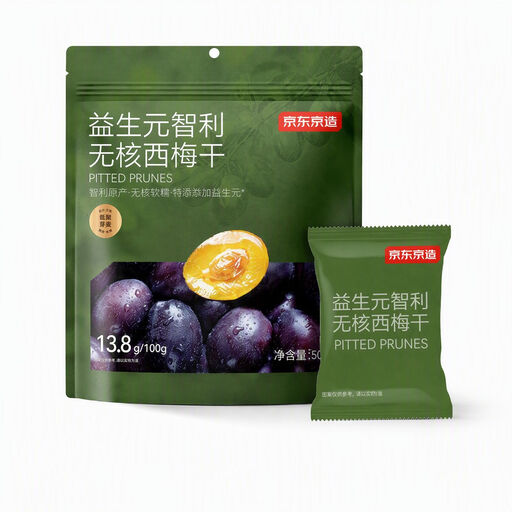
Consider these pitted prunes for use with a meal, rather than as a standalone after-school snack. The pack is labelled 500g; check its nutrition panel for the amount you plan to serve and its packaging for any stone warning.
 No image available
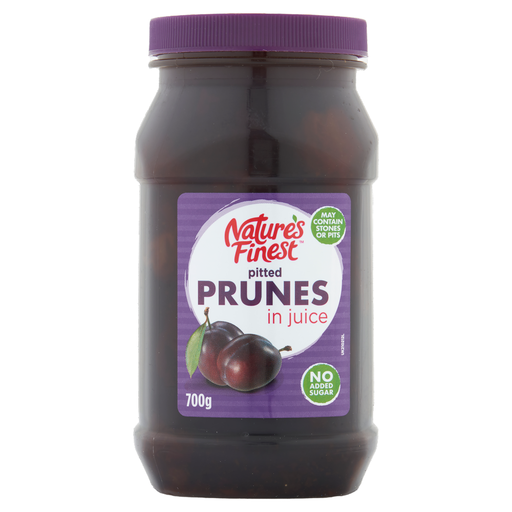
For a meal serving, measure an amount from this 700g pack rather than comparing its total pack weight with a small box. Check the nutrition and ingredient declarations for this prune product, along with its stone or pit-fragment warning.
 No image available
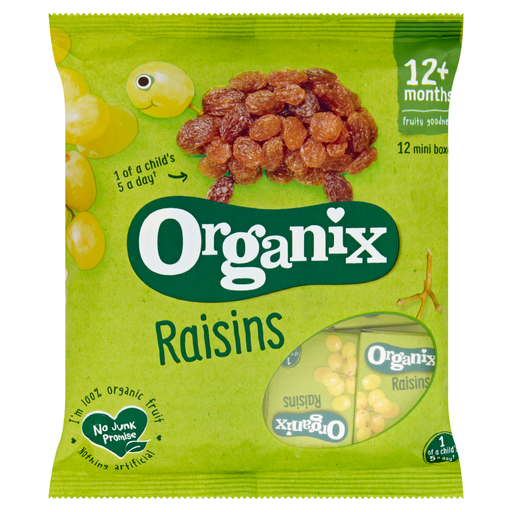
The 12 individual 14g boxes make the amount per box clear, but their small size does not change the NHS advice to serve dried fruit with meals rather than between them. Compare calories for an equal weight if choosing between these raisins and another dried fruit.
The NHS advises eating dried fruit at mealtimes rather than as a between-meal snack to reduce the risk of tooth decay. If the child will eat well before dinner, choose another snack type; if you use dried fruit, serve it with a meal.
Compare the same weight of each product. The NHS identifies 30g of dried fruit as one 5 A Day portion, making 30g a useful label-comparison amount; a 14g box and a 25g bag cannot be compared by their per-pack calorie figures alone.
Not necessarily. Tesco lists Sunsweet Stoned Prunes as no added sugar, with 229 kcal and 38g sugars per 100g. Check the energy declaration and serving weight separately from the added-sugar claim.
Compare them with uncoated fruit before deciding. Tesco lists its yoghurt-flavoured coated raisins at 119 kcal per 25g bag, with a coating that makes up 64% of the product; Whitworths lists 118 kcal per 25g for its yoghurt-coated raisins. Check equal serving weights, and keep dried fruit with meals in line with NHS advice.
Read the current pack’s ingredients, highlighted allergens and any stone warning. Tesco lists sulphur dioxide in Whitworths Golden Malatya Apricots, while coated raisins can contain milk or soya. GOV.UK says food businesses must provide information when any of the 14 regulated allergens are ingredients.