Top-up shoppers comparing calories
If you are adding one pack to a small shop, compare kcal per 100g first, then check how much you would put in a serving.


For a lower-calorie dried-fruit choice, compare the stated kcal per 100g and the amount you expect to eat, rather than choosing by fruit type or a ‘no added sugar’ claim. Among three named retailer products, Waitrose & Partners lists its No.1 Perfectly Soft Figs at 216 kcal per 100g, Tesco lists its Ready To Eat Prunes at 221 kcal, and ASDA lists its Figs at 237 kcal; those figures do not rank every dried-fruit product.
If you are adding one pack to a small shop, compare kcal per 100g first, then check how much you would put in a serving.
If ingredients matter alongside calories, check ‘no added sugar’ separately from the energy and total sugars on the nutrition label.
Small boxes or a pack you can divide into servings may help with lunchboxes or meals. The NHS uses 30g of dried fruit as one 5 A Day portion and advises eating it at mealtimes.
Start with energy per 100g to compare equal weights, then look at the labelled serving and the pack format you would actually use.
| Priority | What to check | Your needs |
|---|---|---|
| Energy | Compare kcal per 100g on the same basis. Waitrose & Partners lists No.1 Perfectly Soft Figs at 216 kcal, Tesco lists Ready To Eat Prunes at 221 kcal, and ASDA lists Figs at 237 kcal per 100g. These are figures for named products, not their fruit types as a whole. | I want to compare packs by their stated energy, rather than assume that all figs or prunes have the same value. |
| Portion | Check the weight behind each per-serving figure against the amount you would eat. Waitrose & Partners lists 65 kcal per 30g of its soft figs; Tesco lists 66 kcal per 30g of its ready-to-eat prunes. | A smaller serving is easier for me to plan if I know its weight, especially when buying a larger bag. |
| Ingredients | Read the ingredients and energy line separately. Sainsbury’s lists BEAR dried pineapple as having no added sugar, while its product information gives 303 kcal per 100g. | I may want to avoid added sugar, but I do not want that claim to stand in for a calorie comparison. |
| Pack label | Check the physical pack’s current nutrition, ingredients and allergen declarations, particularly if you have an ingredient restriction. For 5 A Day portions, the NHS counts 30g of dried fruit and advises having it at mealtimes. | If I am buying for someone with an allergy or planning portions for meals, the pack details matter as much as the product name. |
Sainsbury’s lists BEAR dried pineapple as having no added sugar and declares 303 kcal per 100g. Waitrose & Partners lists its No.1 Perfectly Soft Figs at 216 kcal per 100g; the ingredient claim alone does not explain that difference.
Compare kcal per 100g for the particular packs you are considering, then use the ingredients list for your separate added-sugar preference.
A per-serving calorie figure only describes the stated weight. Waitrose & Partners gives 65 kcal per 30g of its soft figs, and Tesco gives 66 kcal per 30g of its ready-to-eat prunes.
Check whether the labelled serving resembles the amount you would take from the pack.
The NHS advises eating dried fruit at mealtimes rather than between meals to reduce its impact on teeth.
Plan when you will eat it and take out a portion instead of repeatedly returning to the bag.
A name does not give you the full ingredients or allergen declaration needed for an allergy or other ingredient restriction.
Read the physical pack before buying or eating, especially when a particular ingredient must be avoided.
Whitworths offers Sunny Raisins in a portioned format.
Tesco’s Ready To Eat Prunes provide a named own-label product for comparing energy and serving size.
ASDA Figs 200g are another named product with a per-100g energy figure.
M&S lists fruit snacks, giving shoppers another range to examine during a top-up shop.
These Joybuy options cover prunes, raisins and red dates. Compare each product’s own kcal per 100g, serving size and ingredients before deciding which suits your top-up shop.
 No image available
The individually wrapped format may help you take a planned portion from the 500g pack. Check the nutrition and ingredients panel before relying on the listing’s ‘Sugar-Free’ claim: the supplied product information also reports sugar and lists isomaltose.
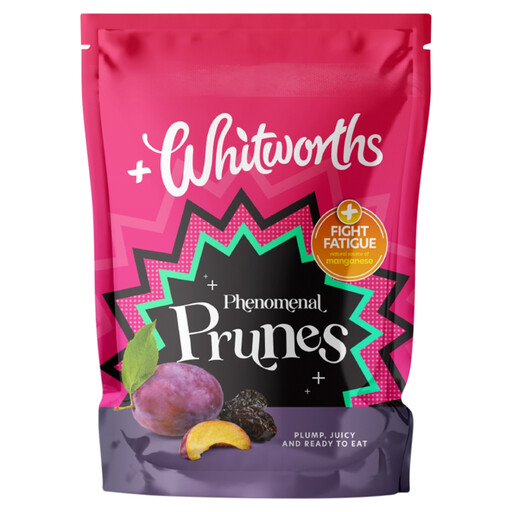 No image available
The 190g pack is an option to divide into servings for meals. Its supplied allergen information conflicts, so check the physical pack’s allergen declaration before choosing it if you have an allergy.
 No image available
The twelve 14g boxes give you a stated amount per box for planning portions. Check the pack’s energy information rather than assuming a small box means fewer kcal per 100g.
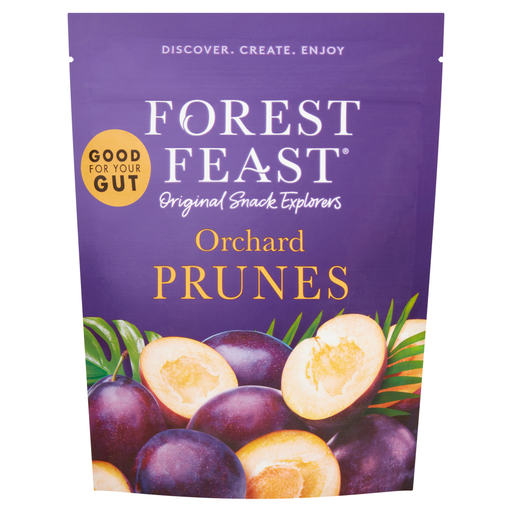 No image available
You can divide this 200g pack into portions for meals; compare its own energy label with other prunes before choosing. The supplied product information mentions potassium sorbate, so check the pack if you are avoiding preservatives.
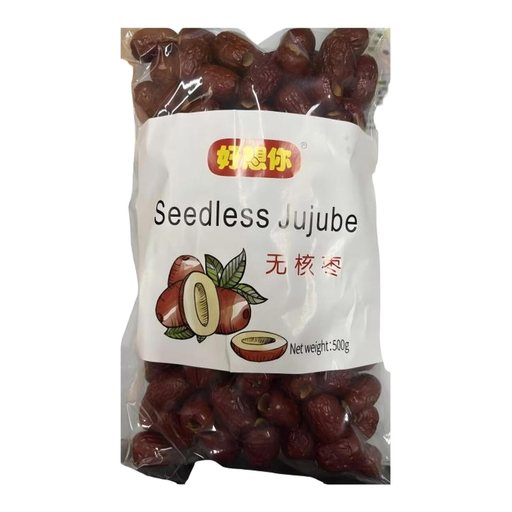 No image available
These pitted red dates offer a different dried-fruit choice for the shop. Check the pack’s kcal per 100g and the amount you plan to use before choosing them for a lower-calorie serving.
Use the weight you expect to eat. The NHS counts 30g of dried fruit as one 5 A Day portion; for that weight, Waitrose & Partners lists 65 kcal for its No.1 Perfectly Soft Figs and Tesco lists 66 kcal for its Ready To Eat Prunes.
No. Sainsbury’s lists BEAR dried pineapple as having no added sugar, but its stated energy is 303 kcal per 100g. Compare the energy line as well as the ingredients.
Yes. The NHS says a 30g portion of dried fruit counts as one portion of 5 A Day and advises eating dried fruit at mealtimes.
The NHS advises having dried fruit at mealtimes rather than between meals to reduce its impact on teeth. If you are buying a larger bag, plan the amount you will take out for a meal.
Check the physical pack’s ingredients and allergen declaration for the specific product before buying or eating it. Do not rely on its fruit name or an online description alone.