What should you compare?
Start with the same per-100g measure across products, then look at the serving you would actually eat. Ingredients and eating occasion can change the decision even when two products are both sold as dried fruit.
| Priority |
What to check |
Your needs |
| Calories and portions |
Compare kcal per 100g on each label, then check the serving weight and its stated calories. The NHS says 30g of dried fruit counts as one 5 A Day portion. |
I want to measure a serving rather than judge its size by eye. A 25g bag and a 30g serving need a common per-100g basis for a product comparison. |
| Fruit and coating |
Read the fruit percentage, ingredients and kcal per 100g. Tesco lists seedless raisins at 277 kcal per 100g and its yogurt-flavoured coated raisins, containing 64% coating, at 477 kcal per 100g. |
If I am choosing dried fruit for its calorie figure, I do not want to treat a coated sweet snack as interchangeable with plain raisins. |
| Sugars and serving size |
Read sugars per 100g and per serving alongside the serving weight. Tesco's seedless-raisin label gives 18.8g sugars per 30g; its coated-raisin label gives 16.0g per 25g bag. |
I want to know what is in the portion I will eat, without mistaking a smaller bag's figure for a like-for-like comparison. |
| Sulphites |
Check the current ingredients and allergen information for sulphur dioxide or sulphites. Sainsbury's Ready to Eat Dried Apricots list them; its SO Organic dried-apricot label lists dried apricots only. |
I need to check the particular pack if I avoid sulphites. The Food Standards Agency notes a higher risk of reaction to sulphur dioxide for people with asthma. |
| Eating occasion |
Consider when you will eat the portion. The NHS advises eating dried fruit at mealtimes rather than between meals to reduce the risk of tooth decay. |
If dried fruit is a regular choice for me, I can plan it with a meal instead of repeatedly taking pieces from a bag between meals. |
Relevant brand and retailer labels
These product labels illustrate differences worth checking; they do not establish that every product from a brand has the same ingredients or nutrition values.
Sainsbury's
Its dried-apricot labels provide a useful comparison of ingredients at the same declared energy figure.
- Sainsbury's Ready to Eat Dried Apricots and SO Organic Dried Apricots each list 228 kcal per 100g and 68 kcal per 30g.
- The ready-to-eat product lists sulphur dioxide; the SO Organic label lists dried apricots only. Check the exact pack rather than assuming the range has one ingredient profile.
Tesco
Its plain and yogurt-flavoured coated raisin products show why processing and serving weight matter.
- Tesco Seedless Raisins list raisins and sunflower oil as ingredients, with 277 kcal per 100g.
- Tesco's yogurt-flavoured coated raisins list 64% coating and 477 kcal per 100g. Compare them as a separate snack product, not as plain raisins.
Whitworths
Sunny Raisins come in individual packs for shoppers who prefer a defined pack size.
- Tesco's listing specifies 12 packs of 14g each, making the pack weight clear when planning a portion.
- The same listing gives 281 kcal per 100g. Individual packaging does not change the raisins' declared energy per 100g.
Dried-fruit options on Joybuy
These options include apricots, prunes and red dates, plus a prune product described as packed in juice. Compare each exact pack's nutrition and ingredients for your intended serving; the prunes in juice are not a like-for-like dried-fruit format.
 No image available
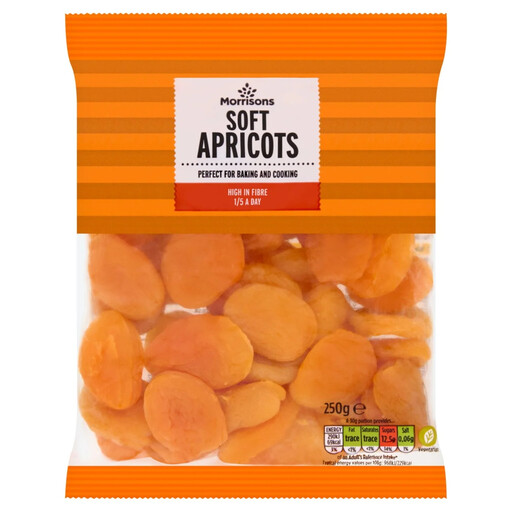
Morrisons Soft Apricots 250g
A soft-apricot option if you prefer that format to firmer dried fruit. Check the pack's kcal per 100g and serving weight, and read its sulphite information if you need to avoid sulphites.
View on Joybuy
 No image available
J.ZAO Pitted Chilean Prunes 500g, Individually Wrapped
The individual wrappers may help you keep track of how many prunes you take. Check the nutrition information for the amount eaten and read the ingredients rather than treating wording about sugar in the longer product title as a nutrition figure.
View on Joybuy
 No image available
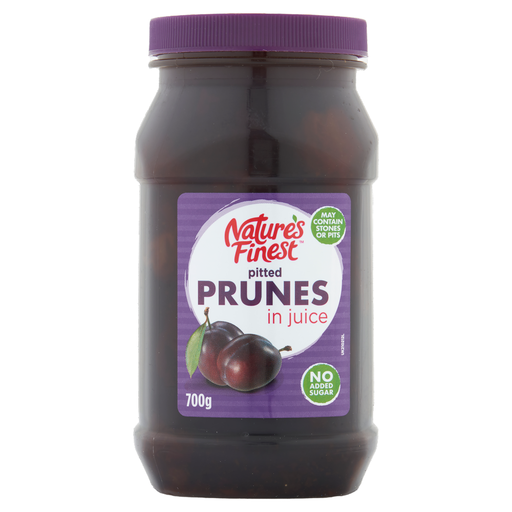
Natures Finest Juicy Pitted Prunes 700g
These prunes are described as packed in juice, so check the nutrition values and serving basis for the whole product. Their format differs from conventional dried fruit; a per-100g figure should be read with that difference in mind.
View on Joybuy
 No image available
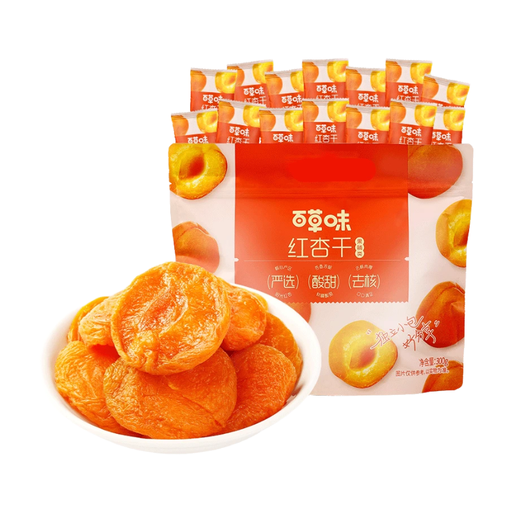
Be&Cheery Dried Red Apricots 300g
A dried red-apricot option for comparison with other apricot packs. Joybuy's product description names red apricot as the ingredient; check the current pack for its nutrition values and allergen information before choosing a serving.
View on Joybuy
 No image available
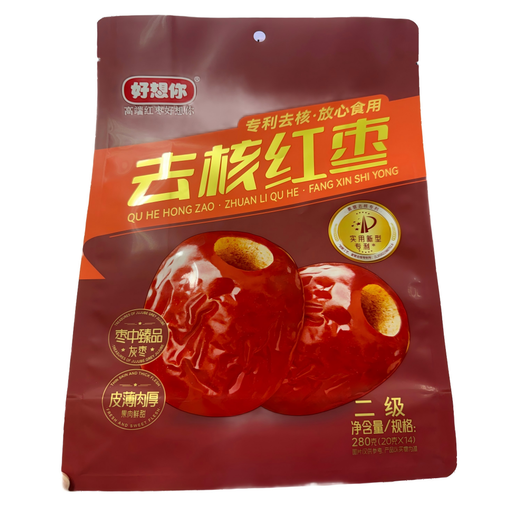
Haoxiangni Grade 2 Fresh-Locked Pitted Red Dates Original Flavour 280g
Pitted red dates offer another dried-fruit format if you are comparing types of fruit. Read this pack's kcal and sugars per 100g, then measure the portion you intend to eat rather than using an apricot or raisin figure for it.
View on Joybuy
Questions about dried fruit
Is dried fruit automatically low in calories?
No. Compare the exact products per 100g, then consider your serving: Sainsbury's Ready to Eat Dried Apricots list 228 kcal per 100g, Tesco Seedless Raisins list 277 kcal, and Tesco's yogurt-flavoured coated raisins list 477 kcal. Those figures describe the named products, not every fruit of those types.
What is a useful dried-fruit portion reference?
The NHS says 30g of dried fruit counts as one 5 A Day portion. Weighing or checking the pack weight helps you relate that amount to the particular product's calorie figure; 30g is not a promise that different fruits contain equal calories.
Is it better to have dried fruit with a meal?
For dental health, the NHS advises eating dried fruit at mealtimes rather than as a between-meal snack to reduce the risk of tooth decay. You can still check the portion and nutrition label when planning that meal.
Should I check dried apricots for sulphites?
Yes, if you need to avoid sulphites, read the current ingredient and allergen information for the exact pack. Sainsbury's Ready to Eat Dried Apricots list sulphur dioxide, whereas its SO Organic dried-apricot label lists dried apricots only. The Food Standards Agency says people with asthma have a higher risk of reaction to sulphur dioxide.
Does an individual pack mean fewer calories?
No. A pack gives you a defined weight, but you still need its nutrition label to know the calories in that amount. Tesco's listing gives Whitworths Sunny Raisins as 12 individual 14g packs and lists 281 kcal per 100g.


