Shoppers watching portion calories
If you have a calorie allowance for a desk snack, compare the energy in the amount you will eat, whether that is a small measured portion or a labelled serving.


Nuts are not automatically low in calories: the British Heart Foundation gives 180–225 kcal for a 30 g portion. If you want a smaller desk snack, measure the amount you intend to eat; a pre-portioned pack saves preparation, but its calories and salt still need to fit your plans.
If you have a calorie allowance for a desk snack, compare the energy in the amount you will eat, whether that is a small measured portion or a labelled serving.
An individual pack removes the need to measure nuts at work. Check its weight and calories first: a convenient 30 g pack is not necessarily a sub-100 kcal snack.
If you prefer plain or unsalted nuts, compare the ingredient list and salt per serving rather than assuming a dry-roasted or flavoured pack is equivalent.
Decide how much you want to eat at your desk, then compare labels for that portion and choose a pack format you can use as intended.
| Priority | What to check | Your needs |
|---|---|---|
| Portion calories | Check kcal for the stated serving and its weight, not just the bag size. The British Heart Foundation gives 180–225 kcal for 30 g of nuts; Kent Community Health NHS lists 12 almonds at 80 kcal and 15 g of pistachios at 90 kcal. | I want a snack that fits my calorie allowance, so I need to know what my actual portion contains. |
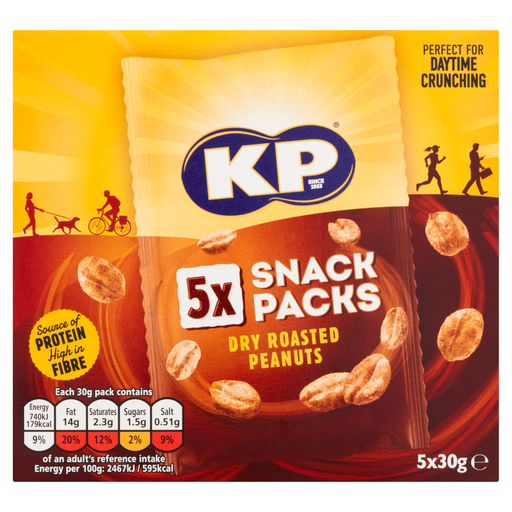
| Pack format | Check whether the pack holds one serving or several. KP Dry Roasted Snack Packs contain five separate 30 g packs, while Sainsbury's Unsalted Mixed Nuts come in a 200 g bag with a 25 g serving declaration. | On a busy workday, I may prefer one ready-sized pack; if I buy a larger bag, I can portion it before taking it to my desk. |
| Salt and ingredients | Read salt per serving and the ingredients on the exact product. Sainsbury's declares less than 0.01 g salt per 25 g of its unsalted mix; KP declares 0.51 g per 30 g of its dry-roasted peanuts. | I would choose a plain, unsalted option when avoiding salt or added flavourings matters more to me than having a ready-sized flavoured pack. |
| Allergens | Read the current pack's ingredients and allergen statement. The Food Standards Agency distinguishes peanuts from tree nuts; a mixed product's name alone does not establish its suitability. | If an allergy affects me or someone sharing the workspace, I need to check the warning on the exact pack before bringing it in. |
The British Heart Foundation gives 180–225 kcal for a 30 g portion, so the amount eaten changes whether nuts fit a particular snack allowance.
Choose a portion first, then read the kcal declaration for that weight or measure out a smaller amount.
Sainsbury's 200 g Unsalted Mixed Nuts bag contains eight 25 g servings. Its declared 165 kcal applies to one serving, not the whole bag.
Put one serving in a separate container before work if you find it difficult to stop at a measured amount while working.
KP's dry-roasted peanut snack pack contains flavouring ingredients and declares 0.51 g salt per 30 g pack. Its ready-sized format does not remove that ingredient trade-off.
Compare ingredients and salt per serving; choose a plain, unsalted product if those are your priorities.
Peanuts and tree nuts are distinct allergens, and a mixed product can carry warnings beyond what its short name suggests.
Check the ingredient list and allergen statement on the current pack rather than relying on a previous purchase.
KP's dry-roasted peanut snack packs offer a defined 30 g serving for carrying to work.
Sainsbury's Unsalted Mixed Nuts come in a 200 g bag with a declared 25 g serving.
M&S Natural Nut Medley is a mixed-nut option sold in a 150 g pack.
Tesco lists both KP 5 x 30 g dry-roasted snack packs and a Tesco unsalted mixed-nut product.
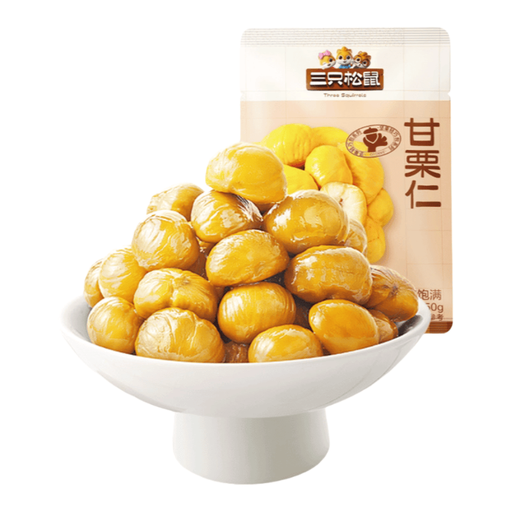
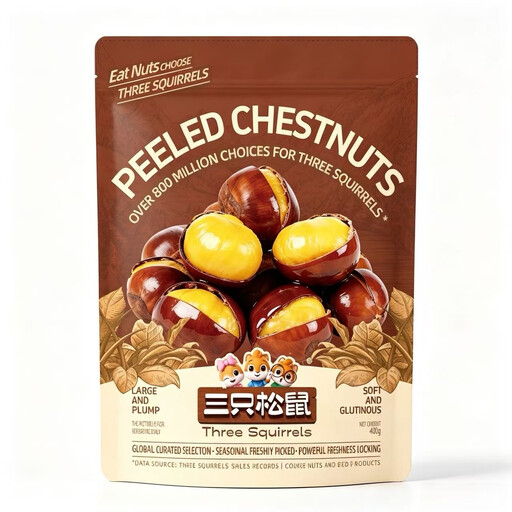
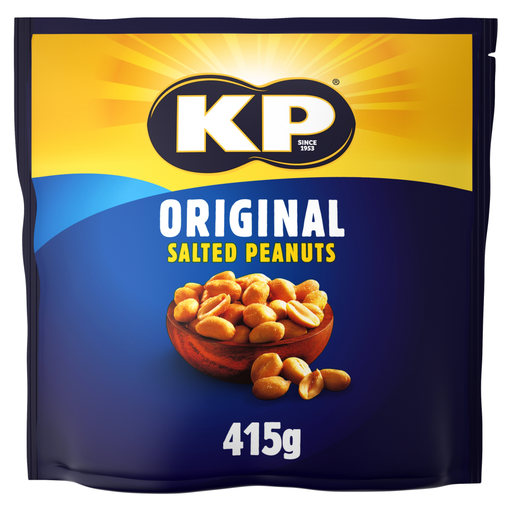
These options include chestnut kernels, ready-sized peanut packs and larger peanut bags. Chestnut products are a different choice from the almond, pistachio and peanut examples above, so compare each product's own serving label rather than applying another product's calorie figure.
 No image available
The 50 g pack gives you a defined amount to take to your desk. Check its kcal declaration if you are comparing it with a smaller measured nut portion.
 No image available
For repeated desk snacks, check how this 400 g pack is divided and use the stated kcal for the amount you plan to eat each time.
 No image available
Five separate 30 g packs make it straightforward to take one serving to work. KP declares 179 kcal and 0.51 g salt per pack, so it is not a sub-100 kcal or unsalted option.
 No image available
This 415 g bag requires you to measure a desk-sized portion yourself. It is a salted product, so compare its salt and kcal declarations for the amount you intend to eat.
 No image available
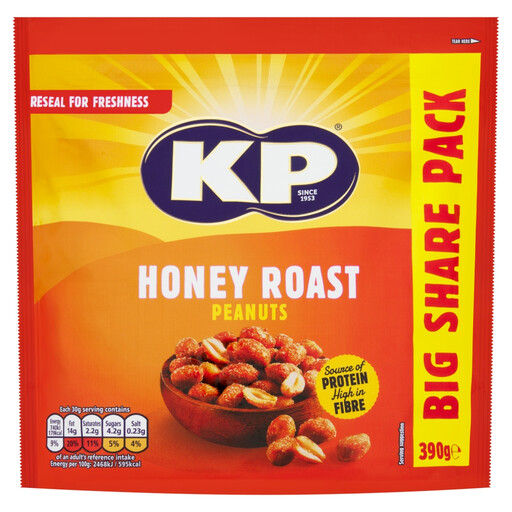
Measure a portion from this 390 g bag before taking it to your desk. The honey-roast coating makes the ingredient list worth checking if you prefer plain, unsalted nuts.
Not automatically. The British Heart Foundation gives 180–225 kcal for a 30 g portion of nuts. For a smaller snack, Kent Community Health NHS lists 12 almonds at 80 kcal and 15 g of pistachios at 90 kcal; check the portion and label of the product you buy.
Measure a smaller portion if you need to control the amount more closely and can prepare it ahead of time. A 30 g pack avoids measuring at work, but KP's dry-roasted peanut pack contains 179 kcal, so it does not meet a sub-100 kcal snack target.
No. KP's dry-roasted peanut snack pack contains flavouring ingredients and declares 0.51 g salt per 30 g. If salt or added ingredients matter to you, compare the exact pack's label with a plain, unsalted product.
No. The Food Standards Agency distinguishes peanuts from tree nuts, and a product name does not give the full allergen information. Read the ingredient list and allergen statement on the current pack before buying it.