Among three products with labelled nutrition figures, KP Dry Roasted Peanuts have the fewest calories per 100g, while Tesco Walnuts have the least carbohydrate per 100g; the figures published by ASDA Groceries and Tesco Groceries do not make either a low-calorie snack. Tesco Almonds offer a different portion to compare, at 158 kcal and 1.7g carbohydrate per labelled 25g serving. Choose by the amount you intend to eat, then check the current pack for carbohydrate, salt and allergens.
Who is comparing these nuts?
People tracking carbohydrate
If you follow a ketogenic eating plan, compare carbohydrate in the portion you will eat with the rest of your day’s food. The British Dietetic Association describes ketogenic diets as containing 20–50g carbohydrate per day; that range is not a target for every individual.
People watching portion calories
If you want a nut snack while managing energy intake, compare products per 100g before looking at their different labelled serving sizes. The figures published by Tesco Groceries and ASDA Groceries for the three products discussed here range from 597 to 701 kcal per 100g.
People checking salt or allergens
If salt or an allergy affects your choice, read the current pack rather than relying on the type of nut alone. The Food Standards Agency distinguishes peanuts from tree nuts, and individual packs may have their own allergen and precautionary statements.
What should you compare?
Start with calories per 100g for a like-for-like comparison, then check carbohydrate and the other details for the portion you plan to eat.
| Priority |
What to check |
Your needs |
| Carbohydrate |
Check grams per labelled serving and per 100g. Tesco Groceries lists 1.0g per 30g for its walnuts and 1.7g per 25g for its almonds; ASDA Groceries lists 2.2g per 30g for KP Dry Roasted Peanuts. |
For a keto-style plan, I want to account for the portion alongside everything else I eat that day, rather than judge it by a front-of-pack description. |
| Calories |
Compare kcal per 100g before comparing servings of different sizes. ASDA Groceries lists 597 kcal per 100g for KP Dry Roasted Peanuts; Tesco Groceries lists 633 for its almonds and 701 for its walnuts. |
When calories matter to me, I want to decide on a portion before eating: the labelled servings for these three products contain 158–210 kcal. |
| Salt and seasoning |
Read salt per serving and per 100g, then check the ingredients on the current pack. ASDA Groceries lists 0.48g salt per 30g serving of KP Dry Roasted Peanuts; Tesco Groceries lists 0.02g per 100g for its walnuts. |
For a salt-conscious choice, I want to compare the actual labels rather than assume all roasted or plain nuts are alike. |
| Allergens |
Check the named allergens and precautionary statements for the exact pack. The Food Standards Agency identifies peanuts as legumes and distinguishes them from tree nuts such as almonds. |
If an allergy affects my household, I need the current declaration for the product I am buying, including any may-contain wording. |
What is easy to overlook?
-
Assuming keto-compatible means low-calorie
The three products listed by Tesco Groceries and ASDA Groceries provide 597–701 kcal per 100g. A choice based on carbohydrate alone may not fit the portion you had in mind.
Compare kcal on the same per-100g basis, then measure the amount you intend to eat.
-
Choosing by carbohydrate without checking salt
ASDA Groceries lists 1.6g salt per 100g for KP Dry Roasted Peanuts, compared with the 0.02g per 100g Tesco Groceries lists for its walnuts. That difference matters if salt is part of your selection criteria.
Read both the nutrition panel and ingredients list when comparing seasoned and plain products.
-
Using an old nutrition or allergen listing
Ingredients and nutrition information can change when a product is reformulated; Tesco advises shoppers to read the pack rather than rely solely on its website information.
Recheck the physical pack before eating, particularly when carbohydrate amounts or allergens are important to your choice.
-
Treating peanuts and tree nuts as the same allergen
The Food Standards Agency distinguishes peanuts, which are legumes, from tree nuts such as almonds and cashews. A product may also carry precautionary allergen wording.
Check the named allergens and may-contain statements on each product variant against the allergy requirements you follow.
Which brands and retailers are relevant?
Tesco
Tesco Groceries publishes nutrition figures for its Almonds 250G and Walnuts 200G, making their labelled servings and per-100g values useful points of comparison.
- The almond and walnut listings state calories and carbohydrate for their labelled servings.
- Tesco advises checking the current pack because product information may change.
KP
KP Dry Roasted Peanuts 250g are a seasoned peanut product with nutrition figures published by ASDA Groceries.
- The listing gives calories, carbohydrate and salt per 100g and per 30g serving.
- Its listed salt content is 1.6g per 100g, so calories are not the only figure to compare.
Sainsbury's
Sainsbury's Groceries lists KP Dry Roasted Peanuts 250g in its nuts range.
- Its listing identifies a branded dry-roasted peanut option to compare by its current pack label.
Joybuy product options
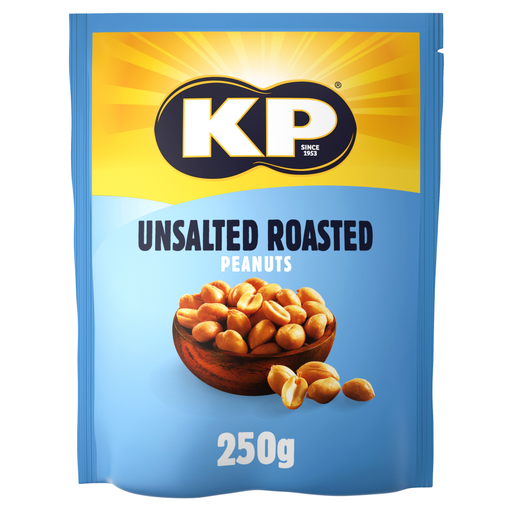
This unsalted roasted peanut option is relevant if you want to compare a peanut snack with the plain and seasoned products discussed above. Check its current nutrition label before comparing calories or carbohydrate.
 No image available
KP Snacks Unsalted Roasted Peanuts 250g
For a keto-style snack where portions matter, check this pack’s carbohydrate and calories per serving. These are unsalted roasted peanuts in a 250g pack; read the current allergen declaration before eating.
View on Joybuy
Questions about nuts and keto
Are nuts low-calorie because they fit a keto-style diet?
No: keto-style eating and calorie content are different considerations. Tesco Groceries and ASDA Groceries list 597–701 kcal per 100g across the three almond, walnut and dry-roasted peanut products compared here, so check the amount you will eat.
Should I choose fewer calories or less carbohydrate?
Choose according to which figure matters for your planned portion. Among the three labelled products, ASDA Groceries lists KP Dry Roasted Peanuts lowest in calories per 100g, while Tesco Groceries lists its walnuts lowest in carbohydrate per 100g; compare both figures rather than treating either as an overall verdict.
What carbohydrate range describes a ketogenic diet?
The British Dietetic Association describes ketogenic diets as containing 20–50g carbohydrate per day. That description is not a personalised allowance; the carbohydrate in a nut serving is only one part of the day’s food.
Do peanuts and tree nuts have the same allergen label?
No. The Food Standards Agency distinguishes peanuts, which are legumes, from tree nuts such as almonds. Check the named allergens and any precautionary statements on the exact pack you intend to use.
When should someone seek advice before starting keto?
Seek professional advice if a medical condition or medication may be affected by a dietary change. The British Dietetic Association says people with type 2 diabetes may need medication changes under medical supervision and states that ketogenic diets should not be followed during pregnancy.


