What to check before choosing
Decide how many calories you want from the snack, then compare that amount with the portion you will carry and eat.
| Priority | What to check | Your needs |
|---|
| Calories per portion |
Compare calories per individual pack or weighed portion, not just per 100g. Kent Community Health NHS Foundation Trust lists 12 almonds at 80kcal, 15g of pistachios at 90kcal and 12 cashews at 90kcal as average examples; check the product label for exact values. |
I want to know whether the amount I will eat fits an approximately 100kcal snack allowance. |
| Pack format |
Check the weight of each small pack and whether it represents one serving. A multipack contains several packs; a larger bag can be divided before leaving home. |
A sealed portion is convenient for my commute, but I may prefer to measure a smaller amount at home. |
| Nutrition per pack |
Read protein, fibre and salt alongside calories for the same serving. Tesco Groceries lists 9g protein, 2.7g fibre and 0.48g salt in a 30g KP dry-roasted pack; KP Nuts lists 9g protein, 2.6g fibre and 0.39g salt in its 30g original salted pack. |
Protein or fibre may matter to me, but neither figure tells me whether the whole pack fits my calorie allowance. |
| Ingredients and allergens |
Read the ingredients and precautionary allergen wording on the pack you buy. The KP original salted variety lists peanuts, sunflower oil and salt; the dry-roasted variety is seasoned. |
I need to distinguish the varieties and check any allergen statements relevant to me before adding one to lunch. |
Joybuy options for lunch on the go
These options include a small chestnut pack, individually portioned peanut snacks and bars, a nut-and-dried-fruit mix, and a larger bag of macadamias to portion yourself. Their pack formats serve different needs; check the calories on the particular product before treating it as an approximately 100kcal snack.
 No image available
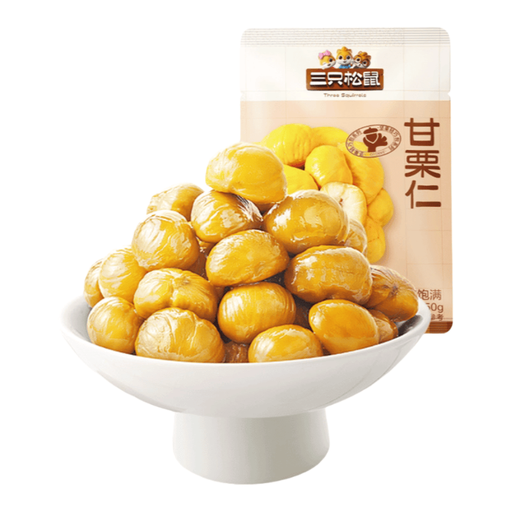
Three Squirrels Light Pack Sweet Chestnut Kernels 50 g
The 50 g pack is an option to carry with lunch. Check its per-pack calories and allergen wording against your needs rather than relying on “Light Pack” to describe its nutrition.
View on Joybuy
 No image available
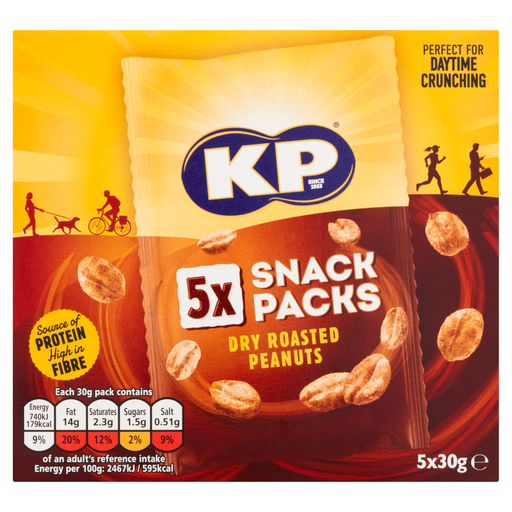
KP Snacks Dry Roasted Peanuts 5 x 30g
Five individual 30g packs make it straightforward to take one portion with lunch. Tesco Groceries lists 179kcal, 9g protein and 2.7g fibre per pack; that pack exceeds an approximately 100kcal snack allowance. Read the current allergen statement before buying.
View on Joybuy
 No image available
Nakd Peanut Delight 4 x 35g
This four-pack offers separate 35g nut-based bars for taking with lunch rather than a pack of plain nuts. Compare the calories per bar with your allowance, and check its ingredients and allergen statement.
View on Joybuy
 No image available
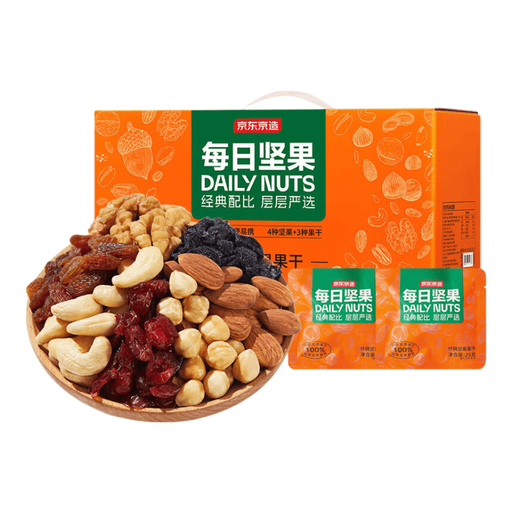
J.ZAO Classic Daily-Nut Mix 750 g, 30 sachets
The separate sachets offer a way to pack a nut-and-dried-fruit mix with lunch. Check the calories and ingredients for one sachet if you want to compare it with a plain-nut portion.
View on Joybuy
 No image available
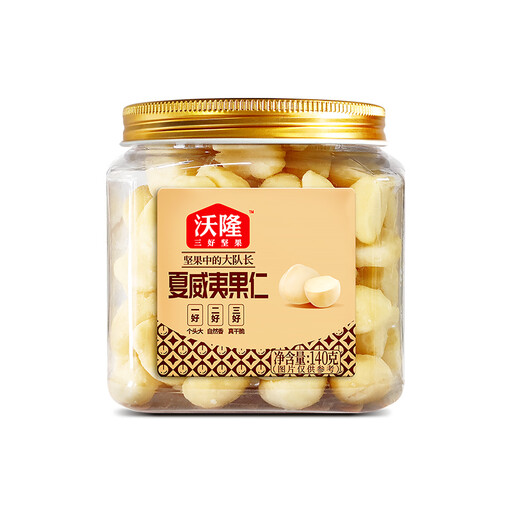
Wolong Macadamia Nuts 140g
The 140g bag suits someone willing to measure a portion before leaving home. Check the label’s calories for the amount you weigh; the full bag is not an individual lunch portion.
View on Joybuy
Questions about nut snacks
Can nuts fit an approximately 100kcal lunch snack?
Yes, if the portion fits that amount. Kent Community Health NHS Foundation Trust gives average examples of 12 almonds at 80kcal, 15g of pistachios at 90kcal and 12 cashews at 90kcal, and advises checking the product label for exact values. An individual pack is not automatically the same size as one of those portions.
What should I read on the label when counting calories?
Check the serving weight, calories per serving or small pack, and the number of servings you expect to eat. For a larger bag, weigh the amount you plan to take rather than using only the per-100g figure.
Does a 30g KP peanut pack fit an under-100kcal target?
No for the two varieties described here: Tesco Groceries lists KP Dry Roasted Peanuts at 179kcal per 30g pack, and KP Nuts lists its Original Salted Snack Pack at 184kcal per 30g pack. A smaller measured portion is the relevant comparison for an approximately 100kcal target.
Do I need to check allergens on a peanut snack?
Yes. The KP dry-roasted and original salted examples contain peanuts and both state that they may contain other nuts, milk, soya and gluten. Read the current pack’s ingredients and precautionary statement for allergens relevant to you.
How do dry-roasted and original salted KP packs differ?
For the 30g packs described by Tesco Groceries and KP Nuts, dry roasted contains 179kcal and 0.48g salt, while original salted contains 184kcal and 0.39g salt. The original salted variety lists peanuts, sunflower oil and salt; dry roasted is seasoned. Compare the current labels if calories, salt or particular ingredients affect your choice.


