Shoppers planning snack portions
If you tend to snack from a larger bag, a stated serving size or a portion you measure yourself gives you a clearer calorie figure to use.


Choose the portion before choosing the nut: a labelled snack pack or a measured serving from a larger bag makes its calorie figure useful for the amount you plan to eat. Compare kcal per serving and per 100g, then check salt, ingredients and allergens on the exact product; read the delivered pack too, as retailer information can change.
If you tend to snack from a larger bag, a stated serving size or a portion you measure yourself gives you a clearer calorie figure to use.
When two online listings look similar, compare their serving weights, kcal, salt and ingredients. Tesco's unsalted and salted mixed-nut listings show why seasoning deserves a separate check.
If peanuts, particular tree nuts or sesame affect your choice, check the exact product's ingredients and precautionary statements before ordering, then check the pack that arrives.
Start with the amount you expect to eat; use the per-100g figure to compare products whose stated servings differ.
| Priority | What to check | Your needs |
|---|---|---|
| Calories | Read kcal per stated serving and per 100g. Note the serving weight before comparing two listings: Tesco gives 191kcal per 30g for its almonds and 158kcal per 25g for its unsalted mixed nuts. | I want the calorie figure to describe the amount I will actually eat, not just the amount chosen for the label. |
| Portion format | Check whether the pack defines one serving or contains several. KP says its 30g Snack Packs are under 200kcal; that statement applies to the Snack Pack format, not every KP nut product. | A defined snack pack suits me when I do not want to measure nuts from a larger bag. Otherwise, I can portion the bag myself. |
| Salt and ingredients | Compare the same serving weight and read the ingredients. Tesco lists 158kcal and less than 0.01g salt per 25g for its unsalted mix, against 160kcal and 0.14g salt per 25g for its salted roasted mix; the latter contains rapeseed oil and salt. | I may prefer roasted, salted flavour, but I want to see the salt and ingredient differences rather than assuming the calorie figures tell the whole story. |
| Allergens | Check which nuts and peanuts are ingredients, plus any precautionary allergen statement. Recheck the delivered pack if the retailer's online information has changed. | If an ingredient or possible cross-contact matters to me, the exact mix and the pack I receive determine whether I can use it. |
| Delivered product | Review the exact product selected at checkout, including any substitution, and compare the delivered pack with the listing before use. | I want the serving, ingredients and allergen information for the product that actually arrives, particularly if my order changes. |
Tesco lists its plain almonds at 635kcal per 100g and its unsalted mixed nuts at 631kcal per 100g. The salt description does not tell you how many calories are in the amount you eat.
Check kcal for a measured serving as well as per 100g; do not treat the whole bag as one snack portion.
Tesco's almond figure is for 30g, while its mixed-nut figures are for 25g. The headline kcal values therefore describe different amounts of food.
Use the per-100g values for a consistent product comparison, then check kcal for the portion you intend to eat.
For Tesco's two 25g mixed-nut servings, the listed calories are close, but the salted roasted mix has 0.14g salt and contains rapeseed oil and salt; the unsalted mix has less than 0.01g salt.
If salt or added ingredients affect your choice, compare those label entries alongside kcal rather than relying on the product photo.
Product information can change. Food Standards Agency research on online food procurement describes people with food hypersensitivities double-checking both their orders and the labels supplied.
Read the ingredients, allergen information and any 'may contain' statement on the delivered pack, especially if a different product was substituted.
These product examples help illustrate label and portion checks; a brand name alone does not establish the nutrition or availability of a different product.
Tesco's listings allow a serving-level comparison of plain almonds, unsalted mixed nuts and salted roasted mixed nuts.
KP describes a defined snack-pack format for shoppers who prefer not to serve nuts from a larger bag.
M&S lists a 450g almond pack for shoppers prepared to measure their own servings.
Planters provides a US-market single-serve example, not an established UK online-grocery delivery option.
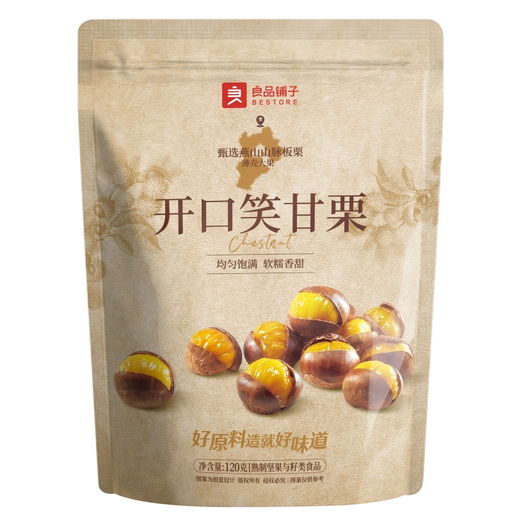
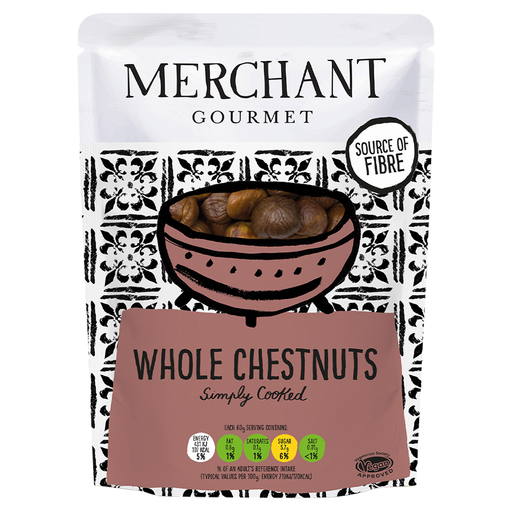
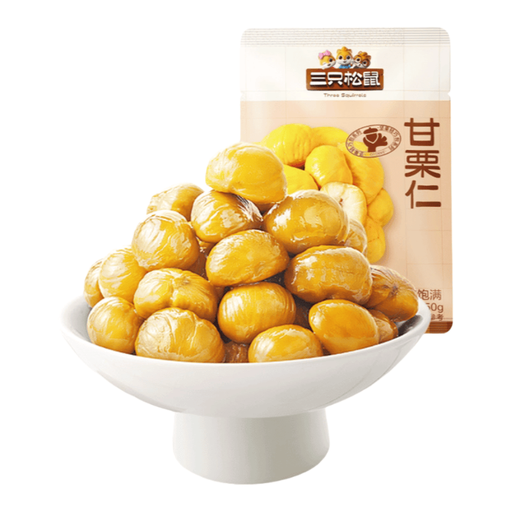
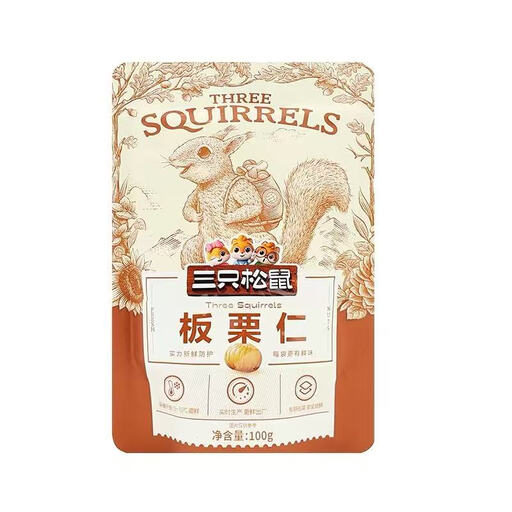
These Joybuy options include chestnut packs in different sizes and a chopped mixed-nut pack. Compare each product's current nutrition and allergen label for the portion you plan to eat; none of the pack sizes below is itself a stated snack serving.
 No image available
For a chestnut snack from a 120g bag, check the nutrition label and measure the amount you intend to eat rather than using the bag as a serving.
 No image available
If you prefer whole chestnuts in a 180g pack, decide on a serving size and check its kcal and allergen information before ordering and on arrival.
 No image available
The 50 g pack is smaller than the other chestnut packs shown here, but its pack weight is not a serving recommendation. Check kcal for the amount you plan to eat.
 No image available
For chestnut kernels in a 100g pack, use the product's current per-100g and serving figures to plan a portion; check the delivered label before eating.
 No image available
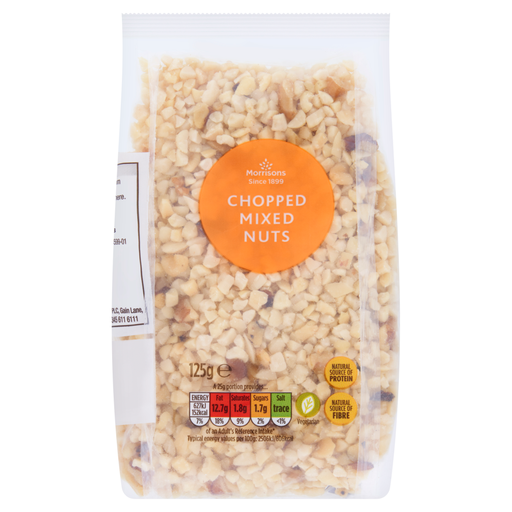
If you want chopped mixed nuts rather than chestnuts, measure a serving from the 125g pack. Check its kcal, ingredients and allergen statement for the exact mix.
No: 'plain' describes the product, not the calories in your portion. Tesco lists plain almonds at 191kcal per 30g and unsalted mixed nuts at 158kcal per 25g, so check both the serving weight and kcal per 100g before comparing them.
Not necessarily. Tesco lists its unsalted mixed nuts at 158kcal per 25g and its salted roasted mixed nuts at 160kcal per 25g. Salt differs more clearly in these examples: less than 0.01g versus 0.14g per 25g; the salted mix also contains rapeseed oil and salt.
Start with serving weight, kcal per serving and kcal per 100g, then check salt, ingredients and allergen information for the exact product. A smaller stated serving can make a headline calorie figure look lower without establishing a lower per-100g value.
Use it before ordering, but check the pack that arrives, including any substitution. Tesco and M&S warn that product information can change, while Food Standards Agency research on online food procurement describes shoppers with food hypersensitivities double-checking orders and labels.