Families whose school permits nuts
You want to pack a measured nut snack after checking the school’s current allergy arrangements and any instructions for your child’s class.


Check the school’s packed-lunch and allergy rules before choosing nuts: if it asks families not to bring them, choose a permitted snack instead. Where nuts are allowed and the child is at least 5 with no relevant allergy, compare a small measured portion with the nutrition label rather than assuming a particular nut or pack is lower in calories. Kent Community Health NHS Foundation Trust lists 12 almonds at 80 kcal and small portions of pistachios, cashews and walnuts at 90–92 kcal; these are portion examples, not values for every product.
You want to pack a measured nut snack after checking the school’s current allergy arrangements and any instructions for your child’s class.
You want to compare the calories and salt in the amount you will actually pack, rather than relying on names such as “unsalted” or “dry-roasted”.
The NHS advises against giving whole nuts to children under 5 because of choking risk. Choose an age-appropriate snack that the school permits instead.
Start with whether the snack can go to school, then compare the portion you would pack and the exact product label.
| Priority | What to check | Your needs |
|---|---|---|
| School rules and allergens | Check the current packed-lunch policy and class messages. Read the pack’s ingredients and allergen information for the child concerned. | I need a snack the school allows. If its arrangements restrict nuts or peanuts, I will choose another permitted option. |
| Calories in the packed portion | Measure a count or weight, then compare calories for that amount. Kent Community Health NHS Foundation Trust lists 12 almonds at 80 kcal, 12 cashews or 15 g of pistachios at 90 kcal, and seven walnut halves at 92 kcal; check the product label for its values. | A sharing bag makes it easy to pack more than I intended. I want to decide the portion before it goes into the lunchbox. |
| Salt and flavourings | Read the ingredients and compare salt per 100 g and per packed portion on the exact products. Plain, salted and coated varieties need not have the same values. | If I am choosing between a plain product and a flavoured one, I want to see what each contains rather than judge it by the nut type alone. |
| Age and texture | Check whether the snack contains whole nuts. The NHS says whole nuts should not be given to children under 5 because they can choke on them. | For a child under 5, I need an age-appropriate, school-permitted alternative to whole nuts. |
A nut snack may conflict with the school’s allergy arrangements, whatever its calorie count.
Read the current school policy and class communications before buying or packing it; use a permitted alternative if nuts or peanuts are restricted.
Per-100 g values do not tell you the calories in the quantity packed. Kent Community Health NHS Foundation Trust’s 80–92 kcal examples are specific small portions, not whole bags.
Measure the portion and use the pack’s nutrition information to work out the calories for that amount.
Product labels can differ substantially: a listing for KP Original Salted Peanuts states 1.2 g salt per 100 g, while Marks & Spencer lists 0.05 g per 100 g for its cashew product. These are different products and nut types, not a like-for-like test of seasoning.
Compare the ingredients and salt values on the particular packs you are considering.
The NHS warns that children under 5 can choke on whole nuts.
Choose an age-appropriate snack permitted by the school instead of packing whole nuts.
These ranges offer starting points for comparing labels; a brand name does not establish whether a particular pack fits the school’s rules or your intended portion.
Tesco lists KP unsalted peanuts and 30 g salted and dry-roasted peanut snack packs.
Tesco’s peanut range lists unsalted, salted and dry-roasted options, including snack packs.
Marks & Spencer lists natural almonds, cashews, pistachios and walnut halves in its nut range.
These chestnut, peanut, cashew and almond packs are options to compare if the school permits the relevant snack. Pack sizes differ, so decide how much you would send rather than treating a whole pack as one comparable portion.
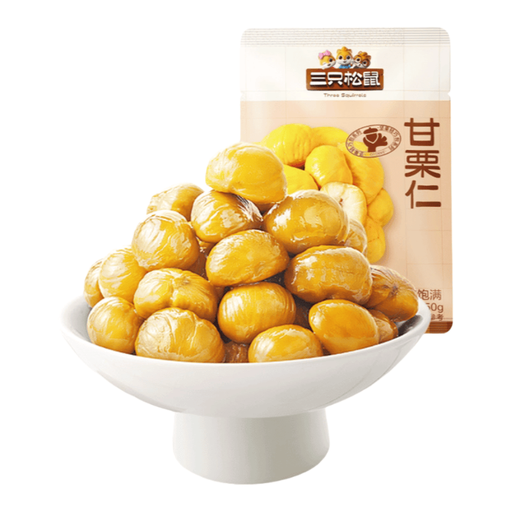 No image available
The 50 g pack gives you a stated quantity to compare with the lunchbox portion you intend to send. Check the pack’s ingredients, allergens and nutrition, along with the school’s policy.
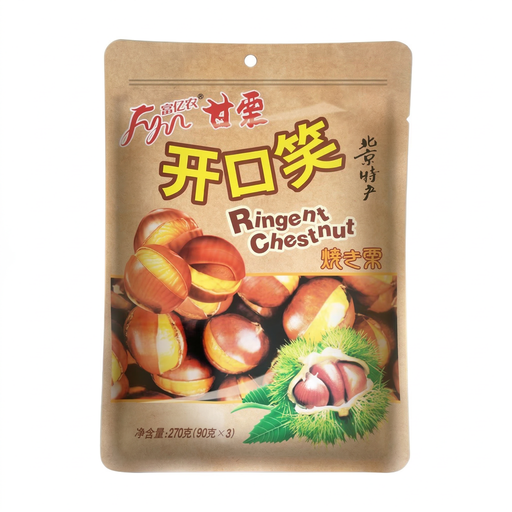 No image available
With three packs totalling 270 g, this option calls for a check of the amount going into one lunchbox. Use the exact pack label for nutrition and allergen details, and confirm the school permits it.
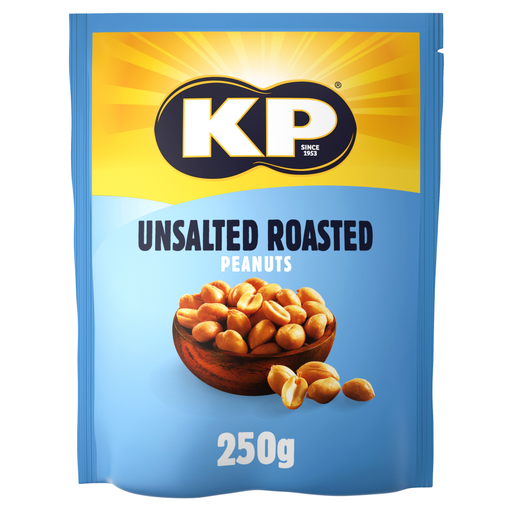 No image available
If peanuts are permitted, measure a portion from this 250 g pack rather than using the bag size as a serving. Its unsalted name does not establish the calories in your portion; check the pack label.
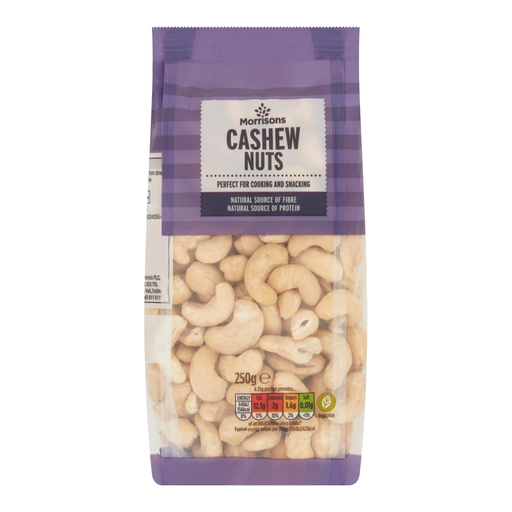 No image available
For a cashew portion, Kent Community Health NHS Foundation Trust lists 12 cashews at about 90 kcal as an example. Measure what you pack from this 250 g bag and check its own label for nutrition and allergens.
 No image available
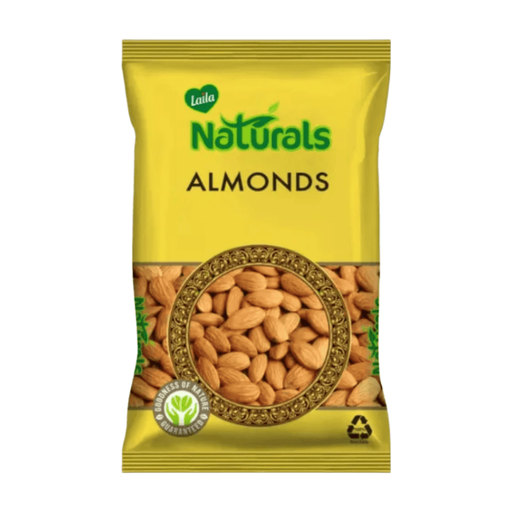
The 500 g bag needs portioning for a lunchbox. Kent Community Health NHS Foundation Trust lists 12 almonds at about 80 kcal as an example; check this product’s label and the amount you actually pack.
Check the individual school’s current packed-lunch and allergy instructions before packing nuts or peanuts, and choose another snack if it restricts them. Department for Education guidance for England says schools must publish an allergy safety policy setting out arrangements to reduce contact with known allergens.
Among the portions listed by Kent Community Health NHS Foundation Trust, 12 almonds are about 80 kcal, compared with 90 kcal for 12 cashews or 15 g of pistachios and 92 kcal for seven walnut halves. These are approximate portions, so check the chosen product’s label and measure what goes into the lunchbox.
No. The NHS says children under 5 should not be given whole nuts because they can choke on them. Choose an age-appropriate snack that the school permits.
Do not use them as a substitute for the school’s packed-lunch policy. Department for Education guidance on school food in England addresses food and drink provided in state-funded schools; check the individual school’s instructions for food brought from home.
If you want to compare salt, use the exact products’ labels rather than their names alone. A listing for KP Original Salted Peanuts states 1.2 g salt per 100 g, while Marks & Spencer lists 0.05 g per 100 g for its cashew product; they are different products, and neither figure tells you the calories in the portion you will pack.