Festival-goers comparing calories
If you are packing a bar for a day outdoors, compare the calories in the complete bar rather than choosing by its protein claim alone. Bar weights differ, so the per-100 g figure answers a different question.


Compare calories per whole bar first, then check protein, sugars, polyols and allergens on the exact flavour you plan to pack. Among the products compared here, Myprotein’s Cookie Dough Lean Protein Bar has 152 kcal and 18 g protein per 45 g bar, while Tesco lists 215 kcal and 23 g protein for Grenade White Chocolate Cookie per 60 g bar. The higher-protein option also contributes more calories per bar, so the choice depends on which figure matters more for your snack.
If you are packing a bar for a day outdoors, compare the calories in the complete bar rather than choosing by its protein claim alone. Bar weights differ, so the per-100 g figure answers a different question.
A larger, confectionery-style bar may provide more protein alongside more calories. Compare both per-bar figures, then check sugars and polyols if those affect your choice.
Read the ingredients and allergen statements on the exact flavour before packing it. A vegan label, a low-sugar claim or familiarity with the brand does not replace that check.
Start with the figures for one complete bar, then check whether its ingredients and pack instructions suit a day away from home.
| Priority | What to check | Your needs |
|---|---|---|
| Calories per bar | Compare kcal for the complete bar and note its weight. Check the exact flavour’s label, as values can vary between flavours. | I want to know what one packed bar contributes, rather than judging it by a low-sugar or high-protein claim. |
| Protein | Read grams of protein alongside kcal per bar. For example, Myprotein lists 18 g protein and 152 kcal for its 45 g Cookie Dough Lean bar; Tesco lists 23 g and 215 kcal for the 60 g Grenade White Chocolate Cookie bar. | More protein matters to me, but I also want to see the calorie difference before choosing the larger bar. |
| Sugars and polyols | Check sugars and polyols separately from calories. Tesco lists 1.7 g sugars and 16 g polyols per Grenade White Chocolate Cookie bar; the PhD nutrition basis lists 20 g polyols per 64 g Smart Bar. | I may prefer less sugar, but I do not want to assume that means fewer calories or overlook an unfamiliar sweetener. |
| Ingredients and allergens | Read the exact pack’s ingredients and any ‘may contain’ statement. Check dietary labels against the particular flavour, not the range as a whole. | If an ingredient or potential allergen matters to me, I need that information before taking the bar to the festival. |
| Practical packing | Check the pack’s storage instructions and whether the bar is individually wrapped. Consider trying an unfamiliar flavour before relying on several bars during the event. | I want a snack I can carry and am willing to eat, without discovering on the day that the flavour or ingredients do not suit me. |
Products with similar front-of-pack claims can differ in bar weight and total calories. Myprotein lists 152 kcal for its 45 g Cookie Dough Lean bar, while Tesco lists 215 kcal for the 60 g Grenade White Chocolate Cookie bar.
Compare kcal, protein and sugars on a whole-bar basis before deciding which trade-off suits your snack.
Tesco lists 16 g polyols per Grenade White Chocolate Cookie bar, and the cited PhD Smart Bar nutrition basis lists 20 g per 64 g bar. Individual tolerance can vary.
Read the ingredients and pack warnings, and try an unfamiliar product before making it your only packed snack.
Ingredients can differ between products and flavours. Barebells, for example, states that its vegan Caramel Peanut bar contains wheat protein and therefore gluten.
Check the exact pack’s ingredients and precautionary allergen statement. The Food Standards Agency explains that ‘may contain’ labelling signals that a regulated allergen could be unintentionally present.
Its Lean Protein Bar provides a lower-calorie example for a whole-bar comparison.
The White Chocolate Cookie bar listed by Tesco illustrates a larger bar with more protein per serving.
Its Smart Bar is another protein-focused format to compare by whole-bar nutrition.
Barebells offers original, soft and vegan protein-bar formats.
Quest presents protein-focused bars as on-the-go snacks.
Tesco is a retailer where shoppers can compare protein bars from different manufacturers.
These Joybuy options include multipacks of Grenade bars and Nature Valley protein bars. Compare the exact pack label for calories, ingredients and allergens before deciding which bars to take.
 No image available
A multipack to consider if you want to take individual 50 g bars. Check the Double Chocolate pack’s per-bar nutrition, polyols and allergen information before packing it.
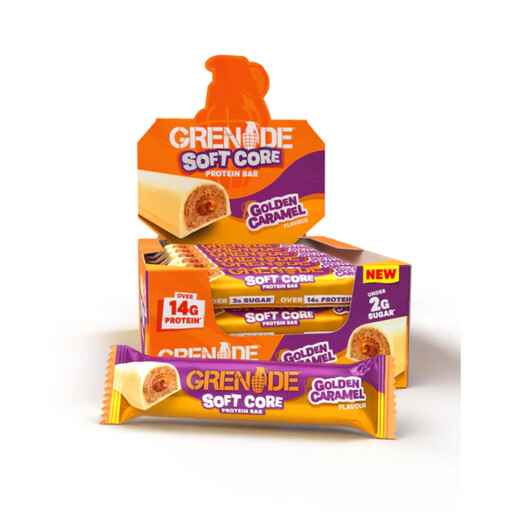 No image available
This is another 12-pack of 50 g Soft Core bars. Use the Golden Caramel label—not another flavour’s figures—to compare calories, ingredients and allergens.
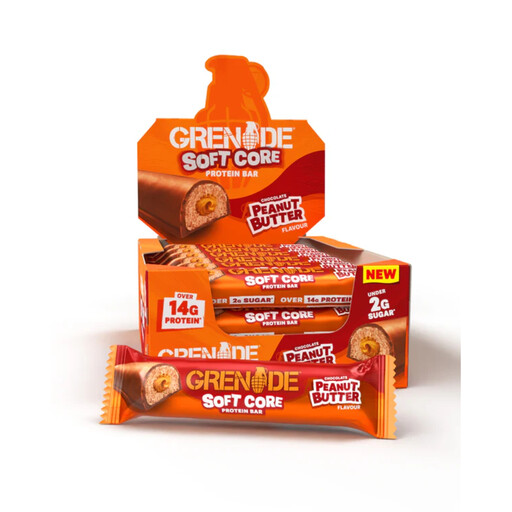 No image available
The Peanut Butter variant comes as twelve 50 g bars. Check its exact allergen statement, as well as calories and polyols per bar, before taking it to a festival.
 No image available
These are 60 g bars in a four-pack. If calories per snack are your main concern, compare the Oreo Flavour pack’s whole-bar figure with the 50 g options rather than relying on its low-sugar wording.
 No image available
This four-pack contains 40 g bars. Compare the Salted Caramel Nut label’s calories, protein and sugars per bar with the Grenade options, and check its nut and other allergen information.
Compare kcal per complete bar, then read protein and bar weight alongside it. Myprotein lists 152 kcal per 45 g Cookie Dough Lean bar, Tesco lists 215 kcal per 60 g Grenade White Chocolate Cookie bar, and PhD lists 238 kcal per 64 g bar for its cited Smart Bar nutrition basis. Check the exact flavour, because formulations can differ.
Yes, especially if the bar is unfamiliar. Tesco lists 16 g polyols in the Grenade White Chocolate Cookie bar, while PhD’s cited 64 g Smart Bar nutrition basis lists 20 g. Individual tolerance varies, so read the pack warnings and consider trying the product before the festival.
Check the exact bar’s ingredients and any ‘may contain’ statement, including when you have bought another flavour from the same brand before. The Food Standards Agency explains that precautionary allergen labelling communicates that a regulated allergen could be unintentionally present.