Shoppers comparing calories per bar
If you want a portable snack before routine training, the whole-bar energy value is more useful for comparing these products than a low-sugar phrase on the front of a pack.


For a lower-calorie protein bar before training, compare kcal per whole bar before looking at protein or low-sugar wording. Tesco lists Barebells Cookies & Cream at 190 kcal per 55g bar, while Myprotein lists 212 kcal and 20g carbohydrate per 60g Layered Bar on its cited nutrition panel. If carbohydrate for the session matters more than choosing a protein bar, the UK Sports Institute also identifies familiar, compact carbohydrate foods as pre-exercise options; check ingredients and personal tolerance before trying a new bar close to training.
If you want a portable snack before routine training, the whole-bar energy value is more useful for comparing these products than a low-sugar phrase on the front of a pack.
If your snack needs to provide carbohydrate as well as protein, check the amount per bar. The UK Sports Institute also identifies compact carbohydrate foods as a way to add energy before or during exercise.
If allergens or sweeteners affect your choice, read the label on the exact pack. Ingredient statements and warnings matter particularly when you are considering a bar you have not eaten before training.
Decide whether you mainly want a protein-containing bar or a carbohydrate-focused snack for the session, then compare the whole serving and the ingredients you will actually eat.
Consider it: When whole-bar calories are the main comparison, Tesco lists Barebells Cookies & Cream at 190 kcal per 55g bar.
Check: Its listing contains sweeteners and milk proteins, gives precautionary allergen statements and warns about excessive consumption.
Consider it: If you want both nutrients in one bar, Myprotein lists 20g carbohydrate and 20g protein per 60g Layered Bar on its cited panel.
Check: That panel also lists 212 kcal and 6.6g fibre; Myprotein warns that excessive consumption may produce laxative effects.
Consider it: If carbohydrate for the session is your main reason for eating, the UK Sports Institute gives examples including dried fruit, oat bars and jam sandwiches.
Trade-off: Choose this route for its role as a carbohydrate snack, rather than assuming it provides the protein stated on a protein-bar label.
| Priority | What to check | Your needs |
|---|---|---|
| Whole-bar calories | Read kcal for the entire bar, not just per 100g. Compare serving sizes alongside the figures: Tesco lists 190 kcal per 55g Barebells Cookies & Cream bar; Myprotein lists 212 kcal per 60g Layered Bar on its cited panel. | I want to compare the snack I would actually eat, rather than assume that low sugar means fewer calories. |
| Carbohydrate | Read carbohydrate grams per bar alongside protein and consider when you plan to eat. Myprotein lists 20g carbohydrate per 60g Layered Bar; the UK Sports Institute also describes compact carbohydrate foods as options before or during exercise. | If carbohydrate for my session is the priority, I want to compare the bar with a familiar carbohydrate-focused snack. |
| Ingredients and warnings | Check sweeteners, fibre and any consumption warning on the exact flavour. Myprotein lists 6.6g fibre per Layered Bar on its cited panel; both Myprotein and Tesco carry warnings about laxative effects from excessive consumption. | A new bar just before training may not fit my routine, so I would rather try it on an ordinary day first. |
| Allergens | Read the current pack’s ingredients and precautionary statements. Tesco’s Barebells Cookies & Cream listing identifies milk proteins and says the bar may contain gluten-containing cereals, soya, peanuts and nuts. | When an ingredient affects what I can eat, I need to check the exact pack rather than rely on the flavour name. |
Sugar wording does not give the whole-bar calorie total. Tesco lists 190 kcal for its 55g Barebells Cookies & Cream bar, while Myprotein lists 212 kcal for a 60g Layered Bar on its cited panel.
Compare kcal per entire bar first, then read its protein, carbohydrate and fibre values for the snack you have in mind.
Protein grams do not tell you how much carbohydrate a bar provides. The UK Sports Institute identifies compact carbohydrate foods as options for adding energy before or during exercise.
If carbohydrate for the session is your priority, compare the bar’s carbohydrate value with a familiar carbohydrate-focused snack.
The Myprotein Layered Bar page and Tesco’s Barebells Cookies & Cream listing both warn that excessive consumption may have laxative effects.
Read the ingredients and warning, and try a new bar during ordinary training rather than immediately before an important session.
Ingredients and nutrition information can change if a product is reformulated. Tesco advises reading the label rather than relying solely on its website listing.
Check the nutrition panel, ingredients and allergen statements on the exact pack before eating it.
These references describe particular ranges or listings, not the nutrition of every flavour sold under a brand.
Tesco lists the Barebells Cookies & Cream 55g protein bar with nutrition and ingredient information for that product.
The Layered Bar is an option to examine when both protein and carbohydrate per bar matter.
PhD’s UK Smart Bar range provides another whole-bar label to compare.
Grenade markets its protein-bar range as high in protein and low in sugar.
Quest describes its protein bars on a US product-range page, which does not establish the label for a UK pack.
Tesco is a retailer reference for the Barebells Cookies & Cream listing, not the maker of that bar.
These Grenade bars offer different flavours and pack sizes to consider for a pre-workout snack. Compare the nutrition panel and ingredients on the exact flavour before deciding whether its whole-bar calories, carbohydrate and allergens suit you.
 No image available
For a pre-workout snack, compare the whole-bar nutrition panel and ingredients for this Double Chocolate flavour. The pack contains 12 x 50g bars.
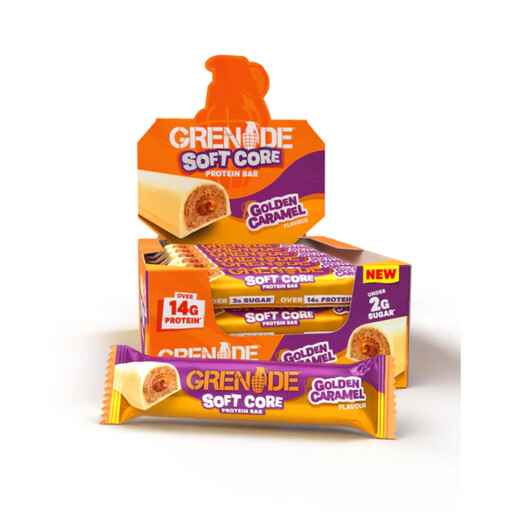 No image available
If Golden Caramel appeals as a snack before training, check its whole-bar calories and carbohydrate on the exact label. This pack contains 12 x 50g bars.
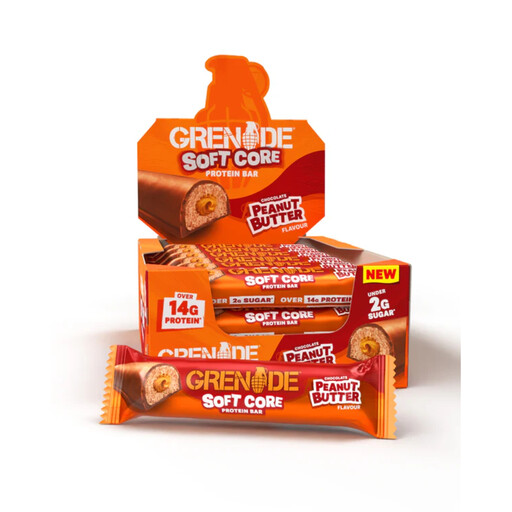 No image available
For this Peanut Butter variant, check the exact pack’s allergen statement as well as its whole-bar nutrition before eating it ahead of training. The pack contains 12 x 50g bars.
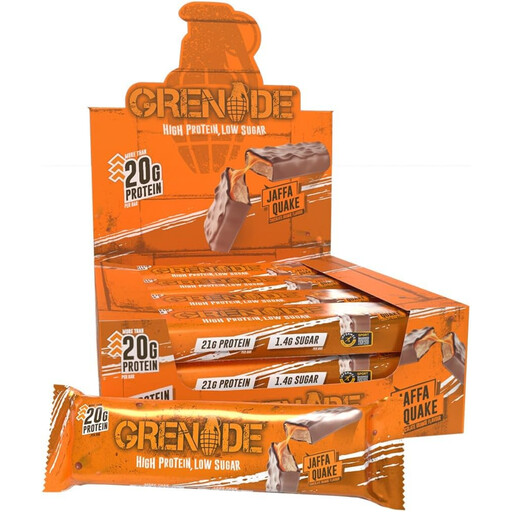 No image available
If you want to compare a 60g bar with smaller servings, read its whole-bar kcal and carbohydrate values rather than judging by bar weight alone. This Jaffa Quake pack contains 12 x 60g bars.
 No image available
Before choosing this Oreo Flavour bar as a pre-workout snack, compare its whole-bar nutrition and read the exact pack’s ingredients. The pack contains 4 x 60g bars.
No. Read kcal per whole bar: Tesco lists 190 kcal per 55g Barebells Cookies & Cream bar, while Myprotein lists 212 kcal per 60g Layered Bar on its cited panel. Low-sugar wording alone does not give you either total.
Not necessarily. If carbohydrate for the session is your main reason for eating, the UK Sports Institute identifies compact foods such as dried fruit, oat bars and jam sandwiches as pre-exercise options. Compare that choice with a bar’s stated nutrition and what you are accustomed to eating.
Read the ingredients and precautionary statements on the exact pack before eating it. GOV.UK says specified allergens in prepacked food must be clearly labelled within the ingredients list; Tesco’s Barebells Cookies & Cream listing identifies milk proteins and says it may contain gluten-containing cereals, soya, peanuts and nuts.
Try it during an ordinary training routine first if you do not know how you tolerate it. Myprotein’s Layered Bar page and Tesco’s Barebells Cookies & Cream listing both warn of possible laxative effects from excessive consumption.
Check the label on each exact pack you buy. Tesco notes that food products can be reformulated, so an online listing may not reflect the ingredients, nutrition or allergen information on a later pack.