What should you check?
Decide whether a small wrapped portion fits the after-school occasion, then compare complete bars and check the rest of their labels.
| Priority | What to check | Your needs |
|---|
| Portion and calories | Read kcal for the complete bar and its weight in grams. Check whether a multipack’s stated serving contains one bar or more. | I want a portion that fits this snack occasion, not simply the smallest number on a pack. |
| Sugars and label colours | Compare sugars, saturated fat and salt on the nutrition panel. Where traffic-light labelling appears, compare the colours for these nutrients as well as the serving size. | A protein, fibre or fruit message should not be the only reason I choose a bar. |
| Fibre and protein | Read the stated grams per bar if either attribute matters to your choice. Compare them alongside calories and the other nutrition values. | If a small bar does not suit the occasion, I want to compare other portions without assuming a protein claim settles the choice. |
| Allergens and dietary needs | Check the ingredients, allergen statement and any may-contain wording on the exact flavour and current pack. | I need to know whether this particular bar meets our household’s ingredient requirements before comparing its nutrition. |
| Snack routine | Consider whether fruit or vegetables are practical, or whether the occasion calls for a wrapped snack. The NHS advises aiming for no more than two packaged snacks a day for children. | Sometimes portability matters; at other times I can offer an unpackaged snack. |
Brand and product-line references
These figures describe the named bars and serving sizes, not every product made by each brand. Check the current pack before choosing a flavour.
Alpen
Alpen Light Chocolate & Fudge is a small cereal-bar portion: Weetabix Cereals lists one bar as 19g.
- Weetabix Cereals lists 65 kcal, 4.0g sugars and 4.2g fibre per bar.
- The manufacturer states that this bar is not suitable for nut-allergy sufferers.
Eat Natural
Eat Natural Soft Fruit Bars offer 25g portions in the Apple and Red Berries flavours listed by Tesco.
- Tesco lists Apple at 86 kcal and Red Berries at 87 kcal per bar; both listings describe them as vegan and gluten-free.
- The Apple listing gives 13.8g sugars per 25g bar, so compare sugars as well as calories.
Graze
Graze Sticky Toffee Oat Boost is a 30g oat flapjack serving, larger than the 19g Alpen Light example.
- Tesco lists 122 kcal, 3.8g sugars and 4.7g fibre per 30g serving, and describes this flavour as suitable for vegans.
- Those figures are for Sticky Toffee; check the label rather than applying them to other Oat Boost flavours.
Nakd
Nakd Cherry Protein is a 45g bar to compare when protein is a consideration, rather than when seeking the smallest calorie portion here.
- Tesco lists 6.2g protein and 7.2g fibre per bar.
- The same listing gives 182 kcal and 15g sugars per bar despite its no-added-sugar description; it also carries a may-contain statement for soya and nuts.
Nature Valley
Nature Valley Protein Salted Caramel Nut is a 40g bar for shoppers comparing a protein bar with smaller cereal-bar portions.
- Tesco lists 10g protein per 40g bar and describes this flavour as gluten-free.
- The listing identifies peanuts and almonds; check the current pack if allergens affect the choice.
TREK
TREK High Protein Choc Caramel is a 44g bar, so compare its full portion rather than its protein claim alone.
- Tesco lists 159 kcal, 12g protein, 12g fibre and 1.8g sugars per bar.
- The listing carries a may-contain statement for gluten-containing cereals, nuts, milk and sesame.
Snack bars on Joybuy
These options include individually portioned cereal and oat bars, a protein bar and a variety pack. Compare the stated pack sizes and check each current label before deciding which suits an after-school snack.
 No image available
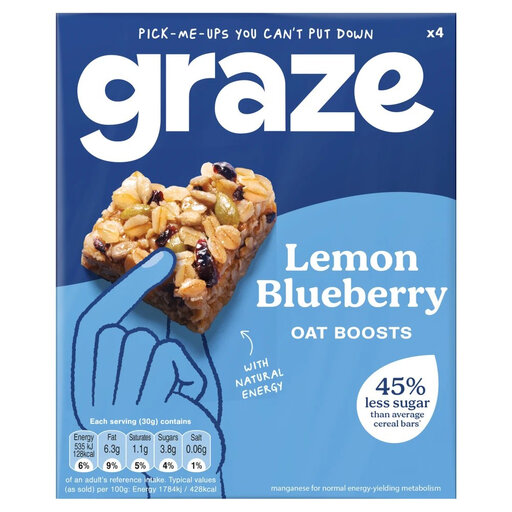
Graze Oat Boosts Lemon Blueberry 4 × 30g
Four individually sized 30g oat-bar portions offer a wrapped option for after school. Check the Lemon Blueberry label for nutrition and allergens; figures for another Graze flavour do not describe this bar.
 No image available
Special K Dark Chocolate Snack 6 × 21.5g
Each bar is labelled as 21.5g, a portion size worth checking if you want a small wrapped snack. Read the pack for its per-bar calories, sugars and allergens.
 No image available
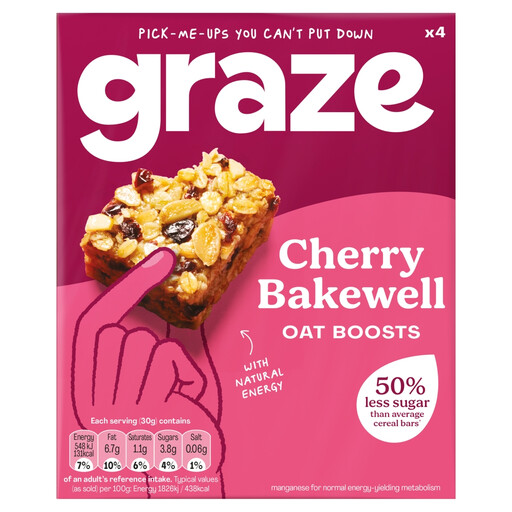
Graze Oat Boosts Cherry Bakewell 4 × 30g
This pack contains four 30g oat-bar portions for occasions when a wrapped snack is useful. Check this flavour’s own nutrition and ingredient statements rather than using figures from Sticky Toffee Oat Boost.
 No image available
Nature Valley Protein Salted Caramel Nut 4 × 40g
This 40g protein bar is a different-sized portion from the smaller cereal bars above. Tesco lists 10g protein for the named 40g flavour and identifies peanuts and almonds; check the current pack’s full nutrition and allergen information before choosing it.
 No image available
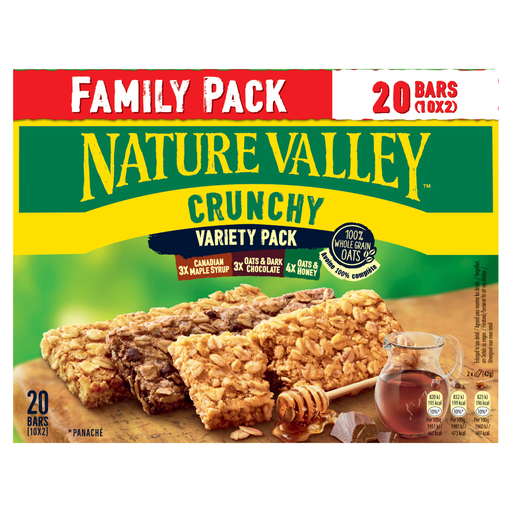
Nature Valley Crunchy Family Variety Pack 10 × 42g
The variety-pack format offers a choice of crunchy bars. Check how the label defines a serving within each 42g pack, then compare its nutrition and ingredients with single-bar portions.
Frequently asked questions
How do I compare lower-calorie bars for after school?
Compare kcal for the complete bar alongside its weight and the rest of its label. Weetabix Cereals lists Alpen Light Chocolate & Fudge at 65 kcal per 19g bar, while Tesco lists Eat Natural Apple at 86 kcal per 25g bar; the smaller calorie figure alone does not decide which portion or ingredients suit the occasion.
Should a snack bar be the usual after-school choice?
The NHS recommends fruit and vegetables as the first choice for children’s snacks. When using packaged snacks, it advises aiming for no more than two a day; a wrapped bar may still be practical when portability matters.
Does a protein or fibre claim tell me enough?
No: compare the full nutrition panel and ingredients as well. In its November 2025 audit of 458 bars from 10 major UK retailers, Action on Salt & Sugar classified 37% of the sampled products as high in sugars and 55% as high in saturated fat under UK front-of-pack thresholds.
What do traffic-light colours tell me?
Where traffic-light labelling is shown, green indicates a low amount of the labelled nutrient, amber a medium amount and red a high amount, according to GOV.UK guidance. Use the colours to compare labels, while also checking the serving size and allergens.
Can I choose a fruit-and-nut bar for a child with a nut allergy?
Do not assume that a fruit-and-nut bar is suitable. Check the exact current wrapper’s ingredients and precautionary allergen statement; the product information for bars discussed here includes nuts or nut-allergy warnings, and another flavour’s label is not a substitute.


