Who is choosing an elevenses bar?
The useful starting point is whether you want a small portion, a bar with particular declared nutrients, or one that meets a dietary restriction.
Shoppers planning a small mid-morning portion
Compare calories for the whole bar, not just per 100g. The Graze Banana Bread and Cocoa Vanilla Oat Boosts listed by Waitrose & Partners and Tesco provide 115 and 116 kcal respectively per 30g bar; Joybuy lists 131 kcal for a 35g nākd. Blueberry Muffin bar.
Shoppers comparing protein and fibre
A larger bar may suit you when its portion and declared nutrients matter more than minimising calories. Nature Valley lists around 10g protein and around 4g fibre in its 196 kcal Protein Peanut & Chocolate bar; the TREK Cocoa Oat flapjack listed by Ocado provides 9g protein and 227 kcal per 50g bar.
Shoppers checking dietary and allergen information
Read the current pack even when a bar is described as vegan or gluten-free. The examined products have differing ingredients and precautionary statements involving nuts, peanuts, soya, milk or oats; a dietary claim does not answer every allergy question.
What should you compare?
Choose the portion you intend to eat, then compare its nutrition and ingredients with other bars that meet your dietary requirements.
| Priority |
What to check |
Your needs |
| Portion calories |
Check kcal for one bar or the stated serving, and note its weight. Use per-100g figures when comparing bars of different sizes; the NHS explains that labels give nutrition per 100g and may also give it per portion. |
I want to know the calories in the bar I will eat at elevenses, rather than choose on a per-100g figure alone. |
| Sugars and saturates |
Read total sugars and saturated fat for the portion and per 100g. A “no added sugar” claim does not describe the amount of total sugars: Joybuy lists 17g sugars per 35g nākd. Blueberry Muffin bar. |
A fruit-and-nut, oat or protein label might catch my eye, but I also want to compare the nutrition table before choosing. |
| Protein and fibre |
Compare declared grams per bar alongside calories and portion size. Nature Valley lists around 10g protein and around 4g fibre in its 40g Protein Peanut & Chocolate bar, which provides 196 kcal. |
If I would prefer a larger bar or a particular protein or fibre amount, I can weigh that against a smaller portion with fewer calories. |
| Ingredients and allergens |
Check the current ingredients, emphasised allergens and any “may contain” statement. Check a vegan or gluten-free claim separately against the dietary requirement it needs to meet. |
For a food allergy or necessary dietary avoidance, I need the information for this particular bar and pack, not an assumption about the brand or bar type. |
Brand and product-line references
Compare particular flavours and pack labels rather than assuming that every bar from a brand has the same portion or nutrition.
Graze
The examined Oat Boost variants are 30g portions: Waitrose & Partners lists 115 kcal for Banana Bread, and Tesco lists 116 kcal for Cocoa Vanilla.
- Both examined listings describe their respective bars as high in fibre.
- Check the current flavour’s ingredients and allergen statement; the calorie figures apply to the named variants, not every Graze bar.
nākd.
Joybuy lists the examined Blueberry Muffin fruit-and-nut bar at 131 kcal per 35g bar.
- Its listing provides both a per-bar calorie figure and a total-sugars figure for comparison.
- The bar lists 17g sugars and contains almonds and cashews; check its precautionary allergen statement too.
Nature Valley
Nature Valley lists around 10g protein, around 4g fibre and 196 kcal for each 40g Protein Peanut & Chocolate bar.
- The named bar provides declared protein and fibre amounts alongside its portion calories.
- Joybuy lists peanuts, soya and milk among its allergens, with a precautionary statement for nuts.
Eat Natural
Eat Natural lists 175 kcal and 2.8g fibre per 40g Dark Chocolate & Sea Salt High Fibre Bar.
- The named bar has a declared per-bar fibre amount as well as a high-fibre claim.
- Read its current ingredients and allergen information, including the precautionary statement for other nuts and milk.
TREK
The TREK Cocoa Oat Protein Flapjack listed by Ocado is a 50g portion with 9g protein and 227 kcal.
- The named flapjack offers a larger portion and a stated protein amount for comparison.
- Its 227 kcal serving is a different choice from the examined 30g and 35g portions when portion calories are the priority.
Alpen
Alpen’s UK FAQ lists several former Alpen bar products, including an Alpen Light Bars flavour, as no longer being made.
- The FAQ helps identify named older bars when assessing an existing recommendation.
- Check the exact product and its current pack information rather than relying on an older Alpen bar listing.
Snack bars on Joybuy for elevenses
These options include oat bars, a fruit-and-nut bar and cereal bars. Compare their stated pack portions and check each current product label against the calories, ingredients and dietary details that matter to you.
 No image available
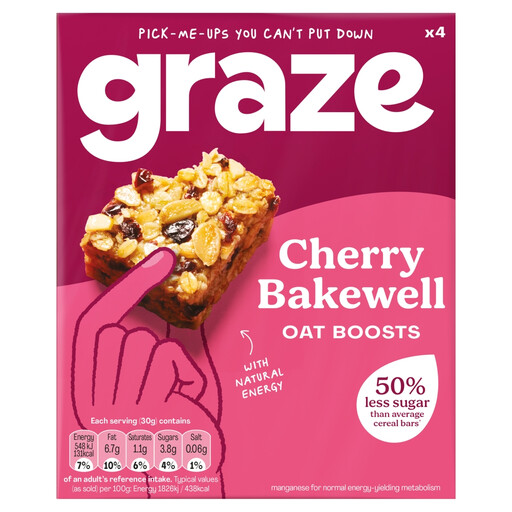
Graze Oat Boosts Cherry Bakewell, 4 x 30g
A 30g oat-bar portion to consider if you want a small elevenses snack. The pack contains four bars; check the current wrapper for almond, oat and precautionary allergen information.
View on Joybuy
 No image available
Graze Oat Boosts Lemon Blueberry, 4 x 30g
Another 30g oat-bar option for a small mid-morning portion, supplied as four bars. Check the current ingredients and “may contain” statement if oats, soya or other allergens are a concern.
View on Joybuy
 No image available
Nakd Blueberry Muffin Raw Fruit & Nut Bars, 4 x 35g
A fruit-and-nut alternative if a 35g bar suits your elevenses portion. Joybuy lists 131 kcal and 17g total sugars per bar; it contains almonds and cashews and carries precautionary allergen information.
View on Joybuy
 No image available
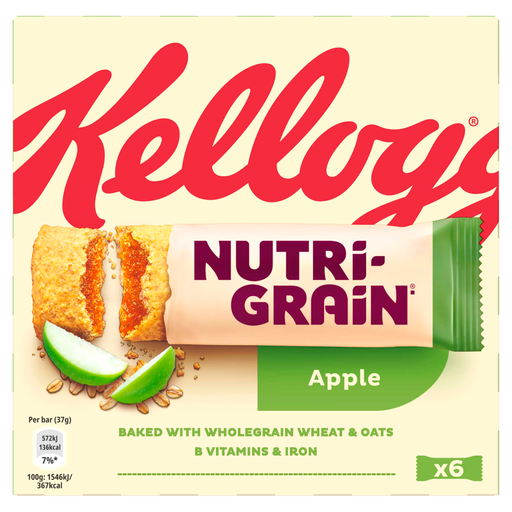
Kellogg's Nutri Grain Apple Fruity Breakfast Bars, 6-pack, 222g
A fruity breakfast-bar format to compare with the oat and fruit-and-nut options for elevenses. The pack contains six bars and weighs 222g; check the current label for per-bar nutrition and allergens, including wheat, oats, milk and soya.
View on Joybuy
 No image available
Special K Dark Chocolate Snack Bars, 6 x 21.5g
A 21.5g cereal-bar portion if you want to compare a smaller bar with the other pack sizes shown here. The pack contains six bars; read the current nutrition and allergen information, particularly if wheat, barley, oats, milk or soya matter to you.
View on Joybuy
Questions about choosing a snack bar
What should I compare first for a lower-calorie elevenses?
Compare kcal for the bar or serving you intend to eat, then look at its weight and the rest of its nutrition table. The NHS explains that labels give nutrition per 100g and may also give it per portion; the portion shown by a manufacturer may differ from the amount you eat.
Does “no added sugar” mean a bar has little total sugar?
No. Joybuy lists 17g total sugars in a 35g nākd. Blueberry Muffin bar despite its no-added-sugar positioning. Check the total-sugars figure for the portion rather than treating the claim as a substitute for the nutrition table.
Is a protein bar necessarily the lower-calorie choice?
No. Nature Valley lists around 10g protein and 196 kcal in its 40g Protein Peanut & Chocolate bar, while the TREK Cocoa Oat flapjack listed by Ocado has 9g protein and 227 kcal per 50g bar. Compare both protein and portion calories with the smaller bars you are considering.
What allergen information should I check?
Read the current pack’s full ingredients, emphasised allergens and any “may contain” statement for the exact bar. The examined products differ in their ingredients and precautions, so a vegan or gluten-free description is not a substitute for checking the allergens relevant to you.
Can I use an older recommendation for an Alpen bar?
Check the exact product before relying on it. Alpen’s UK FAQ lists several former bar products as no longer being made, so an older recommendation may refer to a bar that is no longer produced; read the current pack information for any product you do find.


