Households planning individual portions
Individually wrapped bars make it easier to see the labelled amount for one snack. Check whether the pack’s stated serving is one bar or more before comparing multipacks.


For a family cupboard, compare the labelled calories in the bar someone will actually eat, then check sugars, fibre and allergens rather than choosing by the calorie figure alone. Bar sizes differ: Eat Natural labels its Apple and Red Fruits Soft Fruit Bars at 86 and 87 kcal per 25g bar respectively, while the Graze Oat Boost variants described below have 30g portions. Check the current pack before buying, particularly when one multipack needs to suit several people.
Individually wrapped bars make it easier to see the labelled amount for one snack. Check whether the pack’s stated serving is one bar or more before comparing multipacks.
If calories are not the only consideration, compare total sugars, fibre or protein for the portion someone is likely to eat. A smaller bar and a larger flapjack are not equivalent portions.
Check the ingredients and precautionary allergen wording on each flavour and pack. A dietary label on one bar does not establish that every product from the brand suits the household.
Start with the portion likely to be eaten, then compare like-for-like nutrition figures and check whether everyone who might take a bar can have it. The NHS explains that food labels give nutrition information per 100g and sometimes per portion.
| Priority | What to check | Your needs |
|---|---|---|
| Portion calories | Read kcal per bar and the labelled serving size; check whether a serving contains more than one bar. Use kcal per 100g to compare different bar sizes on the same basis. | I want to know the amount in the snack someone will actually take from the cupboard, not just the figure printed most prominently on the pack. |
| Total sugars | Compare the total-sugars row per bar and per 100g. Read it separately from claims about added sugar or ingredients. | If I am comparing fruit bars with oat bars, I want to see their sugar figures as well as their calories. |
| Fibre or protein | Check the stated grams for the exact bar and serving. Do not use a protein or fibre description as a substitute for checking kcal. | Some family members may want an oat bar or a protein-containing option, while others are choosing mainly by portion size. |
| Ingredients and allergens | Read the ingredient list, declared allergens and any “may contain” statement on the exact flavour and pack. Check dietary wording product by product. | Before I buy several packs for the household, I need to know which bars each person can have. |
A smaller bar can show fewer calories per portion partly because it contains less food. Nature Valley UK, for example, declares the serving for its Crunchy Variety Pack as two bars weighing 42g.
Compare the amount likely to be eaten as well as the per-100g figures when looking across different formats.
The two statements answer different questions. Tesco Groceries lists nākd. Peanut Delight at 12g total sugars per 35g bar, while nākd. describes its bars as having no added sugar.
Use the total-sugars row on the exact pack when sugar matters to the choice.
Bars within this category can contain nuts, peanuts, oats or soya, and precautionary statements vary between products. A pack that suits one family member may not suit another.
Check every intended flavour’s current ingredient and allergen information before stocking a shared cupboard.
These brand examples illustrate different bar formats; the nutrition and dietary details apply to the named products, not to every bar in a range.
Its individually wrapped Apple and Red Fruits Soft Fruit Bars are small, 25g portions. Eat Natural labels them at 86 and 87 kcal per bar respectively.
Its Oat Boost flapjacks provide another individually portioned format. Tesco Groceries lists Cocoa Vanilla at 116 kcal and Sticky Toffee at 122 kcal per 30g serving.
The brand describes its fruit-and-nut bars as having no added sugar. That description is separate from their total-sugars and calorie figures.
Its range includes Crunchy bars and products described by Nature Valley UK as Protein bars. Check the serving basis before comparing either format with a single smaller bar.
These options cover small oaty and cereal bars, oat flapjacks and a fruit-and-nut bar for a family shop. Compare the current nutrition and allergen information for each exact pack before choosing.
 No image available
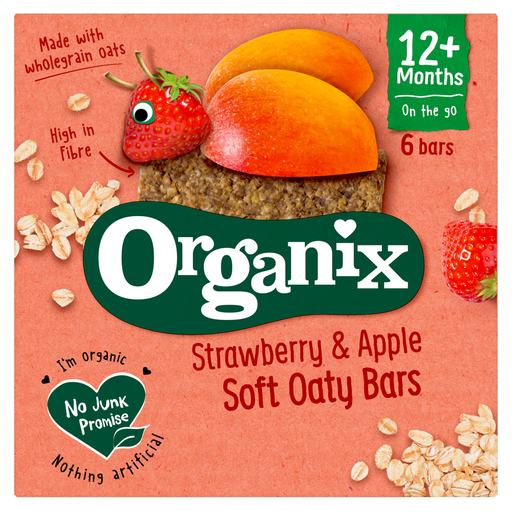
The 23g bar size is relevant when comparing individual portions. This product is labelled for ages 12+ months; check its current nutrition and allergen information before choosing it for the household.
 No image available
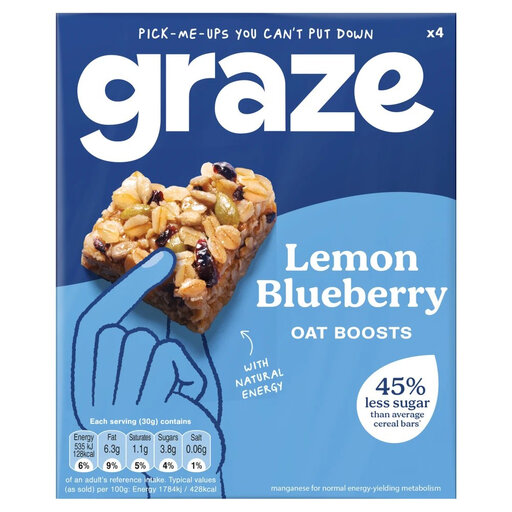
A 30g oat-bar option for comparing a flapjack portion with smaller snack bars. Check the Lemon Blueberry pack’s own kcal, total-sugars and allergen information rather than applying figures from other Oat Boost flavours.
 No image available
Another 30g Oat Boost flavour to consider if an oat flapjack suits the household. Compare its own nutrition panel and ingredient list with Lemon Blueberry; the shared bar size does not mean their other details are identical.
 No image available
Its 21.5g bar is smaller than the oat bars shown here. Compare both per-bar and per-100g figures so the difference in portion size does not obscure the nutrition comparison.
 No image available
A 35g fruit-and-nut bar for households considering that format alongside oat or cereal bars. Check the Blueberry Muffin pack’s total sugars, kcal and nut-allergen wording; figures for other nākd. flavours do not establish its figures.
Use both when choosing bars of different sizes. Per bar describes one packaged portion, while per 100g gives a common comparison basis; the NHS notes that labels provide nutrition information per 100g and sometimes per portion. If someone usually eats two bars, also check what that means for their actual portion.
No. The added-sugar description and the total-sugars figure tell you different things. For example, nākd. describes its bars as having no added sugar, while Tesco Groceries lists 12g total sugars per 35g Peanut Delight bar. Read the nutrition panel for the flavour you intend to buy.
Check the exact product before buying; do not rely on its calorie figure or a separate vegan or gluten-free description. Eat Natural’s Apple and Red Fruits Soft Fruit Bars contain almonds, and nākd. Peanut Delight contains peanuts. Read the current ingredients and any “may contain” statement for every flavour under consideration.
No. A protein figure describes protein, not energy. Nature Valley UK lists selected Protein bars with 7g or 10g protein, depending on the product; compare each bar’s labelled kcal and serving size separately if portion calories are the priority.