Shoppers comparing calories per snack
If you usually eat one bar at a time, its per-bar calories are a useful starting point. Check the bar weight and per-100 g figure as well, particularly when comparing small bars with larger ones.


When choosing a snack bar for an online grocery order, compare calories in the bar you expect to eat, then check its weight and calories per 100 g. A smaller bar can have fewer calories per portion without being lower in calories per 100 g; check sugars, ingredients, allergens and the available delivery options before settling on a flavour or multipack.
If you usually eat one bar at a time, its per-bar calories are a useful starting point. Check the bar weight and per-100 g figure as well, particularly when comparing small bars with larger ones.
If protein or fibre matters to you, compare the amount per bar alongside calories and portion size. A protein-labelled bar is not necessarily the lower-calorie choice.
If you need to avoid an ingredient or follow a particular diet, check the exact flavour and pack. Ingredients and may-contain statements can differ between bars from the same brand.
Start with the portion you would eat, then use the full nutrition panel and ingredient information to narrow the choice.
| Priority | What to check | Your needs |
|---|---|---|
| Calories and portion | Compare kcal per bar, bar weight and kcal per 100 g. Check whether you would eat one bar or more than one. | I usually eat one bar at a time, so its stated portion matters more to my immediate choice than the multipack total. |
| Sugars and saturated fat | Read the values per bar as well as calories. Where shown, use per-100 g values to compare bars of different sizes. | A fruit, oat or protein label alone does not tell me how much sugar or saturated fat is in the portion. |
| Protein and fibre | Compare grams per bar alongside kcal and bar weight; do not treat a front-of-pack claim as a calorie figure. | If protein or fibre is important for this snack, I can weigh that against the calories in the whole bar. |
| Ingredients and allergens | Check the exact flavour’s ingredients, allergen declaration and may-contain statements. Recheck the physical pack on delivery. | I cannot assume another flavour from the same brand has the ingredients or dietary suitability I need. |
| Delivery and substitutions | Confirm the chosen flavour and pack size in the basket, and review substitution settings before checkout. | If a replacement arrives, I need to check its portion, nutrition and allergens rather than assume they match my first choice. |
A small bar may have fewer calories per eating occasion while having a similar or higher calorie figure per 100 g than a larger bar.
Compare both figures and the bar weights before deciding what the lower per-bar number means for you.
Those claims describe particular attributes, not the total calories in a bar. Nature Valley UK lists 197 kcal for its 40 g Protein Chocolate & Coffee bar, while Tesco Groceries lists 189 kcal for a 45 g Nakd Peanut Butter Protein bar.
Check kcal per bar first, then compare protein, fibre and sugars according to what matters for this purchase.
Tesco Groceries showed Nakd Apple Pie and Alpen Raspberry & Yoghurt as out of stock when their listings were checked. That status does not tell you what will be available for your delivery slot.
Check the final basket and substitution settings before placing the order.
A substituted flavour or pack size may require you to check the nutrition and ingredients again.
Bars within this category can contain peanuts, tree nuts, soya or milk, and may-contain statements also vary by product.
Read the exact product listing and check the pack on delivery, particularly if an allergen or dietary restriction affects your choice.
These examples show why flavour and product line matter more than a brand name alone when comparing portions and ingredients.
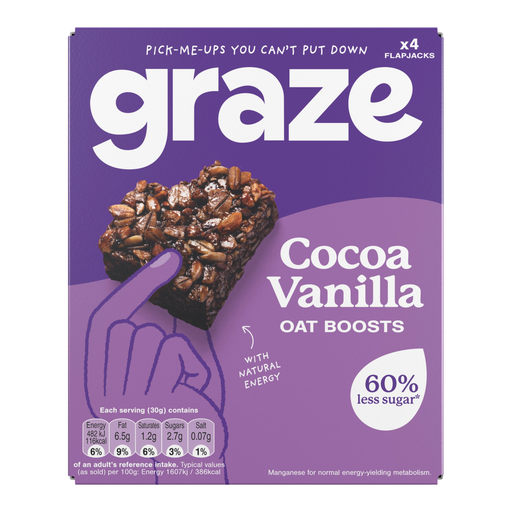
Graze has oat-based snack bars, including Cocoa Vanilla Oat Boosts listed by Tesco Groceries at 116 kcal per 30 g boost.
Nakd offers fruit-and-nut bars as well as protein bars; their portion sizes and calorie figures differ.
Nature Valley has oat bars and protein-labelled varieties with different nutrition and ingredients.
Alpen Raspberry & Yoghurt cereal bars provide a named-brand example for comparing per-bar calories.
Eat Natural has nut- and fruit-based bars, including a Dark Chocolate & Peanut Protein variety.
TREK has oat-based protein flapjacks, including a Lotus Biscoff multipack listed by Tesco Groceries.
These snack bar multipacks offer different flavours and portion sizes to consider for a grocery order. Use each exact product’s current nutrition and ingredient information to make a calorie or allergen comparison.
 No image available
The 30 g squares give you a stated portion size for a per-bar comparison. Check this exact product’s nutrition panel and allergen information before ordering; do not use figures from a differently named Graze Cocoa Vanilla bar.
 No image available
Each bar is listed as 21.5 g, so check its calories per bar before comparing it with larger portions. Review the current ingredients and allergens for this dark chocolate variety.
 No image available
This four-pack lists 30 g per bar. Compare the Lemon Blueberry nutrition panel per bar and per 100 g, and check its own ingredients rather than those of another Oat Boosts flavour.
 No image available
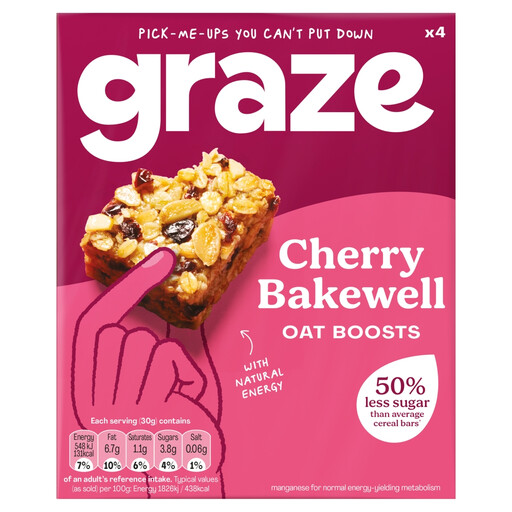
The stated 30 g bar size helps with a portion-by-portion comparison. Check calories and allergens for the Cherry Bakewell variety itself, particularly if a different flavour would be offered as a substitute.
 No image available
This multipack lists 50 g per bar, a larger stated portion than the other bars here. If you are considering it for its protein-bar format, compare the whole-bar calories as well as the protein figure on the current label.
Not on that basis alone. A smaller bar can have fewer calories per serving without being lower in calories per 100 g. Compare both figures rather than treating a small portion as a nutrition claim.
Use both: calories per bar describe the portion you expect to eat, while calories per 100 g help you compare bars of different weights. Check the pack size too, so you do not mistake a multipack total for a single serving.
No. The wording does not tell you the bar’s total calories or sugars. Tesco Groceries lists its no-added-sugar Nakd Peanut Butter Protein bar at 189 kcal per 45 g bar; compare the full nutrition panel and serving size.
Check the replacement’s exact flavour, portion size, nutrition and ingredients before accepting it. A similar-looking bar need not have the same calories or allergens, so review substitution settings before checkout and the pack when it arrives.
Check the declaration for each exact product. Tesco Groceries lists peanuts, almonds and walnuts in Nakd Apple Pie; Nature Valley UK lists peanuts, soya and milk in Protein Chocolate & Coffee and says it may contain tree nuts. Recipes differ, so use the current listing and physical pack for the bar you receive.