Desk workers watching portion calories
If a bar is a small snack between meals, compare kcal for the whole portion you plan to eat. Pack size and serving size are not always the same thing.


Choose an office snack bar by the calories in the portion you will actually eat, then use the per-100g figures to compare bars of different sizes. A small cereal bar may suit a short break, while oat, fruit-and-nut and protein bars offer different ingredients and portions; check their fibre, protein, sugars and allergens rather than relying on front-of-pack wording.
If a bar is a small snack between meals, compare kcal for the whole portion you plan to eat. Pack size and serving size are not always the same thing.
If a very small bar will not suit the break you have in mind, compare bar weight, fibre and protein alongside calories. A larger portion changes what you eat, even when its packaging emphasises one nutrient.
Vegan, gluten-free and dairy-free suitability varies by product. Check the exact pack’s ingredients and any relevant may-contain statements before bringing bars into a shared office.
Start with the portion you would eat during a break, then compare nutrition and ingredients on the same basis.
| Priority | What to check | Your needs |
|---|---|---|
| Portion and calories | Check kcal per bar, the stated serving and the number of bars you would eat. Use kcal per 100g to compare different bar sizes. | For a short desk break, I want to know the calories in my whole snack—not just in one bar from a larger pack. |
| Bar size, fibre and protein | Compare bar weight, fibre and protein per bar alongside kcal per bar. A protein figure alone does not show whether a bar fits your intended portion. | A small sweet bar might be enough for one break; at another time, I may prefer a larger portion and want to see what comes with it. |
| Sugars and ingredients | Read “of which sugars” per bar and per 100g, then check the ingredients. “No added sugar” does not state the amount of total sugars. | If I am comparing fruit-and-nut bars with oat or cereal bars, I want the nutrition figures rather than a front-of-pack phrase to guide the choice. |
| Allergens and dietary suitability | Check the current pack’s ingredients, emphasised allergens and relevant may-contain statements. Confirm vegan or gluten-free labelling on the exact variant. | When snacks go into a shared drawer, I need to know whether each particular bar meets the dietary requirements involved. |
Weetabix Cereals lists its Alpen Light Chocolate & Fudge bar as 19g, while TREK lists its Cocoa Oat flapjack as 50g. Their per-bar figures describe different portions.
Use kcal per bar to assess what you would eat, and kcal per 100g for a like-for-like comparison between products.
nākd. labels its Blueberry Muffin bar “no added sugar”, but lists 17g total sugars and 131 kcal per 35g bar.
Compare the total sugars and calories on the nutrition panel, then read the ingredients for context.
Nature Valley lists 196 kcal and 10.2g protein for its 40g Peanut & Chocolate Protein Bar; TREK lists 227 kcal and 9g protein for its 50g Cocoa Oat flapjack. Those portions differ from the smaller cereal-bar examples.
If protein matters to your choice, weigh its per-bar amount against the calories, portion size and ingredients of the bar you would eat.
A fruit-based or vegan bar can still contain nuts or other allergens. Suitability also differs between flavours and product lines.
Check the exact current pack. GOV.UK guidance says the ingredients list for pre-packed food emphasises the regulated allergens it contains; read any relevant may-contain statement too.
These figures describe the named bars and serving sizes, not every product made by each brand.
Alpen Light Chocolate & Fudge is an example of a small cereal-bar portion for a short office break.
The Cocoa Vanilla Oat Boost is a 30g oat-bar example for shoppers comparing a larger portion with a small cereal bar.
Blueberry Muffin is a fruit-and-nut option that nākd. describes as vegan, gluten-free and dairy-free.
The Cocoa Oat protein flapjack offers a larger 50g portion for someone comparing protein as well as calories.
Peanut & Chocolate Protein Bar is a 40g protein-bar example, rather than a small cereal-bar portion.
Dark Chocolate & Peanut Protein Bar is a nut-based example for comparing a 40g portion with smaller snack bars.
These cereal and oat-bar packs are options to consider for an office snack drawer. Compare the serving and nutrition information for each flavour before deciding how much of a pack fits your break.
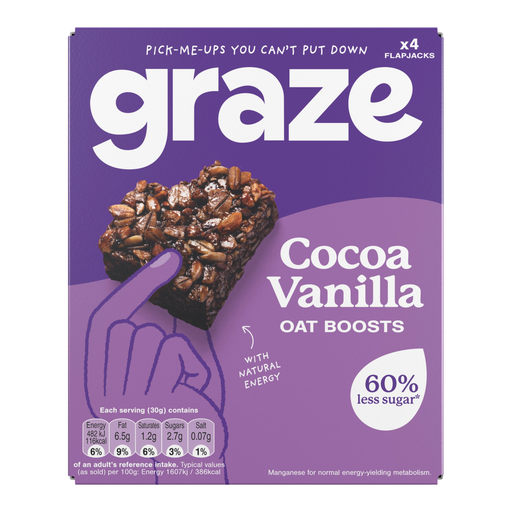 No image available
For a desk-drawer oat snack, compare the nutrition information for one 30g square with the portion you intend to eat.
 No image available
If lemon and blueberry appeal, check this oat bar’s kcal, sugars and fibre per 30g bar against other flavours you are considering.
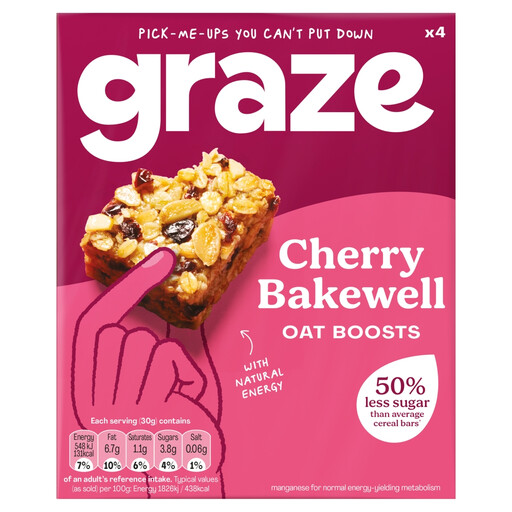 No image available
Cherry Bakewell is another 30g oat-bar flavour. Check its own nutrition panel and ingredients rather than applying figures from a different Graze bar.
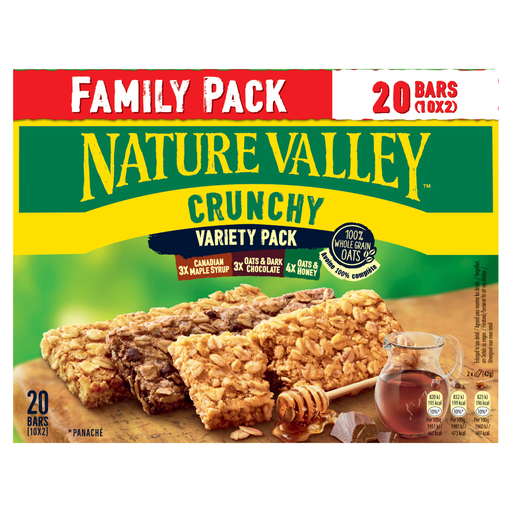 No image available
With a variety pack, check each flavour’s serving information and count all the bars you would eat in one office break.
 No image available
The 21.5g bar size is worth considering for a small office snack; check its kcal per bar and ingredients before comparing it with larger bars.
Check kcal for the whole portion you would eat, then compare kcal per 100g for a like-for-like view of bars with different weights. For example, Weetabix Cereals lists 65 kcal per 19g Alpen Light Chocolate & Fudge bar, while TREK lists 227 kcal per 50g Cocoa Oat flapjack; those per-bar figures describe different portions.
No. nākd. describes its Blueberry Muffin bar as having no added sugar, but lists 17g total sugars and 131 kcal per 35g bar. Read “of which sugars” and kcal per bar alongside the ingredients.
Choose one if its protein content and portion fit what you want from that break, but check its calories too. Nature Valley lists 10.2g protein and 196 kcal per 40g Peanut & Chocolate Protein Bar; TREK lists 9g protein and 227 kcal per 50g Cocoa Oat flapjack.
Check the ingredients and any relevant may-contain statements on the exact current pack. GOV.UK guidance says regulated allergens in the ingredients list of pre-packed food must be emphasised; a vegan or fruit-based description does not answer every nut, soya or other allergen question.