Hosts planning portions
Individually portioned bars make it easier to compare what one guest will receive. Start with kcal per bar rather than relying on words such as “natural” on the wrapper.


For a birthday party, compare the calories in the bar each guest will actually receive: Graze Honey Oat Boost has 129 kcal per 30 g bar and nākd Cocoa Delight has 138 kcal per 35 g bar, both below the 175 kcal per-serving average in Action on Sugar’s 2025 UK snack-bar report. Bar sizes differ, so also compare sugars and per-100-g figures, then check the exact pack against guests’ dietary requirements and allergies; neither example is a default choice for a nut-allergy-managed table.
Individually portioned bars make it easier to compare what one guest will receive. Start with kcal per bar rather than relying on words such as “natural” on the wrapper.
If guests ask for vegan or gluten-free food, check the claim on the exact pack alongside its ingredients. Neither claim establishes that a bar is lower in calories or free from other allergens.
Check ingredients and precautionary allergen wording against each guest’s requirements before serving. Oat, fruit, nut and protein bars cannot be treated as interchangeable allergy options.
Choose the portion you intend to serve, compare its nutrition label, and assess allergen suitability before putting bars on a shared table.
| Priority | What to check | Your needs |
|---|---|---|
| Portion energy | Compare kcal per bar for the portion served. Check kcal per 100 g for a like-for-like comparison when bar sizes differ. | I’m putting out one bar per guest, so the per-bar figure matters; a smaller bar may have fewer calories partly because it is smaller. |
| Sugars and other nutrients | Read total sugars per bar alongside kcal. Consider fibre or protein per bar separately; a “no added sugar” or protein claim does not establish a lower calorie figure. | I want to see what is in each portion, not choose from one claim on the front of the pack. |
| Allergens | Read the exact pack’s ingredients and “may contain” statement for each relevant allergen. Keep wrappers available so guests can identify the bars. | Someone with a declared allergy needs an option checked for that allergen, not simply a bar described as vegan or gluten free. |
| Dietary preferences | Check vegan, dairy-free or gluten-free wording on the current variant, then read its full ingredients and allergen statement. | If I’m offering different options, I need to know which guests each specific bar is intended for. |
“No added sugar”, “natural” and protein claims answer different questions from how many calories or total sugars are in one bar. For example, nākd lists 15 g sugars per 35 g Cocoa Delight bar despite its no-added-sugar claim.
Compare kcal and total sugars for the portion served; use fibre and protein figures only where they matter to your choice.
The products discussed here include bars containing cashews, peanuts or almonds, as well as bars carrying precautionary allergen statements. Vegan or gluten-free wording does not resolve those other allergy questions.
Ask about guests’ requirements where possible, check each current pack and keep unsuitable products clearly separate from any allergy-managed selection.
The compared examples range from 30 g to 50 g per bar. Per-bar energy describes the portion a guest receives, while the per-100-g figure answers a different, like-for-like comparison question.
Use both figures, then decide whether the actual bar size fits what you plan to serve.
Alpen’s official FAQ lists several earlier bar varieties as no longer being made, including some Alpen Light bars.
Confirm the current product and read its present nutrition and allergen label before planning the party selection around it.
These examples describe particular bars or ranges, not the nutrition or allergy suitability of every product from a brand.
Honey Oat Boost is a 30 g oat-bar example for comparing individually portioned snacks.
Its range includes crunchy and protein-bar formats.
Check the current range before considering Alpen for a snack-bar selection.
Almond & Apricot with yoghurt coating is a 40 g fruit-and-nut bar example.
Cocoa Delight is a 35 g fruit-and-nut bar labelled no added sugar.
Cocoa Oat is a 50 g protein oat flapjack.
These Joybuy options include portioned oat, chocolate and nut bars to consider for a birthday-party snack table. They are different variants from several of the named nutrition examples above: compare each option using its own current pack, especially for kcal, sugars and allergens.
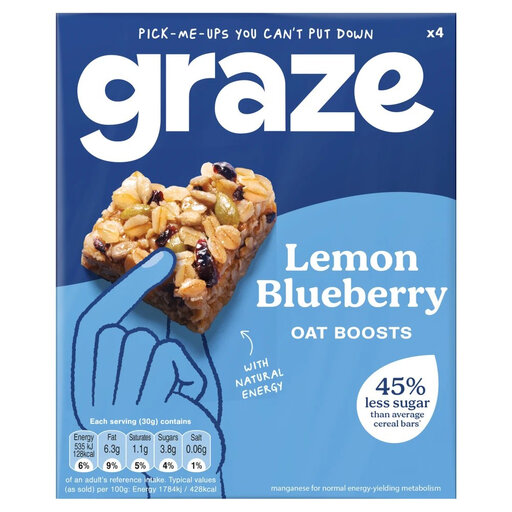 No image available
The 30 g bar size gives you a defined portion to compare for a party. Check this Lemon Blueberry variant’s kcal and sugars on its pack rather than using figures for Honey Oat Boost; also review its precautionary allergen wording before serving.
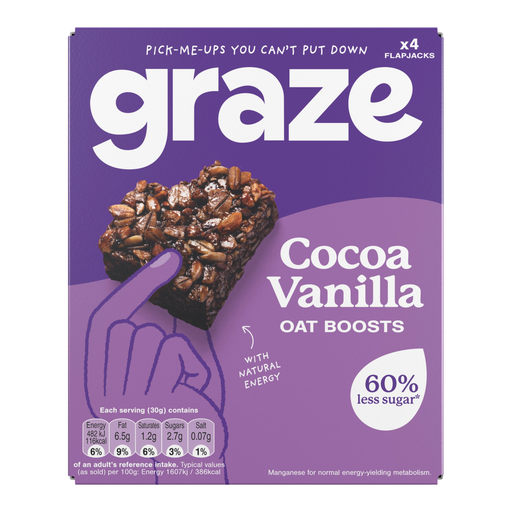 No image available
These 30 g portions offer another size to compare with the rest of the snack table. Read this variant’s per-portion nutrition panel and check its allergen and “may contain” wording, particularly if guests have nut, peanut, milk or egg allergies.
 No image available
At 21.5 g per bar, this is a smaller stated portion than the other options here. Compare both kcal per bar and per 100 g, and check the pack’s cereal, milk and soya ingredients against guests’ requirements.
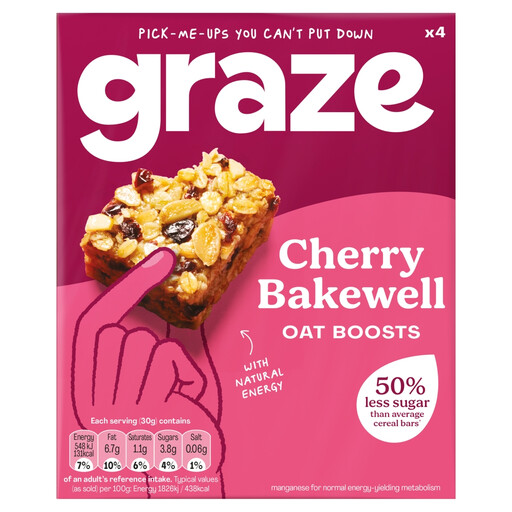 No image available
The 30 g bar size helps with per-guest portion planning. Check Cherry Bakewell’s own kcal and sugars rather than transferring figures from another Graze flavour, and review the pack for almonds and any precautionary allergen warnings.
 No image available
This 40 g nut-bar option calls for a separate per-bar calorie check if lower energy per portion is the aim. Do not use nutrition figures for the different Peanut & Chocolate variant; check this pack’s ingredients and allergen statement before offering it to guests.
Use kcal per bar to compare the portions you plan to serve, and kcal per 100 g to compare bars of different sizes on the same weight basis. Sainsbury’s lists Graze Honey Oat Boost at 129 kcal per 30 g bar, while nākd lists Cocoa Delight at 138 kcal per 35 g bar; those figures apply to those specific products.
No. nākd Cocoa Delight is labelled no added sugar, but its nutrition information lists 138 kcal and 15 g total sugars per 35 g bar. Read both figures on the variant you intend to serve.
No. Gluten-free wording does not address other allergens: the checked Nature Valley Peanut & Chocolate bar lists peanuts, soya and milk, while the checked nākd Cocoa Delight contains cashews. Match each exact pack’s ingredients and warnings to the guest’s declared requirements.
Keep the original wrappers available so guests can read the ingredients and any “may contain” wording for the bar being offered. Check the current pack before serving rather than relying on a photograph or an earlier listing.
Do not assume one bar meets every guest’s dietary or allergy requirements. Check those requirements first, then identify and separate any options you can offer appropriately; a lower calorie figure does not establish allergen suitability.