Parents choosing a small snack
An individually portioned bar makes it easier to compare the energy in what will actually be packed. Keep it separate from the main lunch item rather than treating a smaller bar as a complete lunch.


Compare the energy in the individual bar you would pack, then check the per-100g figure so that different portion sizes do not obscure the comparison. Read the exact pack’s ingredients and allergen statements, and check school rules before choosing; a snack bar should not take the place of the main lunch item and fruit or vegetables described in NHS lunchbox guidance.
The right bar depends on the portion going into the lunchbox, the rest of the lunch and any ingredient restrictions.
An individually portioned bar makes it easier to compare the energy in what will actually be packed. Keep it separate from the main lunch item rather than treating a smaller bar as a complete lunch.
Check the exact flavour’s ingredients and precautionary allergen statements, alongside the school’s food rules. A vegan or gluten-free description answers a different question from whether a bar is suitable for a particular allergy.
For an older pupil where protein content is a selection priority, compare that figure with energy per bar and the allergen declaration. The Nature Valley Protein Chocolate & Coffee example contains peanuts and provides 197 kcal per 40g bar, according to Nature Valley UK.
Start with the portion you intend to pack, then use the rest of the label and the school’s rules to decide whether that particular bar fits.
| Priority | What to check | Your needs |
|---|---|---|
| Portion energy | Read kcal per bar and the bar’s weight. Compare kcal per 100g when bar sizes differ; Nature Valley UK explains that this gives a like-for-like basis. | I want to know the energy in the bar I will pack, without mistaking a smaller portion for a different nutritional profile. |
| The rest of lunch | Plan the main lunch item and fruit or vegetables separately. NHS lunchbox guidance suggests basing the main item on foods such as bread, rice, pasta or potatoes. | A bar might be an optional snack, but I still need to pack the main part of lunch. |
| Allergens and school rules | Read the current ingredients and any ‘may contain’ statement for the exact flavour. Check the school’s packed-lunch and allergy policy, particularly for nuts and peanuts. | If an ingredient is restricted or relevant to my child, the calorie figure alone cannot settle the choice. |
| Dietary descriptions | Confirm vegan, gluten-free or dairy-free wording on the exact product. Compare its energy per bar separately; a dietary description does not establish that it has fewer calories. | I need a bar that meets the relevant dietary requirement, while still checking its portion and allergens. |
A lighter bar can show fewer kcal per bar partly because it is a smaller portion.
Use kcal per bar to assess what you will pack and kcal per 100g to compare bars of different weights. Check the serving definition if a wrapper contains more than one bar.
Those descriptions do not state the energy in a serving. Nature Valley UK lists 197 kcal for its 40g Protein Chocolate & Coffee bar, despite its stated protein and fibre content.
Read the nutrition panel for the exact flavour and portion instead of using the product description as a shortcut.
Bars in this category can contain nuts or peanuts, or carry precautionary statements. Suitability for one child does not establish suitability under a school’s rules.
Check the current pack’s ingredients and ‘may contain’ wording, then confirm the school’s policy before packing the bar.
A bar does not replace the lunchbox structure described by the NHS, which includes a main item and fruit or vegetables.
If you include a bar, pack it as an optional snack alongside the rest of lunch.
These examples illustrate why the exact flavour and portion matter; figures and allergen statements for one bar should not be applied to an entire brand range.
Alpen Light Chocolate & Fudge is a 19g cereal bar. Weetabix Cereals lists 65 kcal for one bar in its nutrition panel.
Eat Natural Soft Fruit Bars Apple is a 25g fruit-and-nut bar. Waitrose & Partners lists 86 kcal per bar.
nākd. describes its fruit-and-nut bars as pressed fruit and nuts. FatSecret UK lists 94 kcal for one 30g Banana Bread bar.
Graze Cocoa Vanilla Oat Boosts is a 30g oat-based flapjack. Waitrose & Partners lists 116 kcal per serving.
Nature Valley UK lists 10.2g protein, 4.5g fibre and 197 kcal for one 40g Protein Chocolate & Coffee bar.
TREK describes Protein Flapjacks and High Protein bars as two parts of its plant-based protein range.
These cereal, fruit-and-nut and oat bars are options to assess for an optional school-lunch snack. Compare each exact pack’s portion information and allergen declaration before deciding what to pack.
 No image available
The stated 21.5g bar size gives you a defined portion to compare with other lunchbox snacks. Check the current pack’s energy per bar, ingredients and allergens against the school’s rules.
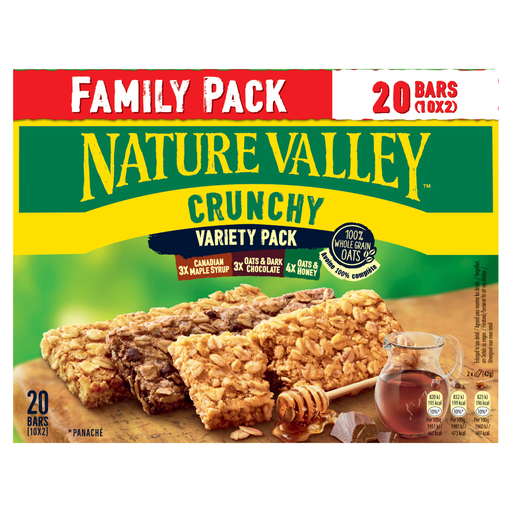 No image available
A 42g serving comprises two bars, so check the nutrition panel against the number you plan to pack. The product carries a ‘may contain’ warning for peanuts and tree nuts; check the school’s policy.
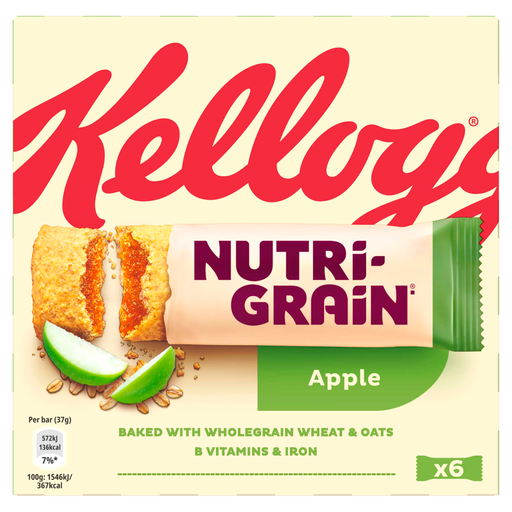 No image available
For an apple-flavoured breakfast-style bar, compare the energy for one bar rather than the full pack. Check the current ‘may contain’ nuts statement and the school’s packed-lunch rules.
 No image available
This fruit-and-nut option contains almonds and cashews, so it does not fit a nut-free school rule. Check the current pack’s energy per 35g bar and its full allergen declaration, including precautionary wording.
 No image available
Compare the energy for one 30g bar with other portion sizes. This variant contains almonds; check the current pack’s further allergen information and the school’s rules before packing it.
Compare kcal per individual bar for the portion you would pack, then kcal per 100g for a like-for-like comparison. Weetabix Cereals lists 65 kcal for a 19g Alpen Light Chocolate & Fudge bar, while Waitrose & Partners lists 86 kcal for a 25g Eat Natural Soft Fruit Bars Apple bar; those per-bar figures describe different-sized portions.
Do not treat a snack bar as the main lunch item. NHS lunchbox guidance suggests a main item based on foods such as bread, rice, pasta or potatoes, with vegetables and fruit; if you pack a bar, consider it an optional snack alongside those foods.
No. Weetabix Cereals says Alpen Light Chocolate & Fudge is not suitable for nut-allergy sufferers, and the Eat Natural Apple bar contains almonds according to Waitrose & Partners. Check the exact current pack, including ‘may contain’ statements, and the school’s policy.
No; dietary suitability and energy per bar are separate label details. Confirm the relevant description for the exact flavour, then read its nutrition panel and allergen information before deciding whether to pack it.
The Department for Education’s School food in England guidance addresses food and drink provided in state-funded schools in England. For a lunch brought from home, check the individual school’s published packed-lunch and allergy policy rather than assuming one rule applies to every school.