Shoppers choosing a smaller snack
If you want a vegan bar for a desk drawer or commute, compare the calories in one bar rather than relying on words on the front of the pack. Check the per-100g figure too when the bars differ in weight.


Choose a bar explicitly labelled suitable for vegans, then check calories per bar for the portion you will eat and per 100g to compare bars of different sizes. Tesco lists Graze Cocoa Vanilla Oat Boost at 116 kcal per 30g boost, but that figure does not apply to other Graze flavours or pack sizes. Check the current pack’s ingredients and allergen advice as well as its nutrition panel.
If you want a vegan bar for a desk drawer or commute, compare the calories in one bar rather than relying on words on the front of the pack. Check the per-100g figure too when the bars differ in weight.
A fruit-and-nut format or a stated protein amount may matter to you, but neither establishes a lower calorie figure. Compare the exact flavours and serving sizes you are considering.
Vegan suitability and allergy suitability are separate checks. Read the current ingredient list and any precautionary statements for milk, nuts, peanuts or soya that are relevant to you.
Confirm vegan suitability for the exact flavour, compare energy on the same basis, then consider ingredients and allergens.
| Priority | What to check | Your needs |
|---|---|---|
| Vegan suitability | Look for an explicit vegan statement for the exact bar and flavour. Read the current ingredients rather than assuming that an oat-based or vegetarian bar is vegan. | I want a bar whose vegan status applies to the one I am buying, not just to other products from the same brand. |
| Calories and size | Check kcal per bar and the bar’s weight. Use kcal per 100g for a like-for-like comparison across different sizes, as Nature Valley UK’s label guide explains. | For a smaller snack, I care about the calories in the whole bar I will eat. I also want to know whether a difference comes partly from portion size. |
| Nutrition and ingredients | Read the current energy, sugars and saturated-fat figures per bar and per 100g. A vegan or no-added-sugar description does not give you those figures. | A fruit-and-nut bar appeals to me, but I do not want to assume its label description tells me its calorie content. |
| Protein and fibre | If these matter to your choice, check the amounts or claims for the exact variant alongside its serving size and calories. Tesco lists 7g plant protein for its nākd. Cocoa Hazelnut Protein Bar listing; TREK describes its protein flapjacks as providing 9g. | I may prefer a protein-focused bar over a smaller portion, provided its own nutrition panel fits what I am looking for. |
| Allergens | Read the exact pack’s highlighted ingredients and precautionary allergen statements. A vegan label does not mean a bar is free from milk cross-contact, nuts, peanuts or soya. | If I need to avoid an allergen, I must check that separately from the bar’s vegan status. |
Neither phrase tells you how many calories are in a bar. Action on Sugar’s 2025 snack-bar review also cautions against relying on a wholesome image when assessing sugars, saturated fat and calories.
Compare the current pack’s energy per bar and per 100g, then read its sugars and saturated-fat figures.
A smaller bar can contain fewer calories per bar partly because the portion is smaller; that alone does not establish a difference per 100g.
Use the per-bar figure for the portion you intend to eat and the per-100g figure to compare products of different weights.
Eat Natural describes its peanuts, coconut and dark-chocolate cereal bar as vegan, while its product information lists peanuts and a precautionary statement for milk and several nuts.
For an allergy, check the exact current pack’s ingredients and precautionary statements independently of its vegan label.
A small-portion bar and a protein-focused flapjack address different preferences. TREK states that its protein flapjacks provide 9g plant protein; that figure does not establish their calorie content relative to a smaller bar.
Decide which feature matters for this snack, then compare the exact products’ protein, fibre and calories per bar.
Vegan status and nutrition figures belong to individual products and flavours, not every bar bearing a brand name.
An oat-flapjack option to examine when portion size matters: Tesco lists Cocoa Vanilla Oat Boost as suitable for vegans at 116 kcal per 30g boost.
Its Cocoa Delight fruit-and-nut bar is described by nākd. as vegan and having no added sugar; Tesco lists a separate Cocoa Hazelnut Protein Bar as suitable for vegans.
A reference for vegan protein-flapjack formats when a stated plant-protein amount matters to the comparison.
Eat Natural identifies its peanuts, coconut and dark-chocolate cereal bar as vegan.
Nature Valley UK’s label guide explains the different uses of per-bar and per-100g nutrition figures.
Alpen is a cereal-bar brand, but a familiar product-line name is not enough to establish a current vegan option.
These options span fruit-and-nut bars, oat flapjacks and protein-flapjack formats. Compare the current pack of each flavour for vegan suitability, calories and allergens before choosing.
 Image unavailable
A peanut bar to compare with the smaller-portion and protein-focused options. The pack contains four 35g bars; check calories per bar and the current peanut, other-nut and soya allergen advice.
 Image unavailable
A fruit-and-nut format in four 35g bars. Compare the exact pack’s calories per bar and per 100g; check its cashew and almond ingredients and any further nut or soya warnings.
 Image unavailable
Four 30g oat flapjacks for shoppers comparing smaller portions. Check this flavour’s own calorie and vegan information rather than applying figures from Graze Cocoa Vanilla; read its precautionary allergen advice too.
 Image unavailable
A protein-flapjack format with three 50g bars. Compare its exact per-bar calories and protein figure with the smaller bars; check the pack’s vegan designation and soya allergen information.
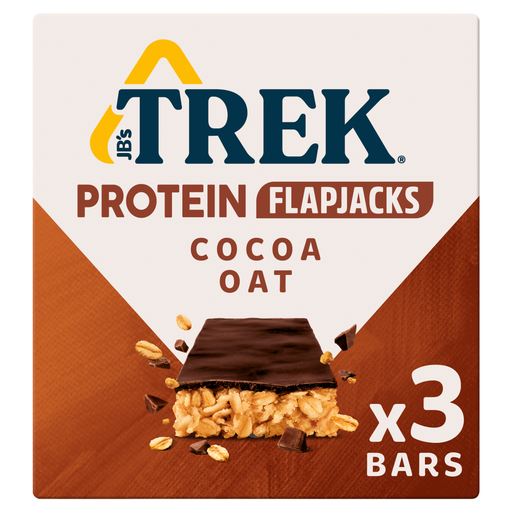 Image unavailable
A cocoa-and-oat protein-flapjack option in three 50g bars. Check this variant’s calories and protein per bar, alongside its vegan designation and soya allergen statement, rather than relying on figures for another TREK flavour.
Use calories per bar to assess the portion you will eat, then compare calories per 100g across different bar sizes. Nature Valley UK’s nutrition-label guide explains why both figures are useful.
No. That description does not establish the bar’s calorie content or total sugars. Check energy and sugars per bar and per 100g on the exact pack before comparing it with another product.
No. Nature Valley describes its Crunchy Canadian Maple Syrup bar as suitable for vegetarians, which does not confirm that it is vegan. Check the current pack or exact product information for an explicit vegan statement.
No. Check ingredients and precautionary allergen statements separately. Eat Natural’s vegan peanuts, coconut and dark-chocolate bar, for example, lists peanuts and says it may contain milk and several nuts.