Hosts offering packaged snacks
If you are handing out or selling cereal bars, choose a pack size that fits the number of refreshments you need and keep the original packaging available so people can read the ingredients and allergens.


For a car boot sale, compare cereal bars by total fat per 100g before deciding which has less fat, then check the amount in each bar, sugars, saturates and allergens. Kellogg's UK declares 6.3g fat per 100g for Special K Red Berry Bar, while Nature Valley UK declares 18.1g per 100g for Crunchy Oats & Honey; these are specific recipes, not a verdict on either range. A bar with less total fat may still have sugars or ingredients that make it unsuitable for the people you are serving.
If you are handing out or selling cereal bars, choose a pack size that fits the number of refreshments you need and keep the original packaging available so people can read the ingredients and allergens.
Compare the total-fat figures per 100g across exact flavours, then look at the amount per bar. Words such as “oat”, “protein” or “fruit and nut” do not tell you which recipe has less fat.
Check each flavour's current ingredient and allergen statement. The example bars have different declarations involving cereals containing gluten, milk, soya and nuts, so one wrapper cannot stand in for another.
Start with a like-for-like nutrition comparison, then check the actual portion and whether each exact flavour suits the people who may take one.
| Priority | What to check | Your needs |
|---|---|---|
| Total fat | Compare total fat per 100g across exact recipes. Then check the fat per bar and the bar's weight. | I want to compare bars of different sizes fairly, rather than choosing one because its smaller portion shows a smaller figure. |
| Other nutrition | Read sugars and saturates per 100g and per bar alongside total fat. Check any other nutrition figures that matter to your choice on the same basis. | Less total fat is only part of my decision; I also want to see what the serving contains. |
| Ingredients and allergens | Read the current ingredient list and allergen statement for every flavour. Keep its original packaging accessible when offering the bar. | If people have different dietary restrictions, I need them to be able to check the exact bar before taking it. |
| Pack and availability | Confirm the number and weight of bars in the pack. Check the exact flavour and pack listing before planning quantities or substituting a different product. | I need enough bars for the sale, with labels for the products I actually bring. |
Those descriptions identify ingredients or a product style, not its total-fat figure. Nature Valley UK declares 18.1g fat per 100g for Crunchy Oats & Honey, while Myprotein UK lists 19.6g per 100g for Trek Original Oat Protein Flapjack.
Use the total-fat line per 100g to compare recipes, then read the rest of each panel.
A smaller serving can show less fat per bar without having less fat per 100g than another recipe.
Compare per 100g first; use per-bar figures to understand the portion you will provide.
Ingredients and allergen declarations differ across the example bars, which matters when refreshments are offered to a mixed group.
Keep the original packaging for every flavour and let people check its current statement.
Joybuy's listing for Nature Valley Oaty & Crispy Honey 5 x 23g states that the product is no longer available.
Check the exact pack before planning quantities. If you substitute another bar, compare its nutrition and allergen information afresh.
A substitution can mean changing both the bar count and the information you need to make available to guests.
These brand examples show why the exact recipe matters more than the name of the range.
Special K and Nutri-Grain provide two distinct bar examples with published nutrition declarations.
Its Oaty & Crispy and Crunchy examples have different declared total-fat figures.
Its Oat Boost range is a flapjack-style option for shoppers considering oat-based snacks.
Original Oat Protein Flapjack is a protein-led example rather than an automatic lower-fat choice.
Its cashew and blueberry bar provides a fruit-and-nut example for comparison.
The five specific bars below are ordered by their declared total fat per 100g, using the named brand or retailer declarations. This is a limited comparison of recipes, not a market-wide ranking or a judgement about taste; the Joybuy-listed Nature Valley pack is shown for comparison, not as a current purchase option.
| Rank | Bar | Main specifications | Why it is here | Supplier or platform |
|---|---|---|---|---|
| 1 | Kellogg's Special K Red Berry Bar | 6.3g fat; 28g sugars per 100g | Kellogg's UK declares the lowest total-fat figure among these five recipes. Check its sugars and allergen statement as well. | Kellogg's UK |
| 2 | Nature Valley Oaty & Crispy Honey 5 x 23g | 8.0g fat; 15.8g sugars per 100g | Joybuy declares these figures for the listed pack, but states that it is no longer available. | Joybuy |
| 3 | Nature Valley Crunchy Oats & Honey | 18.1g fat; 26.8g sugars per 100g | Nature Valley UK's declaration shows why an oat-based name alone is not a lower-fat comparison. | Nature Valley UK |
| 4 | Trek Original Oat Protein Flapjack | 19.6g fat; 20.4g protein per 100g | Myprotein UK's figures make this a different choice for someone considering protein, rather than selecting chiefly by lower total fat. | Myprotein UK |
| 5 | Eat Natural Cashew & Blueberry with yoghurt coating | 26.3g fat; 18.6g saturates per 100g | Eat Natural UK declares the highest total-fat figure in this five-bar comparison; check the ingredient and allergen statement too. | Eat Natural UK |
These Joybuy multipacks include Special K, Cadbury Brunch Light and Nutri-Grain flavours that you can assess for car boot sale refreshments. Compare the current label on each exact pack before deciding how it fits your lower-fat brief.
 No image available
The six-bar pack gives you a stated bar weight for planning refreshments. Compare the current fat and sugars figures, and check this pack's allergens before offering it.
 No image available
This four-pack is an orange-flavoured option; “Light” in its name is not a substitute for comparing total fat per 100g. Check the current sugars, saturates and allergen declaration as well.
 No image available
This dark-chocolate six-pack has a stated 21.5g bar size. Compare its own nutrition panel with the Red Berry flavour rather than applying one flavour's figures or ingredients to the other.
 No image available
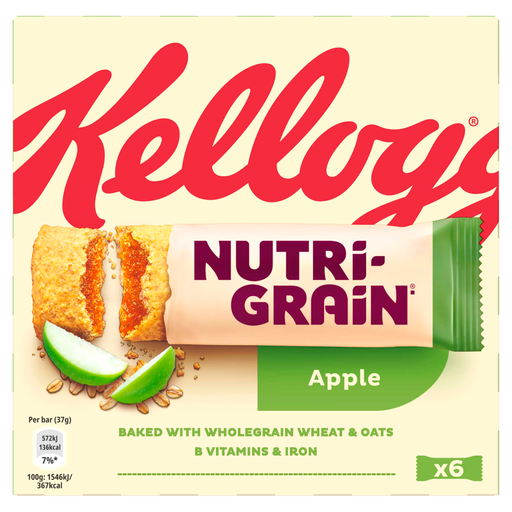
This apple-flavoured six-pack is worth comparing if you want a breakfast-bar format. Kellogg's UK declares 8.3g fat and 33g sugars per 100g for Nutri-Grain Apple; check the current pack's portion figures and allergens.
 No image available
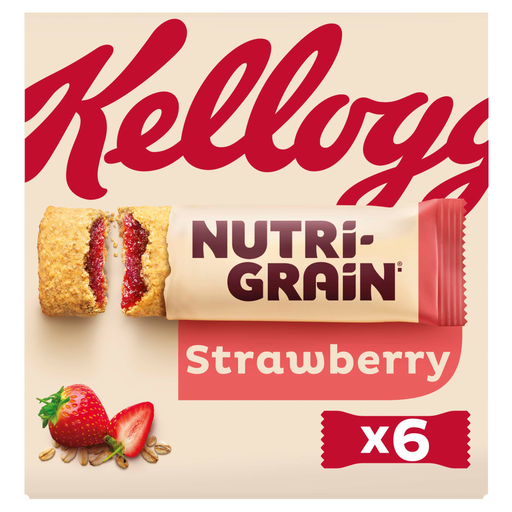
This strawberry-flavoured six-pack offers another Nutri-Grain choice for refreshments. Check its own per-100g figures and ingredient statement; the Apple flavour's declaration does not establish the Strawberry recipe's values.
No: a comparison claim does not by itself tell you the bar's total-fat figure. UK Department of Health & Social Care guidance covers the use of nutrition claims; when shopping, read the declared fat per 100g and per bar rather than treating the wording as the whole comparison.
Start with total fat per 100g to compare different bar sizes on the same weight basis. Then check the portion you will offer, plus sugars and saturates: Kellogg's UK declares 6.3g fat per 100g for Special K Red Berry Bar, while Nature Valley UK declares 18.1g for Crunchy Oats & Honey.
No; check the exact recipe's total-fat declaration. Myprotein UK lists 19.6g fat per 100g for Trek Original Oat Protein Flapjack, and Eat Natural UK declares 26.3g per 100g for its yoghurt-coated Cashew & Blueberry bar.
Keep manufacturer-sealed bars in their original packaging so people can check each flavour's current ingredients and allergens. If you operate a food business and prepare and prepack food for direct sale yourself, the Food Standards Agency says that in England, Wales and Northern Ireland the pack must show the food name and a full ingredients list with allergenic ingredients emphasised; that rule has a different scope from simply offering manufacturer-sealed bars.