Lower-fat snack planners
If you carry cereal bars for a commute, desk drawer or lunchbox, compare total fat and saturates rather than relying on the product name or front-of-pack wording.


For a lower-fat grab bag, compare cereal bars by fat per 100g, then check the fat in the bar you will actually eat. Kellogg's UK lists 6.3g fat per 100g for its 27g Special K Red Berry bar, while Weetabix Cereals lists 6.5g per 100g for its 19g Alpen Light Chocolate & Fudge bar; check the exact pack, as bar sizes and variants differ. GOV.UK guidance puts the threshold for a 'low fat' claim on solid food at no more than 3g fat per 100g, which neither of these examples meets.
If you carry cereal bars for a commute, desk drawer or lunchbox, compare total fat and saturates rather than relying on the product name or front-of-pack wording.
A bar that is small enough to carry may also have a small fat amount per serving. Check its per-100g values as well so that bar size does not obscure the comparison.
Vegan or gluten-free suitability may affect your choice, but it does not establish that a bar is lower in fat. Check the exact variant's ingredients, allergen statement and nutrition panel.
Start with the per-100g panel to compare different bar sizes, then read the values for the portion you intend to pack.
| Priority | What to check | Your needs |
|---|---|---|
| Total fat and saturates | Compare fat per 100g, then fat and saturates per bar. GOV.UK guidance gives 3g fat per 100g as the maximum for a 'low fat' claim on solid food. | I want to compare bars fairly, even when one portion is much smaller. A modest amount per bar alone does not tell me whether it meets that claim threshold. |
| Portion size | Check the weight and number of bars in the stated serving. Nature Valley UK declares two Crunchy Oats & Honey bars as a 42g serving; Weetabix Cereals declares one 19g Alpen Light Chocolate & Fudge bar. | For my bag, I want to know whether the nutrition figures describe one bar, two bars or a larger snack. |
| Sugars | Read sugars per 100g and per bar separately from fat. A reduced-sugar comparison does not describe the bar's fat content. | When I choose a bar for regular snacking, I want to see its sugar figure as well as its fat figure, rather than judging the whole product by one claim. |
| Ingredients and allergens | Read the ingredient and allergen declaration for the exact flavour. Check any vegan or gluten-free statement against the product you are buying. | If I need to avoid particular ingredients, another flavour or bar from the same brand is not automatically suitable. |
| Other snack priorities | If considering a protein, nut or flapjack bar, compare its fat per 100g and per portion with cereal bars, alongside the feature that drew you to it. | I may prefer another bar format for its ingredients or stated dietary suitability, but I still need to account for the fat in that portion. |
Weetabix Cereals lists 1.2g fat in a 19g Alpen Light Chocolate & Fudge bar, but 6.5g per 100g. GOV.UK guidance sets the solid-food 'low fat' claim threshold at no more than 3g per 100g.
Use the per-100g figure to compare products and the per-bar figure to understand the portion you will eat.
Tesco lists 11g fat per 50g TREK Smooth Lemon flapjack. Eat Natural lists 10.5g or 11.4g fat per 40g bar for its cited cashew-and-blueberry and vegan coconut-and-dark-chocolate products.
Choose those formats for a feature you want, such as the stated ingredients or dietary suitability, after comparing their fat and saturates with your other options.
Tesco lists a 45% lower-sugar comparison for Graze Cherry Bakewell Oat Boosts against more than 80 cereal bars, alongside 22g fat per 100g for the Graze product. The sugar comparison does not establish a lower fat content.
Read the sugars, fat and saturates figures individually.
Declared servings range from a single small bar to a two-bar pack or a larger flapjack. Ingredients and allergen statements also differ between products and flavours.
Check the current pack's serving size, ingredients and allergen declaration before putting a bar in your bag.
These examples describe named products, not every bar made by each brand.
Alpen Light Chocolate & Fudge is a small-bar option when the amount of fat in one portion matters.
Check the particular Kellogg's range and bar size rather than treating the brand as one nutrition profile.
Crunchy Oats & Honey uses a two-bar serving, so check whether you plan to eat one bar or both.
Graze Cherry Bakewell Oat Boosts illustrate why a sugar comparison and a fat comparison need separate checks.
Eat Natural's cited nut, coconut and coated bars offer different ingredients and dietary features, but are not the lower-fat examples in this comparison.
TREK Smooth Lemon is a flapjack to consider for its stated protein amount and dietary suitability, rather than as a lower-fat cereal bar.
These Joybuy options include cereal-bar multipacks and protein-bar alternatives for a grab bag. Compare the nutrition panel on the exact pack you choose: the differently sized Special K Red Berry pack here should not be assigned figures from Kellogg's 27g-bar example above.
 No image available
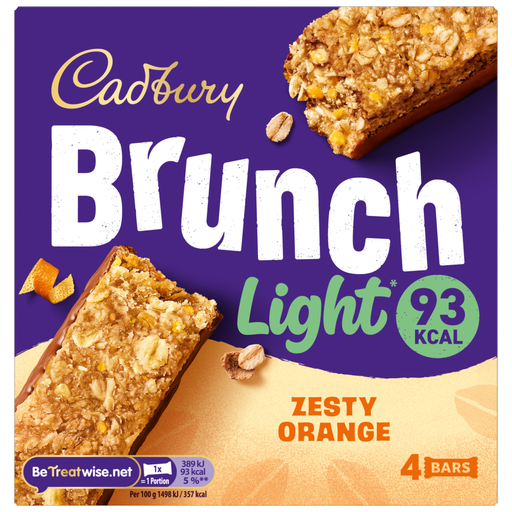
The 4-pack is an option to consider when choosing bars for a grab bag. Compare fat and saturates per 100g and per bar on the current pack; 'Light' in the product name does not establish its fat classification.
 No image available
The six 21.5g bars offer a smaller stated bar size for a grab bag. Check this pack's own fat, saturates and sugars figures: Kellogg's UK's published figures for a 27g Red Berry bar do not establish the values for this pack.
 No image available
This six-pack offers a dark-chocolate-flavoured bar in a 21.5g size. If you are comparing it with Red Berry, use the nutrition panels for these exact flavours rather than assuming they have the same fat or sugar values.
 No image available
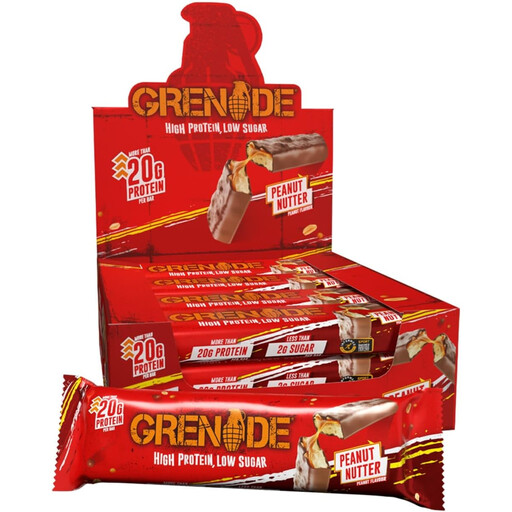
Consider this 60g protein-bar format if you want an alternative to cereal bars in your grab bag. Compare its fat and saturates per bar and per 100g with your cereal-bar options; the product name's low-sugar wording does not answer the fat question. Check its allergen declaration.
 No image available
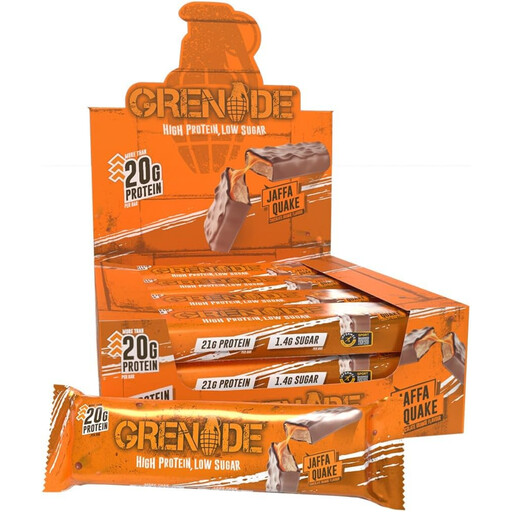
This is another 60g protein-bar option for carrying a single bar. Read the Jaffa Quake pack's own fat, saturates, sugars and allergen information before comparing it with cereal bars or the Peanut Butter variant.
No. GOV.UK guidance says a solid food making a 'low fat' claim must contain no more than 3g fat per 100g. A small bar can have little fat in one serving while exceeding that per-100g threshold, so check both figures.
Compare total fat per 100g first, then check fat and saturates in the bar or bars you plan to eat. Read sugars and the stated serving size too; UK Department of Health nutrition-labelling guidance distinguishes the per-100g information from optional per-portion figures.
Not necessarily. Tesco lists Graze Cherry Bakewell Oat Boosts with a 45% lower-sugar comparison against more than 80 cereal bars, but also lists 22g fat per 100g and 6.7g per 30g portion for that product. Compare sugar and fat separately.
Read the current ingredient and allergen declaration for the exact bar and flavour. Nature Valley UK says Crunchy Oats & Honey may contain peanut, tree nuts and soya, while Tesco says TREK Smooth Lemon may contain peanuts, nuts and milk; another product's statement may differ.