Shoppers prioritising less fat
If fat is your main selection criterion, compare bars per 100g before looking at the amount in one bar. A small portion can have little fat per bar without meeting the NHS food-label definition of low fat.


For a post-gym cereal bar when reducing fat is the priority, compare fat per 100g, then check the amount in the bar you will eat alongside its protein and carbohydrate figures. A smaller, lighter-style bar may contain little protein: Weetabix Cereals lists 1.0g per Alpen Light Summer Fruit bar, while the TREK Original Oat Protein Flapjack listed by Myprotein has 10.2g protein but also 9.8g fat per bar.
If fat is your main selection criterion, compare bars per 100g before looking at the amount in one bar. A small portion can have little fat per bar without meeting the NHS food-label definition of low fat.
If you want the snack to provide protein as well as carbohydrate, check both figures per bar. A protein flapjack can contain considerably more fat than a lighter-style cereal bar, as the listed TREK and Alpen examples show.
If you need to avoid particular ingredients, read the label on the exact flavour and pack. Fruit-and-nut and protein-bar variants can differ in their ingredients and precautionary allergen statements.
Start with the per-100g figures to compare different bar sizes, then use the per-bar figures to judge the portion you plan to eat.
| Priority | What to check | Your needs |
|---|---|---|
| Fat and label wording | Compare total fat per 100g, then per bar. The NHS describes 3g fat or less per 100g as low for solid foods; a name containing “Light” does not establish that the bar meets this figure. | I am looking to reduce fat, so I want a comparison that accounts for different bar sizes rather than relying on the front of the pack. |
| Protein and carbohydrate | Read both amounts per serving, alongside fat. University College London Hospitals NHS Foundation Trust advises including carbohydrate and protein in snacks around activity while keeping fat minimal. | If a meal will be delayed after the gym, I want to know what the bar contributes beyond being convenient. |
| Sugars and portion | Compare sugars and saturated fat on the same per-100g basis, then check the per-bar values where shown. Use traffic-light labelling, if present, alongside the nutrition table. | A protein or oat-based name is not enough for me to judge the whole nutrition profile; the size of the bar matters too. |
| Ingredients and allergens | Check the exact pack’s ingredients, emphasised allergens and any “may contain” statement. Do not apply one flavour’s label to another. | I need to confirm whether this particular bar meets my ingredient or allergen requirements before choosing it. |
Weetabix Cereals lists Alpen Light Summer Fruit at 4.3g fat per 100g, above the NHS food-label figure of 3g or less per 100g for low-fat solid foods.
Check the nutrition table for the exact bar rather than treating its range name as a fat measurement.
The TREK Original Oat Protein Flapjack listed by Myprotein provides 10.2g protein and 9.8g fat per 50g bar. Its protein figure does not make it a lower-fat choice.
Compare protein, carbohydrate and fat using the same serving basis, then decide which figures matter for your snack.
A small bar’s per-bar fat figure cannot be compared directly with another product’s per-100g figure.
Use per 100g to compare products, then per bar to understand the portion you intend to eat.
Ingredients and allergen statements can differ between bars. Weetabix Cereals states that Alpen Fruit & Nut is not suitable for people with milk or other nut allergies.
Read the current label for the exact flavour and pack, including any precautionary statement.
These examples illustrate different bar formats; figures for one flavour should not be assumed to apply across a brand’s range.
Alpen Light and Alpen Fruit & Nut provide examples of smaller lighter-style bars and a fruit-and-nut bar.
Its Crunchy and Protein ranges address different cereal-bar preferences.
The Rice Krispies Snack Bar is an example of a small cereal-bar portion rather than a protein-focused flapjack.
Graze Cocoa Vanilla Oat Boosts are described by Waitrose & Partners as wholegrain oat flapjacks suitable for vegans.
Its protein fruit-and-nut range is relevant if you prefer a nut-based bar.
The Original Oat Protein Flapjack illustrates the protein-focused flapjack format.
These options include protein-focused TREK flapjacks and smaller cereal bars. If reducing fat is your priority, compare the exact packs’ nutrition tables rather than assuming either format meets it.
 No image available
A protein-flapjack option for comparing with lighter-style cereal bars after the gym. Check this flavour’s fat, protein and allergen information on the current pack before choosing it for a reduced-fat goal.
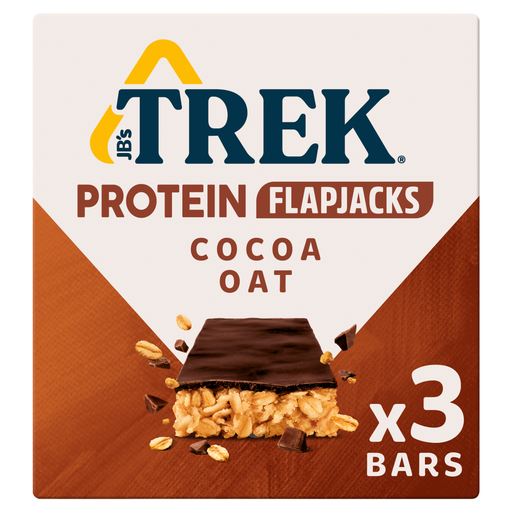 No image available
Another protein-flapjack flavour to consider when comparing protein as well as fat. Use this variant’s own per-100g and per-bar figures; do not apply figures from a different TREK flapjack.
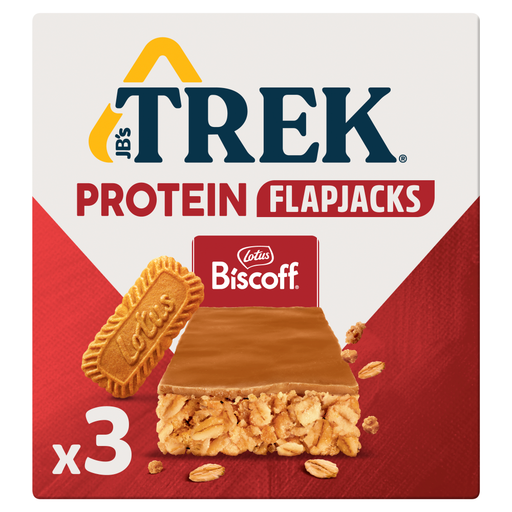 No image available
This flapjack comes as three 50g bars. If you are choosing it as a post-gym snack, compare its protein and carbohydrate per bar with its fat per 100g, and check the exact pack for allergens.
 No image available
A cereal-bar option for comparing with the larger flapjacks. “Light” is part of the product name; check fat per 100g and protein per bar on this flavour’s label before deciding whether it meets your priorities.
 No image available
These 21.5g bars provide a smaller-portion option to compare with flapjacks. Read the exact variant’s per-100g fat figure and per-bar protein figure rather than judging either from bar size alone.
For solid foods, the NHS food-label guidance describes 3g fat or less per 100g as low. Check the per-100g figure to compare bars, then the per-bar figure for the portion you would eat.
Not necessarily. Weetabix Cereals lists Alpen Light Summer Fruit at 4.3g fat per 100g, above the NHS low-fat food-label figure for solids. Read the exact product’s nutrition table instead of relying on its name.
Check how much protein the particular bar contributes. Weetabix Cereals lists 1.0g per Alpen Light Summer Fruit bar and 0.9g per Alpen Light Chocolate & Fudge bar; if protein is a priority, compare those amounts with other foods or bars you are considering.
Yes. Myprotein lists the TREK Original Oat Protein Flapjack at 10.2g protein and 9.8g fat per 50g bar. Compare both figures for the exact flavour rather than using its protein content as a guide to fat.
Read the exact pack for cereals containing gluten, milk, soya and nuts, as well as any “may contain” statement relevant to you. Weetabix Cereals states that Alpen Fruit & Nut is unsuitable for people with milk or other nut allergies; a different bar needs its own label check.