Parents comparing fat content
If reducing total fat is the aim, compare nutrition panels per 100g before checking the amount in the bar you will pack. The NHS gives separate per-100g thresholds for total and saturated fat.


Compare total fat per 100g before looking at the amount in one bar: NHS guidance describes food with 3g fat or less per 100g as low in fat, so a “light” name does not settle the question. Alpen Light Summer Fruit has less total fat per 100g than the other specific bars compared here, but it exceeds that NHS threshold. Check sugars, the current wrapper’s allergen information and the school’s policy before packing any bar.
If reducing total fat is the aim, compare nutrition panels per 100g before checking the amount in the bar you will pack. The NHS gives separate per-100g thresholds for total and saturated fat.
Check the pupil’s dietary needs, the current wrapper and the individual school’s arrangements. Department for Education guidance for England says schools must publish an allergy safety policy.
An individually portioned bar is easy to include alongside other lunch foods, but its serving size and sugars still need checking. The NHS notes that a single cereal bar can contain three sugar cubes.
Start with the per-100g nutrition panel to compare bars on the same basis, then check the portion and whether that particular product can go into the pupil’s lunch.
| Priority | What to check | Your needs |
|---|---|---|
| Total and saturated fat | Compare both figures per 100g, then per bar. NHS low-fat thresholds are 3g or less total fat and 1.5g or less saturated fat per 100g. | I’m looking to reduce total fat, not just choose a smaller bar or one described as “light”. |
| Sugars and portion | Read sugars per 100g and for the serving being packed. Check the serving weight if packs contain several bars. | I want to know how much sugar is in the actual bar, alongside the rest of the packed lunch. |
| Allergens and school rules | Read the current ingredients and “may contain” statements. Check the pupil’s requirements and the individual school’s allergy or packed-lunch policy. | Before packing a bar, I need to know whether its ingredients and allergen warnings fit the pupil’s needs and the school’s arrangements. |
| Other label details | Compare fibre and salt on the same per-100g basis, then check the amount per bar where shown. | If two bars meet my main requirements, I also want to compare their other declared nutrition figures. |
Those descriptions do not give the total-fat figure. NHS guidance uses 3g fat or less per 100g for a low-fat classification; even the Alpen Light Summer Fruit bar compared here declares 4.3g per 100g, according to Weetabix Cereals.
Compare total and saturated fat per 100g on the nutrition panel, then check the amount in the bar itself.
Less fat does not establish how much sugar a bar contains. The NHS notes that a single cereal bar can contain three sugar cubes.
Read sugars per bar as well as per 100g, and consider what else is going into the lunch.
Suitability depends on the pupil’s needs, the current allergen declaration and the school’s arrangements. Bars in this category can list cereals, milk, soya, peanuts or tree nuts as ingredients or possible cross-contact allergens.
Recheck the wrapper when buying or packing a product and consult the individual school’s policy, particularly before sending a nut-containing bar.
These figures refer to the named variants, not every bar made by each brand. Compare the current pack before buying.
Alpen Light Summer Fruit is a 19g multigrain bar.
The Rice Krispies Snack Bar is a 20g cereal-and-milk bar.
Crunchy Oats & Honey is an oat-bar option supplied as two bars per 42g serving.
Honey Oat Boost is a 30g oat flapjack.
Dark Chocolate & Peanut Protein Bar is a 40g peanut, chocolate and soya bar.
Original Oat Protein Flapjack is a 50g oat-and-soya bar labelled vegan and gluten-free.
These cereal bars offer portioned snacks and oat-bar formats to consider for a packed lunch. Their names or formats alone do not establish that they meet a lower-fat aim: compare each current nutrition panel and allergen declaration.
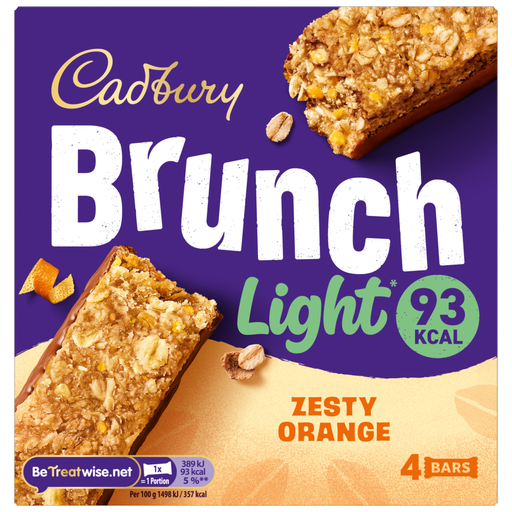 No image available
For a packed-lunch bar, compare its total fat per 100g rather than relying on “Light” in the name. Check the current wrapper for sugars and for cereal, milk, soya and nut-allergen information before packing it.
 No image available
The 21.5g portion is useful to check against per-bar nutrition figures, but compare fat and sugars per 100g when assessing it alongside other bars. Review the wrapper’s cereal, milk and soya declarations against the pupil’s needs.
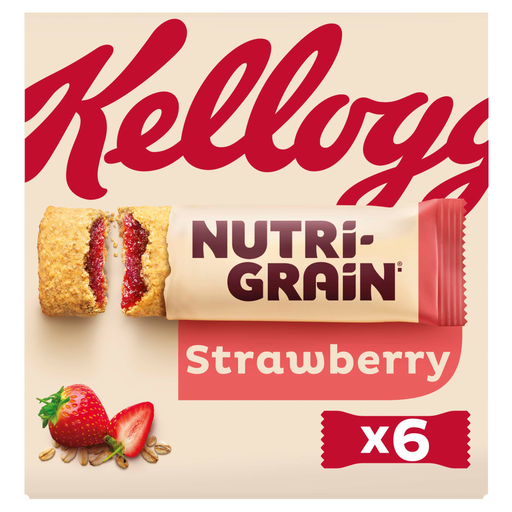 No image available
Check both total and saturated fat: a bar that meets a saturated-fat threshold does not necessarily meet the separate total-fat threshold. Compare sugars too, and check the current allergen declaration and school policy before packing it.
 No image available
This oat-bar format may suit a preference for a 30g portion, but check total fat as well as sugars before choosing it for a lower-fat lunch. Read the current “may contain” information against the pupil’s needs and school arrangements.
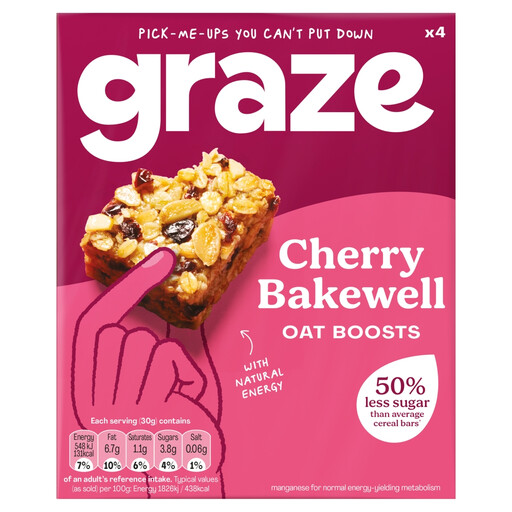 No image available
Compare this 30g oat bar’s fat and sugars per 100g with the other formats before deciding whether it meets the lunchbox brief. Check its almond and other nut information on the current wrapper and consult the school’s policy.
Not necessarily. NHS food-label guidance describes food with 3g total fat or less per 100g as low in fat; check that figure on the current pack rather than relying on the product name. Its separate low-saturated-fat threshold is 1.5g or less per 100g.
Yes. A lower total-fat figure does not tell you the sugar content. The NHS notes that a single cereal bar can contain three sugar cubes, so compare sugars per bar and per 100g alongside the other food and drinks being packed.
Check the individual school’s current policy before packing it. Department for Education guidance for England says schools must publish an allergy safety policy; the pupil’s own allergy requirements and the bar’s current ingredient and “may contain” statements also matter.
No. A gluten-free description does not establish suitability for other allergies. For example, the Trek Original Oat Protein Flapjack is labelled gluten-free, while its Myprotein UK listing identifies soya and warns of possible traces of sesame, peanuts, other nuts and milk.