Among four named cereal bars compared using published nutrition panels, Kellogg's Special K Red Berry Bar has the least total fat at 6.3 g per 100 g. It still exceeds the 3 g per 100 g threshold for a low-fat claim on solid food set out by legislation.gov.uk. For an afternoon snack, compare fat per 100 g before checking the amount in the portion, then read the sugars and allergen information on the current pack; the Joybuy Special K listing is a different 21.5 g bar from Kellogg's 27 g product, so do not transfer the latter's figures to it.
Who is this choice for?
A lower-fat comparison is most useful when it also accounts for portion size, sugars and the ingredients in the exact bar you intend to eat.
Afternoon snackers comparing fat
If you want a portable cereal bar with comparatively less total fat, use the per-100 g panel to compare products. Being lower in fat than another bar does not itself make a product low in fat: legislation.gov.uk sets the low-fat claim threshold for solid food at no more than 3 g per 100 g.
Shoppers who read nutrition labels
Different bar weights make per-bar figures difficult to compare on their own. In the Food Standards Agency and Ipsos Northern Ireland's 2024 tracker, 49% of 611 adults interviewed in Northern Ireland reported actively using traffic-light labels when shopping for food; that figure is not specific to cereal bars.
Buyers checking allergens
If an allergy, intolerance or other ingredient restriction affects your choice, check the ingredients and allergen statement for the exact flavour and current pack. An oat, fruit or wholegrain description cannot answer that question on its own.
What should you compare?
Start with figures per 100 g to compare recipes on the same basis, then look at the stated serving to understand the portion you would eat.
| Priority |
What to check |
Your needs |
| Total fat |
Compare total fat per 100 g, then grams of fat in the stated serving. Legislation.gov.uk sets a low-fat claim threshold of no more than 3 g fat per 100 g for solid food; a lower figure than a competing bar is not the same claim. |
I want to compare bars on the same weight basis, rather than relying on a smaller bar's per-serving figure. The Food Standards Agency and Ipsos Northern Ireland reported that 49% of 611 adults interviewed there between September and November 2024 actively used traffic-light labels when shopping for food; this measures general label use, not preference for lower-fat cereal bars. |
| Sugars and saturates |
Read sugars and saturated fat separately from total fat, both per 100 g and per serving. Front-of-pack traffic-light colours describe the labelled measures; they do not establish whether a bar is lower in total fat than another. |
Reducing fat would not settle my choice if I also want to compare sugars or saturates. In its November 2025 assessment of 458 snack bars from 10 UK retailers, Action on Salt & Sugar classified 37% of products as high in sugars and 55% as high in saturated fat under UK front-of-pack thresholds. Those are proportions of assessed products, not shoppers' preferences. |
| Serving size |
Find the weight behind each serving figure and check whether it refers to one bar or more. The published examples include 27 g and 37 g Kellogg's bars, a 30 g Graze serving listed by Waitrose & Partners, and a 42 g two-bar Nature Valley serving. |
For my afternoon break, I want to know what the nutrition figures cover. A two-bar serving is not directly comparable with a single smaller bar without checking both serving weight and per-100 g values. |
| Ingredients and allergens |
Read the current pack's ingredients, contains and may-contain statements for the exact flavour. Check any dietary-suitability statement separately from the nutrition panel. |
I need the bar I buy to meet my ingredient requirements; a category name such as oat bar or fruit bar does not tell me which allergens its current recipe lists. |
Common cereal-bar mistakes
-
Assuming an oat or wholegrain bar is low in fat
Nature Valley lists 18.1 g total fat per 100 g for its Crunchy Variety Pack, while the Waitrose & Partners listing for Graze Honey Oat Boost gives 22 g per 100 g. The oat-based description alone does not establish a low-fat claim.
Check total fat, saturates and sugars on the nutrition panel instead of using the product name as a shortcut.
-
Calling the lowest-fat option low fat
Kellogg's lists 6.3 g fat per 100 g for Special K Red Berry Bar. It has less total fat than the other three named products compared here, but exceeds legislation.gov.uk's 3 g per 100 g low-fat claim threshold for solid food.
Describe a bar as lower in fat than a specified alternative only when their nutrition panels support that comparison; do not treat the relative difference as a low-fat claim.
-
Comparing fat per bar without checking bar weight
The named products use different serving weights, and Nature Valley's 42 g serving consists of two bars. A per-serving number alone therefore mixes differences in recipe with differences in portion.
Compare fat per 100 g first, then check fat, sugars and energy for the portion you intend to eat.
-
Relying on an older online allergen listing
Recipes and pack information can change, making an earlier listing an unreliable final check for an ingredient restriction.
Read the ingredients and allergen statement on the current physical pack before eating the bar.
Brand references
These examples describe particular product lines and nutrition panels, not every cereal bar made by each brand.
Kellogg's
Its published panels make Special K Red Berry Bar and Nutri-Grain Apple useful comparisons when total fat is the starting point.
- Kellogg's lists 6.3 g fat per 100 g for the 27 g Special K Red Berry Bar and 8.3 g per 100 g for the 37 g Nutri-Grain Apple Bar.
- Both exceed the 3 g per 100 g low-fat claim threshold set out by legislation.gov.uk. Check sugars and the ingredients for the particular pack as well.
Graze
The Honey Oat Boost example is an oat-flapjack comparison for shoppers weighing sugars against total fat, rather than a lower-fat choice among the four named products.
- Waitrose & Partners lists 3.3 g sugars for a 30 g Honey Oat Boost serving.
- The same listing gives 22 g total fat per 100 g. Do not apply this flavour's figures to other Oat Boost varieties without checking their labels.
Nature Valley
The Crunchy Variety Pack illustrates why a two-bar oat snack needs its own portion and per-100 g checks.
- Nature Valley states the serving as two bars weighing 42 g.
- Its published panel lists 18.1 g fat and 26.8 g sugars per 100 g, so the crunchy oat format should not be mistaken for a lower-fat result.
Cereal bars on Joybuy
These listings offer different cereal-bar flavours and pack sizes for an afternoon snack. Compare each listing's current nutrition and allergen panel before choosing: the 21.5 g Special K Red Berry bar shown here is not the 27 g product used in the published comparison above.
 No image available
Special K Red Berry Cereal Bar, 6 x 21.5 g
The 21.5 g bar size makes this a different portion from Kellogg's published 27 g Red Berry Bar. Check this pack's own fat and sugars figures, along with its allergen statement, before comparing it with that product.
View on Joybuy
 No image available
Cadbury Brunch Light Orange Cereal Bar, 4-pack, 104 g
For an orange-flavoured afternoon bar, compare the pack's total fat per 100 g with other options. “Light” is part of the product name; check the nutrition panel rather than treating the name as a low-fat result.
View on Joybuy
 No image available
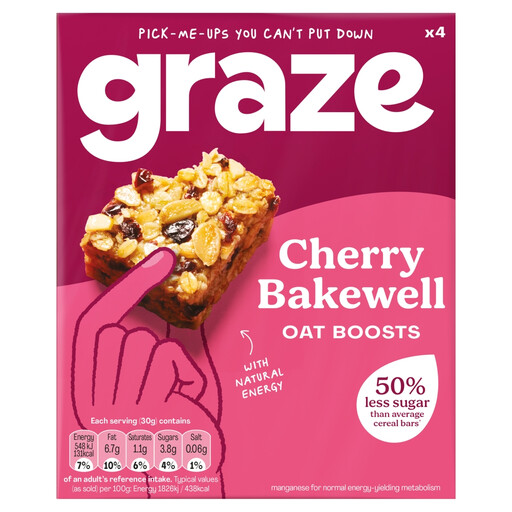
Graze Oat Boosts Cherry Bakewell, 4 x 30 g
If this oat-bar flavour appeals to you, check its own fat and sugars figures per 100 g before deciding whether it fits a lower-fat snack choice. Figures for Graze Honey Oat Boost do not establish the nutrition of Cherry Bakewell.
View on Joybuy
 No image available
Special K Dark Chocolate Snack, 6 x 21.5 g
This six-pack offers a dark-chocolate variant in 21.5 g bars. Compare its own per-100 g fat and sugars figures with the Red Berry variant rather than assuming two Special K flavours have the same recipe.
View on Joybuy
 No image available
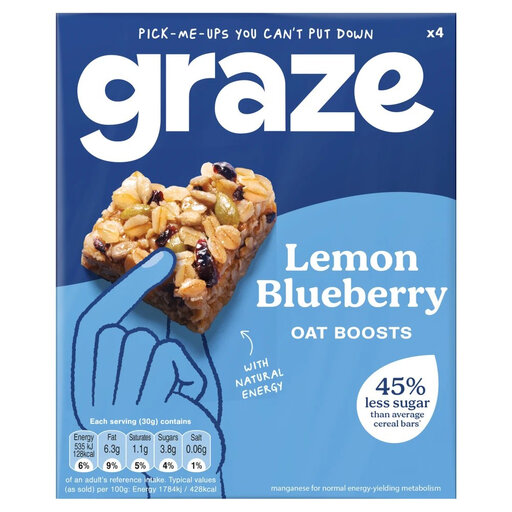
Graze Oat Boosts Lemon Blueberry, 4 x 30 g
For this lemon-and-blueberry oat-bar option, use the current pack's per-100 g panel to compare fat and sugars. Check its ingredients separately if allergens or other dietary restrictions affect your choice.
View on Joybuy
Frequently asked questions
What does “low fat” mean on a cereal-bar label?
Legislation.gov.uk sets the threshold for a low-fat claim on solid food at no more than 3 g fat per 100 g. The four named products in the published-panel comparison range from 6.3 g to 22 g per 100 g, so a bar can have less fat than another in that group without meeting the low-fat threshold.
Does a lower-fat cereal bar necessarily contain less sugar?
No: compare fat and sugars as separate figures. Kellogg's lists 7.6 g sugars in its 27 g Special K Red Berry Bar, while the Waitrose & Partners listing gives 3.3 g sugars in a 30 g Graze Honey Oat Boost serving; the Graze product has more total fat per 100 g. These figures apply to those specific products and portions.
Should I compare cereal bars per bar or per 100 g?
Use both: per 100 g allows a like-for-like comparison of the recipes, while the stated serving shows the amount in the portion. The published examples use 27 g and 37 g Kellogg's bars, a 30 g Graze serving listed by Waitrose & Partners, and a 42 g Nature Valley serving made up of two bars.
How can I check whether a cereal bar meets my ingredient requirements?
Read the ingredients and allergen statement on the current pack for the exact flavour you plan to eat, including any may-contain wording. A bar's oat, fruit or wholegrain description does not establish its allergen or dietary suitability.


