People stocking a shared snack tin
Compare individually wrapped bars by total fat per 100g, then look at the amount in one wrapper. Sugar, saturated fat and the current ingredient label also matter when choosing between products.


Among the four evaluated bars, Alpen Light Summer Fruits has the lowest stated total fat: Weetabix Cereals lists 4.3g per 100g and 0.8g per 19g bar. Kellogg’s UK lists 6.3g per 100g for its 27g Special K Red Berry bar, while the evaluated Nature Valley and Graze products have higher per-100g figures. For a shared office tin, compare the portion in each wrapper as well as fat per 100g, then check sugars, saturated fat and allergens on the current packs.
Compare individually wrapped bars by total fat per 100g, then look at the amount in one wrapper. Sugar, saturated fat and the current ingredient label also matter when choosing between products.
Check each product’s declared allergens and may-contain statements before adding it to a communal tin. The evaluated bars differ in their cereal, milk, soya and nut-related information; a vegan label does not replace an allergen check.
Portion formats differ: Weetabix Cereals lists Alpen Light Summer Fruits as a 19g bar, Kellogg’s UK lists Special K Red Berry as a 27g bar, and the evaluated Nature Valley product comes as a 42g twin-wrapped portion. Compare the actual wrapper, not just the pack name.
Start with fat per 100g to compare differently sized bars, then check what one wrapper contains and whether its label suits a shared space.
| Priority | What to check | Your needs |
|---|---|---|
| Total fat | Compare fat per 100g on the same basis, then fat per stated portion. GOV.UK guidance on nutrition claims sets no more than 3g fat per 100g for a solid food described as ‘low fat’; comparatively lower fat does not itself meet that description. | I want a bar with less stated total fat than the other options I am considering, without assuming that ‘light’ or ‘oat-based’ means ‘low fat’. |
| Full nutrition label | Check sugars, saturated fat and the stated portion alongside total fat. GOV.UK says traffic-light labels indicate high, medium or low amounts of fat, saturated fat, sugars and salt. | I want to compare more than one figure before stocking the tin. In a Food Standards Agency and Ipsos Northern Ireland tracker survey, approximately 49% of 611 people interviewed between September and November 2024 said they actively used traffic-light labels when shopping for food; that is not a cereal-bar preference figure. |
| Wrapper size | Check the weight and number of bars in an individual wrapper, not just the outer pack size. Compare per-bar figures with per-100g figures rather than treating them as interchangeable. | A small single bar may suit my desk drawer; if I choose a twin-wrapped portion, I want to know what the nutrition figures count as one serving. |
| Allergens | Read the current ingredients, declared allergens and may-contain statements on the outer pack and individual wrapper. Check dietary labels separately from allergen information. | Others may take bars from the same tin, so I need packaging they can consult and a separate, clearly identified option where workplace dietary requirements call for one. |
Weetabix Cereals lists Alpen Light Summer Fruits at 4.3g fat per 100g. That is below the other evaluated bars, but above the 3g-per-100g figure in GOV.UK guidance for a ‘low fat’ claim on solid food.
Compare the per-100g figures first, then check the amount in the wrapper you intend to offer. Use the current pack rather than the product name to judge its nutrition.
In its November 2025 review of 458 snack bars collected from 10 major UK retailers, Action on Salt & Sugar reported that 37% were high in sugars and 55% were high in saturated fat under front-of-pack thresholds. Those figures describe the reviewed products, not every cereal bar.
For each shortlisted bar, check sugars, saturated fat, calories and portion size alongside total fat. A fibre or reduced-sugar statement answers a different question.
The evaluated bars have different declared allergens and may-contain statements. A category name or vegan label cannot establish whether a particular bar suits everyone using a communal tin.
Check the packs supplied to the office, keep their labelling available and identify separate options clearly where dietary requirements make that necessary.
These product examples illustrate different fat figures and portion formats; they do not establish a claim about every bar made by each brand.
Weetabix Cereals lists Alpen Light Summer Fruits as a 19g bar with 4.3g fat per 100g and 0.8g per bar.
Kellogg’s UK lists its evaluated Special K Red Berry bar at 6.3g fat per 100g and 1.7g per 27g bar. Compare that 27g product with its own label, rather than applying its figures to a different pack size.
ASDA lists the evaluated Crunchy Oats & Honey bars as a 42g twin-wrapped portion, with 18.1g fat per 100g and 7.6g per portion.
Tesco lists the evaluated Cocoa Vanilla Oat Boosts as a 30g oat-flapjack-style portion, with 22g fat per 100g and 6.5g per portion.
These are cereal and snack-bar packs for the office-tin scenario. They are different products or pack sizes from the four-bar nutrition comparison above: use each current pack’s own per-100g, portion and allergen information before choosing.
 No image available
The 21.5g bar size offers a single-bar option for the office tin. Check this pack’s own fat per 100g and allergen label; the 27g Special K Red Berry product discussed above is a different size.
 No image available
This is another 21.5g portion format for a shared snack selection. Compare its own nutrition declaration and allergens with the other packs rather than assuming that two Special K varieties have the same figures.
 No image available
The pack contains four bars with a stated total weight of 104g. For an office tin, check the current per-bar nutrition and allergen statements; ‘Light’ in the name does not establish a ‘low fat’ claim.
 No image available
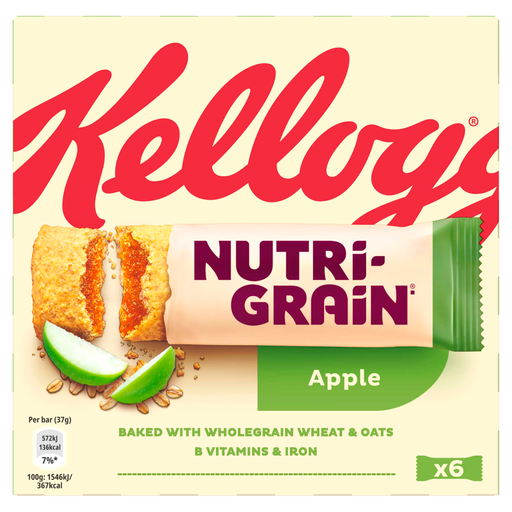
This apple variety comes in a six-pack weighing 222g. If portion size matters for the tin, compare its current per-bar declaration and allergen information with the smaller bar packs.
 No image available
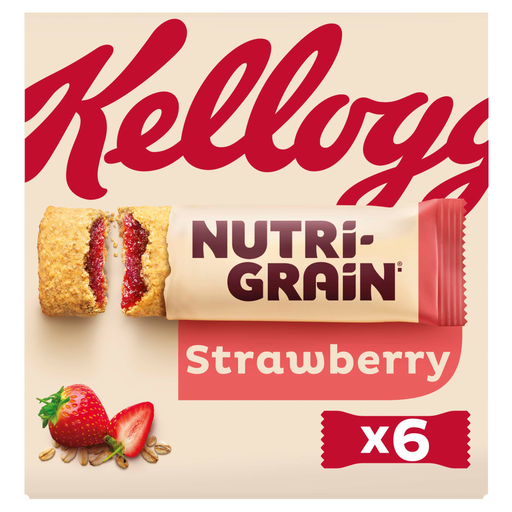
The strawberry variety is listed as a six-pack weighing 222g. Check its own fat per 100g, nutrition per bar and allergen statements before choosing it for a shared tin.
No such conclusion follows from the comparison. Weetabix Cereals lists Alpen Light Summer Fruits at 4.3g fat per 100g, while GOV.UK guidance on nutrition claims gives no more than 3g per 100g for a solid food described as ‘low fat’. It has less stated fat than the other three evaluated bars, but that is a comparative finding.
Use both figures: per 100g puts differently sized products on the same basis, while the stated portion shows the amount in one bar or twin-wrapped serving. The four evaluated portions range from a 19g Alpen bar to a 42g Nature Valley twin-wrapped portion.
No. ASDA lists the evaluated Nature Valley Crunchy Oats & Honey product at 18.1g fat per 100g, and Tesco lists Graze Cocoa Vanilla Oat Boosts at 22g per 100g. Weetabix Cereals lists Alpen Light Summer Fruits at 4.3g per 100g, so check the particular product’s nutrition panel rather than relying on its oat-based format.
Check the current outer packs and individual wrappers for declared allergens and may-contain statements. For example, Weetabix Cereals says the evaluated Alpen Light bar is not suitable for people with a nut allergy, while ASDA lists a may-contain warning for nuts and peanuts on the evaluated Nature Valley product. Keep the relevant labelling available to people choosing a bar.
Use it to compare candidates, then check the pack supplied for the current ingredients and nutrition declaration. Kellogg’s UK says its recipes can change, so a previous listing should not stand in for the label on the product being offered.