What should you check?
Start with when you will eat, then compare the serving and ingredient information on the packs you are considering.
| Priority | What to check | Your needs |
|---|
| Timing and carbohydrate |
Check carbohydrate per labelled serving and how soon you plan to exercise. University College London Hospitals NHS Foundation Trust advises carbohydrate, protein and minimal fat for snacks eaten 60–90 minutes beforehand. |
I’m eating before a session and want to know how much carbohydrate my portion provides. If this is my whole snack, I also need to consider its other components. |
| Fat content |
Compare fat per 100g and per serving on the same basis. Tesco’s Sunsweet Stoned Prunes listing gives 0g fat per 100g; its Whitworths Wondermix fruit-and-nut listing gives 7.9g per 30g serving. |
Lower fat matters more to me than including nuts, so I’ll compare plain-fruit products before considering a fruit-and-nut mix. |
| Ingredients and allergens |
Read the full ingredient and allergen panels. Marks & Spencer lists sulphur dioxide in its Soft Peach and Nectarine; Tesco lists cashews, pecans and pistachios in Whitworths Wondermix. |
I need to know whether the pack contains ingredients I avoid, rather than assuming every dried-fruit product contains only fruit. |
| Portion size |
Use the serving information instead of the pack size as your measure. Tesco lists 23.2g carbohydrate per 30g serving of its Dried Mixed Fruit; the Eatwell Guide uses 30g as a dried-fruit portion reference and advises keeping dried fruit to mealtimes. |
With a larger bag, I’d rather decide what amount I’m having before opening it. I can then compare that portion with the nutrition panel. |
Brand and product-line references
These examples show why the particular product and its label matter more than the brand name alone.
Sunsweet
Tesco’s listing for Sunsweet Stoned Prunes provides a plain-fruit comparison for shoppers checking fat content.
- The listing gives 0g fat and 57g carbohydrate per 100g and states no added sugar.
- Check the current pack for serving information and take care with any remaining stone fragments in pitted fruit.
M&S
Marks & Spencer’s Mixed Dried Fruit and Collection Soft Peach and Nectarine illustrate two different dried-fruit ingredient lists.
- Their listed fat values are 0.4g and less than 0.1g per 100g respectively.
- The Mixed Dried Fruit lists sunflower oil; Soft Peach and Nectarine lists sulphur dioxide. Check the current label for the product you choose.
Tesco
Tesco Dried Mixed Fruit offers both per-100g and per-serving nutrition figures for comparison.
- Tesco lists 2.5g fat and 77.3g carbohydrate per 100g, including 23.2g carbohydrate per 30g serving.
- It is a mixed-fruit product sold for baking and cooking; check its current ingredients if you want a particular fruit composition.
Whitworths
Whitworths Wondermix Fruit and Nut is a useful contrast when deciding whether to include nuts in a dried-fruit snack.
- Tesco’s listing identifies cashews, raisins, pecans and pistachios in the mix.
- The same listing gives 7.9g fat per 30g serving and says it may contain peanuts, other nuts and sesame.
Plain dried-fruit options on Joybuy
These Joybuy listings are for prunes, the plain-fruit route discussed above. Compare the current nutrition and ingredient panels before choosing a portion for your pre-exercise plans.
 No image available
J.ZAO Prebiotic Pitted Chilean Prunes 500g
These pitted prunes are an option if you want to compare plain dried fruit rather than a fruit-and-nut mix. Check the pack’s fat and carbohydrate values per serving, as well as its ingredients; ‘Prebiotic’ is part of the product name, not a reason to assume a particular effect.
View on Joybuy
 No image available
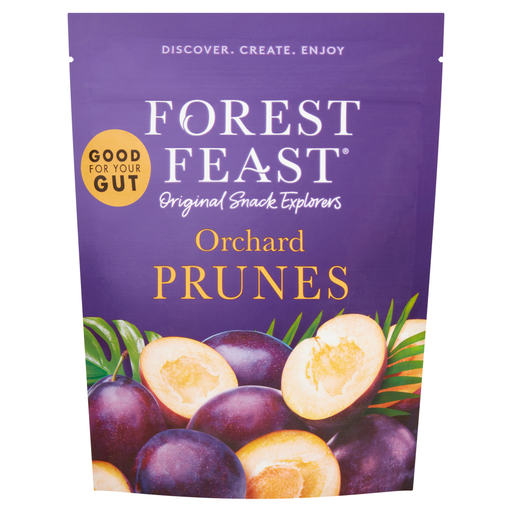
Forest Feast Orchard Prunes 200g
This 200g prune pack is another plain-fruit option to assess by its labelled serving. If you need pitted fruit, confirm that detail on the current pack before buying.
View on Joybuy
 No image available
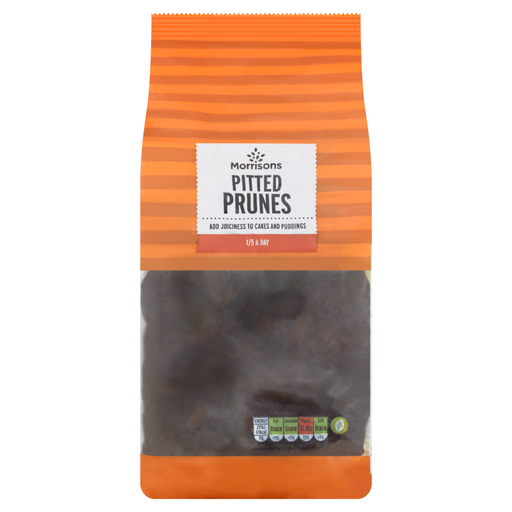
Morrisons Dried Pitted Prunes 500g
The 500g pack contains pitted prunes. If you plan to eat from it over several occasions, choose a serving independently of the pack size and check its nutrition information for that amount.
View on Joybuy
 No image available
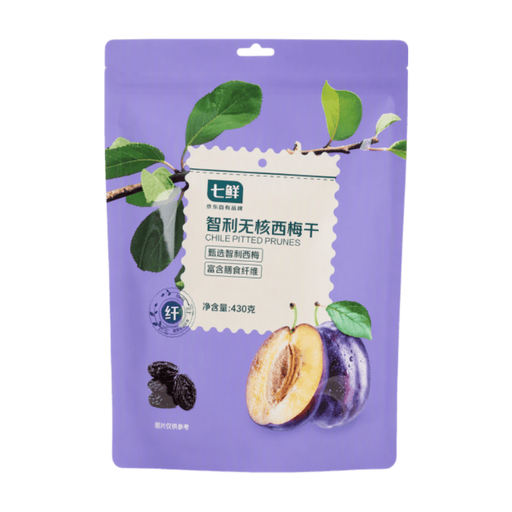
7FRESH Pitted Prunes 430g
These pitted prunes come in a 430g pack. For a pre-exercise snack, compare the current fat and carbohydrate declarations for the portion you intend to eat rather than using the pack size as a serving.
View on Joybuy
 No image available
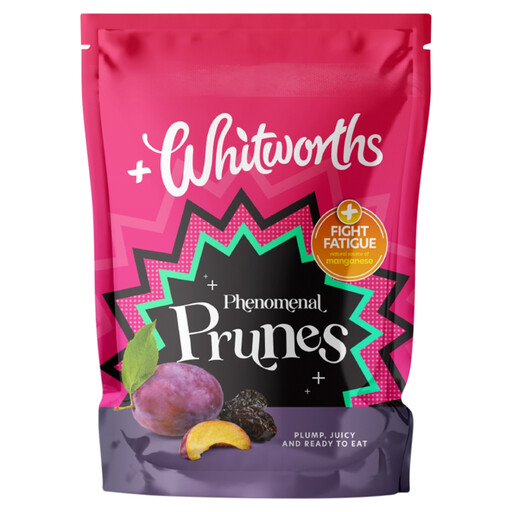
Whitworths Snacking Prunes 190g
This 190g prune product belongs in the plain-fruit comparison, not the Whitworths fruit-and-nut mix comparison. Check this product’s own nutrition, ingredients and allergen information: figures for another Whitworths product do not describe these prunes.
View on Joybuy
Common questions
Do I need a ‘reduced fat’ claim to find lower-fat dried fruit?
No. Compare the fat declaration and ingredients on the products themselves. Tesco lists Sunsweet Stoned Prunes at 0g fat per 100g, showing why a plain-fruit product is worth checking even when you are not shopping by a front-of-pack claim.
Is dried fruit enough for a snack 60–90 minutes before exercise?
Dried fruit can provide carbohydrate, but it does not by itself cover every part of the snack described by University College London Hospitals NHS Foundation Trust. Its guidance for 60–90 minutes before exercise includes carbohydrate, protein and minimal fat, so consider what else you will eat and the timing of your session.
Should I choose a fruit-and-nut mix when lower fat is my priority?
Compare it with plain fruit first. Tesco lists 7.9g fat per 30g serving of Whitworths Wondermix Fruit and Nut, while its Sunsweet Stoned Prunes listing gives 0g per 100g. The products have different serving bases and ingredients; choose the mix if you want nuts, not on the assumption that it matches plain fruit for fat content.
Where should I look for sulphites in dried fruit?
Check the current ingredients and allergen information. The Food Standards Agency identifies sulphur dioxide and sulphites as ingredients used in some dried fruit, and Marks & Spencer lists sulphur dioxide in its Collection Soft Peach and Nectarine.
What portion size can I use when comparing packs?
The Eatwell Guide uses 30g as a dried-fruit portion reference and advises keeping dried fruit to mealtimes. Use the serving size on each product’s current label to compare its nutrition, then decide what amount fits with the rest of your food and exercise plans.


