Shoppers comparing fat figures
If you want the convenience of a frozen ready meal while reducing fat, compare total fat and saturated fat alongside salt and the amount in the pack, rather than relying on the product name.


For an online grocery order, compare frozen meals by total fat and saturated fat per 100g, then check the figures for the portion you expect to eat; a calorie-controlled listing alone does not establish that either fat figure is low. Salt, fibre, allergens and delivery-slot availability also matter. If you choose a frozen meal component instead of a complete ready meal, assess it alongside what you plan to serve with it.
If you want the convenience of a frozen ready meal while reducing fat, compare total fat and saturated fat alongside salt and the amount in the pack, rather than relying on the product name.
An under-500-calorie category can help you browse portioned meals for one. Check each meal’s fat, saturated fat and salt figures separately before adding it to your basket.
A vegetarian component or a product with a stated protein figure may suit your plan, but it is not necessarily a complete meal. Check the portion, accompaniments, allergens, cooking instructions and availability.
Compare products per 100g first, then look at the whole portion and how it will fit into your delivery order.
| Priority | What to check | Your needs |
|---|---|---|
| Fat and saturates | Compare total fat and saturated fat per 100g and for the portion you will eat. NHS food-label guidance describes 3g fat or less and 1.5g saturated fat or less per 100g as low for foods. | I want to compare meals of different pack sizes without mistaking a reduced-fat name for a low fat figure. |
| Salt and fibre | Check salt per 100g and per pack, and compare fibre figures where shown. The NHS describes more than 1.5g salt per 100g as high. | A lower-fat meal still needs to make sense when I look at the rest of its nutrition panel. |
| Calories and portion | Read the energy figure for the portion you intend to eat, then check fat, saturates and salt separately. A calorie-filtered category does not establish those nutrient levels. | If I am choosing a meal for one, I want the pack and serving figures to describe the amount I will actually eat. |
| Complete meal or component | Check whether the pack is a ready meal or one part of a meal. For a component, consider its portion together with any accompaniments. | I may prefer a meal I can heat and serve, or I may want to put together my own plate from frozen ingredients. |
| Ordering and handling | Check availability for your delivery slot, freezer space, allergens and the product’s storage and cooking instructions. Assess a proposed substitute as a different product. | Before relying on the order for dinner, I need to know that I can receive, store and prepare the item as directed. |
A calorie-focused category helps with energy comparisons, but it does not establish that a meal is low in total fat, saturated fat or salt.
Use the category to narrow your search, then compare the nutrition panels per 100g and per pack.
In its May 2025 review of 1,511 chilled and frozen ready meals from 11 major retailers, Action on Salt & Sugar reported that 56% were high in salt, 42% high in saturated fat and 71% low in fibre.
Compare available traffic-light labels and the back-of-pack figures for salt, saturates and fibre, rather than deciding from a fat-related claim alone.
A listing can display product information even when the item cannot be added to your order.
Check your selected delivery slot. If a substitute is offered, read its own nutrition, ingredients and allergen information.
Being frozen does not remove the need to check ingredients or follow the product’s storage and cooking directions.
Read the allergen declaration before ordering and follow the instructions on the delivered pack, including any directions about thawing or refreezing.
These examples illustrate different ways to browse frozen food; each product still needs its own nutrition, allergen and availability check.
Tesco’s frozen under-500-calorie category provides a starting point for comparing meals by energy.
Waitrose lists Birds Eye Get Real Protein Thai Red Chicken Curry as a frozen complete-meal option with stated protein and low-saturated-fat positioning.
Quorn Vegetarian Crispy Nuggets are a meat-free freezer component rather than a complete ready meal.
Iceland describes its exclusive MyProtein range as offering higher-protein, lower-fat meal options.
These options cover a chicken tikka ready meal and Cajun chicken burgers that can form part of a meal. Compare the ready meal with the burger portion and any accompaniments you plan to serve.
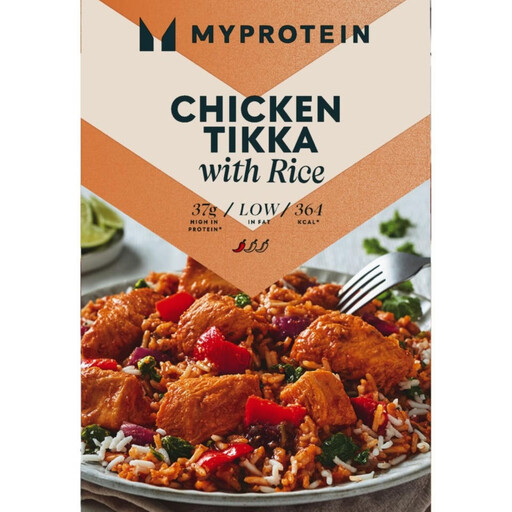 Image unavailable
For a chicken tikka ready meal, compare the figures for the 350g pack with those of other complete meals. Check the allergen declaration, follow the pack’s frozen storage and cooking instructions, and confirm availability for your delivery slot.
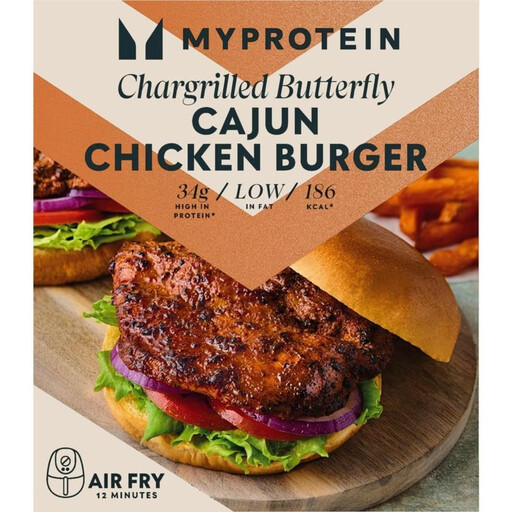 Image unavailable
These chicken burgers are a meal component, not a complete ready meal. Compare the portion you intend to cook along with its accompaniments, and check allergens, pack instructions and delivery-slot availability.
NHS food-label guidance describes 3g fat or less per 100g as low for foods. Check the meal’s per-100g figure and the amount you expect to eat, especially if a pack contains more than one serving.
No: wording about a reduction does not tell you whether the meal meets the NHS low-fat label figure of 3g fat or less per 100g. Read the actual total-fat and saturated-fat figures before comparing it with another meal.
Compare total fat, saturated fat, salt and energy per 100g for similar meals, then check the figures for the portion you will eat. Fibre is another useful comparison where it appears on the panel.
No. It helps narrow a search by energy per meal, but it does not establish the meal’s total fat, saturated fat or salt levels. Check the individual product panel before ordering.
Treat a substitute as a different product: check its pack size, nutrition, ingredients, allergens and cooking instructions before accepting it. Confirm availability for your delivery slot rather than relying on the product listing alone.