Hosts planning shared portions
If guests will take different-sized slices, compare pizzas per 100g and estimate what each person might eat. The serving printed on a pack may not reflect how you divide it.


For a dinner party, compare total fat and saturates per 100g on the exact frozen pizzas you are considering, then work out what those figures mean for the portions you plan to serve. A stated serving may be half a pizza or one individual pizza, so it may not match your guests’ portions. Thin crust and meat-free toppings are not substitutes for checking the nutrition panel; check the current pack for allergens and cooking instructions too.
If guests will take different-sized slices, compare pizzas per 100g and estimate what each person might eat. The serving printed on a pack may not reflect how you divide it.
Crust and topping descriptions tell you about the recipe, not its fat content. Compare the total-fat and saturates figures on the exact pizzas under consideration.
Check the ingredients, allergen declaration and any precautionary statements on every current pack before deciding what to serve. A familiar product name is not a substitute for that check.
Start with a common per-100g comparison, then consider portions and the practical requirements of serving your guests.
| Priority | What to check | Your needs |
|---|---|---|
| Fat comparison | Compare total fat and saturates per 100g on the exact products. Read a reduced-fat claim as a comparison with similar products, not as a description of crust or toppings. The Department of Health & Social Care’s guidance for Great Britain specifies at least a 30% reduction for that claim. | I want to compare the same amount of food, rather than assume a thin or meat-free pizza contains less fat. |
| Guest portions | Check pack weight and the weight or fraction used for the stated serving. Use the per-100g figures to estimate fat and saturates for the portions you plan to cut. | Will a stated half-pizza serving match the slices my guests are likely to take? I also need enough pizza for the group. |
| Other label details | Read the salt figure alongside fat and saturates, using the same per-100g basis. GOV.UK explains that traffic-light labelling shows whether these nutrients are labelled high, medium or low. | Comparing fat alone would leave out other label information I may want to consider for the menu. |
| Serving safely | Check each current pack’s ingredients, allergens, storage directions and cooking instructions. Follow the directions for that pizza and appliance. | If guests have food allergies or the pizzas need different cooking times, I want to plan that before serving. |
Those descriptions do not establish a fat comparison. Tesco Groceries lists its Four Cheese Stonebaked Pizza at 9.3g fat and 6.1g saturates per 100g; the figures belong to that specific pizza, not all meat-free pizzas.
Compare the exact nutrition panels. If a pack makes a reduced-fat claim, check what comparable products the claim relates to.
Tesco Groceries gives 12.6g fat for its stated half-pizza serving of Finest Margherita. Ocado lists 17g fat for one Chicago Town Deep Dish Pepperoni mini pizza. Neither serving automatically describes the slices you will put on a guest’s plate.
Decide how you expect to divide each pizza, then use its per-100g figures to assess that amount.
A total-fat figure does not describe saturated fat or salt. For the two specific Tesco pizzas listed by Tesco Groceries, Finest Margherita has 3.2g saturates per 100g and Four Cheese has 6.1g per 100g.
Compare fat, saturates and salt on the same per-100g basis, then consider your planned portion.
The pack you serve is the one whose ingredients and preparation directions matter, particularly when guests have allergies or different pizza formats need separate cooking plans.
Read every physical pack before preparation and follow its own storage and cooking directions.
These brand references describe formats and specific listed pizzas; a range name does not establish the nutrition of every product in it.
Goodfella's describes a range including Stonebaked Thin, Takeaway and Deep Pan pizzas, giving hosts different crust and serving formats to consider.
Chicago Town lists thin-crust, stuffed-crust and deep-dish ranges, including formats that can be served as individual pizzas or shared.
Tesco Groceries publishes nutrition figures for individual frozen pizzas, allowing a comparison between the exact products being considered.
These frozen pizzas include thin and stuffed-crust formats for a shared dinner. Their styles and pack weights can help you plan portions, but check each current nutrition panel before deciding which meets your fat-comparison aim.
 No image available
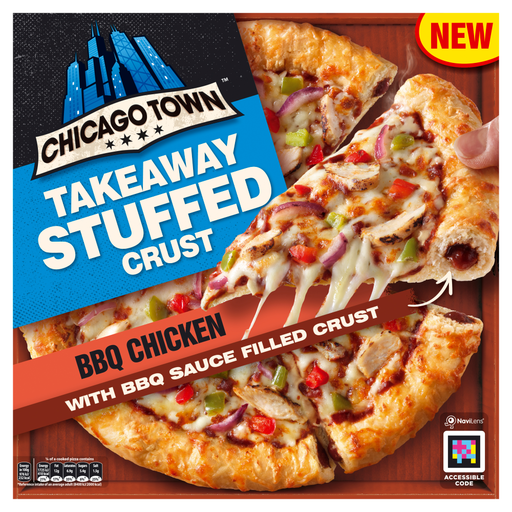
For a pizza shared between guests, use the 668g pack weight to plan portions. Compare fat and saturates on the current pack per 100g and for the amount you intend to serve; check allergens and cooking directions before preparation.
 No image available
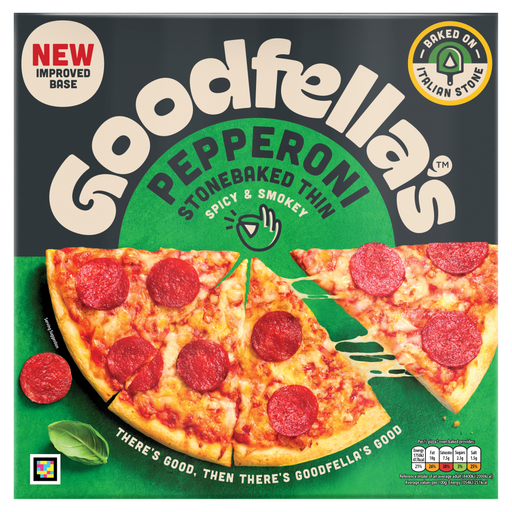
The 332g pack gives you a starting point for planning shared slices. Thin crust is a style, not a fat figure: compare the current pack’s per-100g nutrition and check how its stated serving relates to your portions.
 No image available
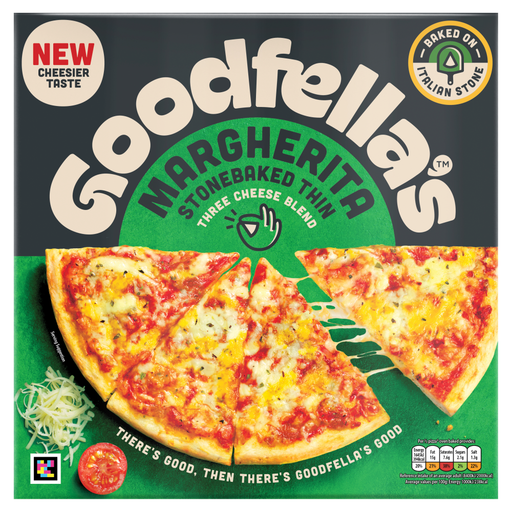
If you plan to divide this 334g pizza, compare the fat and saturates per 100g with other shortlisted pizzas, then assess the slices you expect to serve. Check the current pack for allergens and cooking instructions.
 No image available
This 635g pizza can be divided according to your guest count. Check the current pack’s per-100g fat and saturates to assess your planned slices, and read its allergen and cooking information before serving.
 No image available
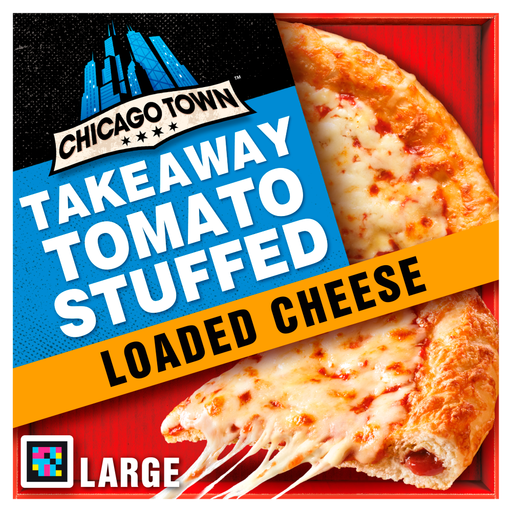
When considering this 630g cheese pizza for a shared meal, compare saturates as well as total fat per 100g. Work from the portions you expect to cut, and check the current pack’s allergens and cooking directions.
No. The Department of Health & Social Care’s guidance for Great Britain says a reduced-fat claim requires at least 30% less fat than comparable products. It is a comparison, not a statement that a pizza has a particular absolute fat content; read the exact product’s nutrition panel as well.
Use per 100g to compare different pizzas on the same weight basis, then consider the portion you will serve each guest. Tesco Groceries states nutrition per half pizza for its Finest Margherita, while Ocado gives a per-pizza serving for Chicago Town Deep Dish Pepperoni mini pizzas; your dinner-party portions may differ from either.
No: crust and topping descriptions do not establish a fat figure. Tesco Groceries lists 9.3g fat and 6.1g saturates per 100g for its specific Four Cheese Stonebaked Pizza. Compare the nutrition panels of the exact products you might buy rather than relying on their styles.
Read the ingredients, allergen declaration and any precautionary statements on every current pack before serving. Check each pizza separately, including one you have bought before, rather than relying on its range name or an older listing.
Follow the storage and cooking directions on each pack, as instructions can differ between pizza formats. Plan the order of cooking around those directions and check any stated standing time before serving.