Couples sharing a frozen pizza
If you are planning to split a pizza for date-night dinner, compare fat per 100g before using the half-pizza or whole-pizza figures to consider the amount each person will eat.


Compare fat and saturates per 100g first, then check the serving information for the amount you plan to share; a thin base or meat-free topping does not establish a pizza’s fat content. Dr. Oetker UK lists 7.8g fat per 100g for Ristorante Pollo, compared with 11g for Pepperoni-Salame and 12g for Mozzarella. That comparison applies to these products, not to every frozen pizza.
If you are planning to split a pizza for date-night dinner, compare fat per 100g before using the half-pizza or whole-pizza figures to consider the amount each person will eat.
If reducing fat is the priority, compare pizzas on the same per-100g basis. A thinner base, meat-free topping or smaller pizza is not enough to settle the comparison.
A fat comparison does not replace an ingredient check. Read the highlighted allergens on the exact pack you buy, particularly when choosing a different flavour or an updated recipe. The Food Standards Agency says allergens must be emphasised in the ingredients list of pre-packed food.
Start with comparable nutrition values, move to the portion you expect to eat, then check the exact pack for ingredients and cooking instructions.
| Priority | What to check | Your needs |
|---|---|---|
| Fat and saturates | Compare both values per 100g on the pizzas you are considering. Dr. Oetker UK lists 7.8g fat and 2.7g saturates per 100g for Ristorante Pollo, versus 12g fat and 3.9g saturates for Ristorante Mozzarella. | For a pizza dinner, I want to compare the recipes themselves rather than choose by how thin or light the pizza looks. |
| Serving size | Read the stated half-pizza or whole-pizza figures and check which portion they describe. Dr. Oetker UK lists 14g fat per half Ristorante Pollo pizza and 47g per whole Ristorante Quattro Formaggi pizza. | We are sharing dinner, so the amount each of us plans to eat matters as well as the per-100g comparison. |
| Label wording | Look for the fat figure behind descriptions such as thin or meat-free. Compare the exact flavours: Dr. Oetker UK lists 11g fat per 100g for Ristorante Pepperoni-Salame and 12g for Ristorante Mozzarella. | I might prefer a particular topping, but I do not want its name or base style to stand in for a nutrition comparison. |
| Ingredients and allergens | Read the ingredient list and highlighted allergens on the exact pack. The Food Standards Agency says allergens must be emphasised in the ingredients list of pre-packed food. | If either diner avoids an ingredient, I need to check the pizza we will actually cook, even if we have bought the flavour before. |
| Cooking instructions | Check the pack’s oven temperature, time and method for cooking from frozen; follow that product’s instructions rather than another pizza’s timing. | I want to know whether this pizza fits the oven and the time available for dinner. |
Dr. Oetker UK lists 12g fat per 100g for Ristorante Mozzarella and 7.8g for Ristorante Pollo. The topping and base descriptions alone would not tell you that.
Compare fat and saturates per 100g for the exact pizzas before looking at serving figures.
A comparison between two products says which has less fat on the stated basis; it does not establish what claim an individual pack can make.
Keep the comparison specific: name the products, use their per-100g figures and check the wording on the pack.
Per-100g values help compare recipes, while serving and whole-pizza values describe different amounts. Dr. Oetker UK lists 47g fat for a whole Ristorante Quattro Formaggi pizza.
Check the serving basis before using a panel figure for a shared dinner.
An earlier pack or a different flavour is not the ingredient list for the pizza in front of you. Goodfella’s advises checking its packaging for changes to ingredients and nutrition values.
Read the exact pack’s ingredients and highlighted allergens before buying or preparing it.
Compare individual recipes rather than assigning one fat profile to an entire brand or range.
Dr. Oetker UK provides per-100g and serving nutrition figures for the Ristorante flavours compared here.
Goodfella’s describes its Stonebaked Thin Margherita as a pizza with tomato sauce and a blend of mozzarella, emmental and red cheddar.
Chicago Town lists several pizza formats, including Take Away and Ultimate Deep Dish, so the format name is only a starting point for selection.
These Goodfella’s Stonebaked Thin pizzas offer Margherita and Pepperoni options for a shared dinner. Compare their current pack nutrition panels if reducing fat is your priority; the thin base alone does not decide between them.
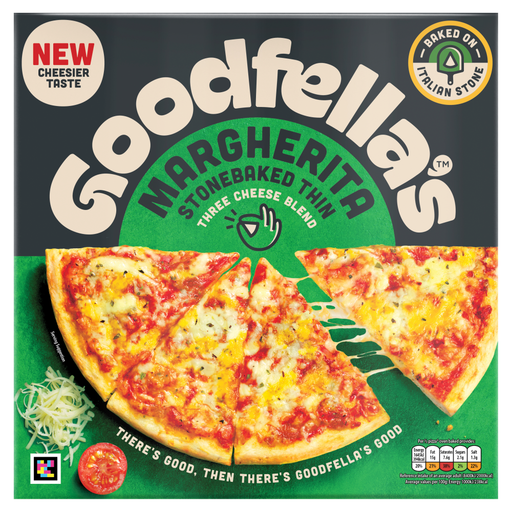 Image unavailable
For a shared Margherita pizza dinner, compare the pack’s fat and saturates per 100g, then check its serving figures for the amount you plan to eat. This is the 334g Stonebaked Thin variant; read the exact pack’s allergens and cooking instructions.
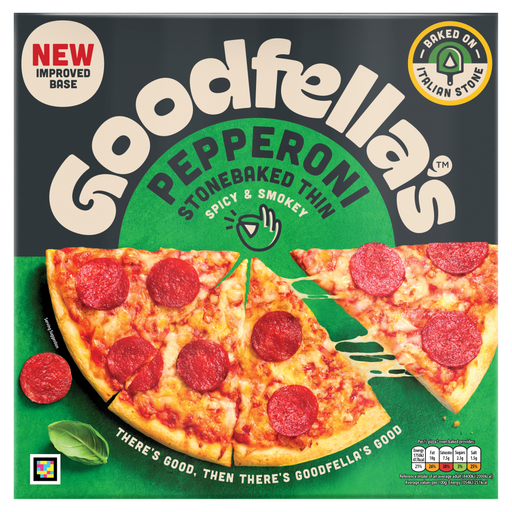 Image unavailable
If pepperoni is the topping you want for dinner, compare its pack’s fat and saturates per 100g with the Margherita rather than assuming their thin bases give them similar values. This is the 332g Stonebaked Thin variant; check the exact pack’s ingredients and cooking instructions.
No: the base description does not give you a comparable fat figure. Check the specific pizza’s panel. Dr. Oetker UK lists 12g fat per 100g for Ristorante Mozzarella, compared with 7.8g for Ristorante Pollo.
Of the Ristorante flavours compared here, Dr. Oetker UK lists the lowest fat per 100g for Pollo at 7.8g, followed by Pepperoni-Salame at 11g, Mozzarella at 12g and Quattro Formaggi at 14g. This ordering is based only on those manufacturer-stated fat figures, not on every frozen pizza.
Use per 100g to compare recipes, then use the stated serving or whole-pizza figures for the amount you expect to eat. Dr. Oetker UK lists 14g fat per half Ristorante Pollo pizza and 47g per whole Ristorante Quattro Formaggi pizza; those are different portion bases.
Check the ingredients and highlighted allergens on the exact frozen-pizza pack. The Food Standards Agency says allergens must be emphasised in the ingredients list of pre-packed food; do not rely on the list for another flavour or an earlier pack.
Follow each pizza’s own pack instructions for cooking from frozen. Check its stated oven setting and time when planning dinner rather than transferring a method from another product.