Who is each option for?
The first choice is whether you want a crunchy snack straight from the pack or are willing to prepare something with a nutty flavour.
Snackers focused on total fat
Compare peanut powder with whole nuts by the fat figure per 100g. Tesco Marketplace lists PBfit powder at 13g fat per 100g, while the Tesco and Sainsbury's whole-nut examples in this article list much more. Powder needs mixing, so it serves a different purpose from a handful of nuts.
People who want crunch and convenience
Ready-to-eat nuts avoid preparation, but an unsalted or roasted name does not establish that they contain less fat. Check the stated serving size and put a portion in a bowl if you do not want to eat directly from a larger pack.
Shoppers comparing salt and sugars too
A lower fat figure is not the whole comparison. Tesco Groceries lists KP Dry Roasted Peanuts at 1.6g salt per 100g, while Sainsbury's lists 17.6g sugars per 100g for its honey-roast maple peanut and cashew mix. Compare the nutrient that matters to your choice on the same per-100g basis.
What should you check before choosing?
Choose the format first: peanut powder needs preparation, whereas whole nuts offer ready-to-eat crunch. Then compare the labels and the amount you plan to serve.
| Priority |
What to check |
Your needs |
| Total fat and format |
Compare fat per 100g on like-for-like labels. Tesco Marketplace lists PBfit peanut powder at 13g; Tesco Groceries lists KP dry-roasted peanuts at 48g and Tesco unsalted mixed nuts at 55g per 100g. Check whether the product needs mixing or is ready to eat. |
I want to reduce total fat, and I am happy to mix powder into a snack rather than eat a crunchy handful. |
| Serving size |
Check both per-100g and per-serving figures, then measure the amount you intend to eat. Tesco Groceries lists 158kcal and 13.8g fat for a 25g serving of its unsalted mixed nuts. |
For a snack late in the evening, I would rather serve a portion than keep eating from a larger bag. |
| Salt and sugars |
Read salt and sugars per 100g as well as the ingredients. Tesco Groceries lists 1.6g salt per 100g for KP Dry Roasted Peanuts; Sainsbury's lists 17.6g sugars per 100g for its honey-roast maple peanut and cashew mix. |
I want to know what the seasoning or coating adds, even if a flavoured product has a lower fat figure than another nut mix. |
| Allergens |
Check the current pack's ingredients and precautionary allergen statements. The Food Standards Agency distinguishes tree nuts from peanuts, which are legumes; a product may refer to both. |
If an allergy is relevant in my household, I need to check the particular product rather than rely on a general description such as “nuts”. |
Which brands and ranges are relevant?
These examples illustrate differences between particular products, not a judgement about every item sold under each brand or by each retailer.
KP
The compared KP peanut products include unsalted roasted and dry-roasted formats.
- Sainsbury's lists KP Unsalted Roasted Peanuts at 51g fat and less than 0.5g salt per 100g.
- Tesco Groceries lists KP Dry Roasted Peanuts at 48g fat but 1.6g salt per 100g. Neither fat figure establishes a lower-fat snack.
Tesco
Tesco lists its own unsalted mixed nuts and, separately, PBfit peanut powder through Tesco Marketplace.
- Tesco Unsalted Mixed Nuts list 0.02g salt per 100g and are ready to eat.
- Those mixed nuts list 55g fat per 100g. The marketplace-listed PBfit powder lists 13g fat per 100g but needs mixing rather than being eaten as whole nuts.
Sainsbury's
The compared Sainsbury's listings include a honey-roast maple peanut and cashew mix and KP unsalted peanuts.
- The honey-roast mix lists 42.6g fat per 100g, below the 51g listed for the KP unsalted peanuts stocked by Sainsbury's.
- The honey-roast mix also lists 17.6g sugars per 100g and includes sugar, honey and glucose syrup.
M&S
The M&S example is a 70g pack of cashew nuts.
- The 70g pack gives shoppers a defined pack size to compare with the amount they intend to serve.
- M&S lists these cashews at 47.2g fat and 8.3g saturates per 100g; the product should not be assumed to have less fat because it is a natural nut option.
Joybuy options for a nutty snack
These options include chestnuts for a different texture and preparation choice, alongside peanuts and chopped mixed nuts for those who want a more familiar nut snack. Compare the current pack labels before treating any one of them as a lower-fat option.
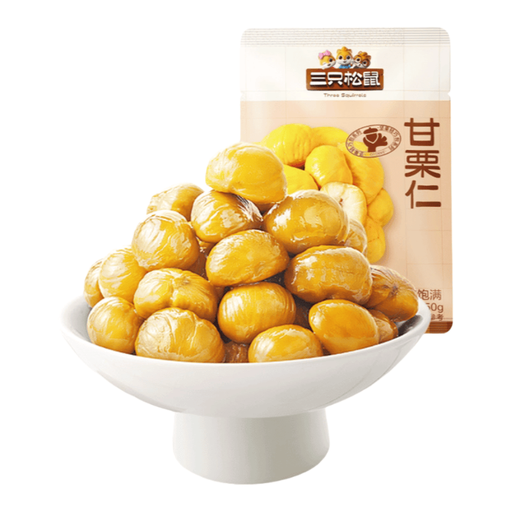 Image unavailable
Three Squirrels Light Pack Sweet Chestnut Kernels 50 g
A 50 g chestnut pack may suit someone who wants a defined amount for a late snack. Chestnuts have a softer texture than crunchy roasted peanuts; check the pack's fat and sugars figures for your comparison.
View on Joybuy
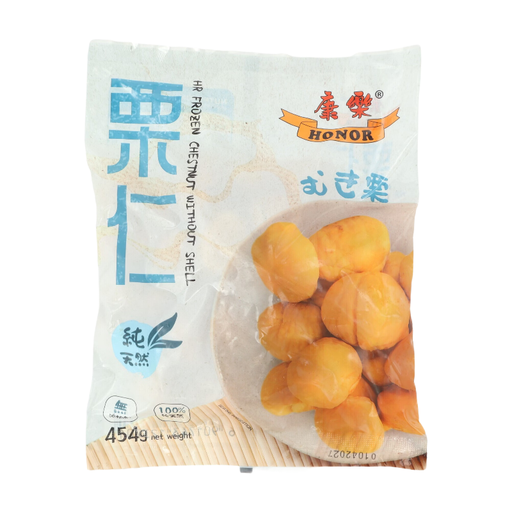 Image unavailable
HONOR Chestnuts Without Shell 454g
Consider these if you are willing to prepare chestnuts rather than open a ready-to-eat nut snack. They require boiling for 2–5 minutes, and the 454g pack needs dividing into the amount you intend to eat. Check the pack's nutrition and preparation instructions.
View on Joybuy
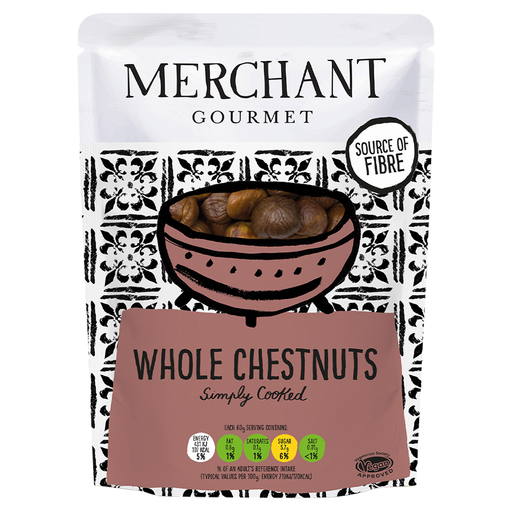 Image unavailable
Merchant Gourmet Whole Chestnuts 180g
These ready-to-eat chestnuts offer a soft alternative to crunchy nuts. The 180g pouch is larger than a single small serving, so decide how much to serve and compare its pack nutrition with the other formats you are considering.
View on Joybuy
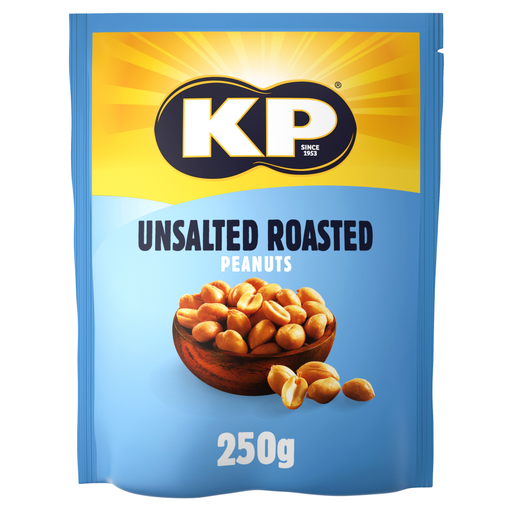 Image unavailable
KP Snacks Unsalted Roasted Peanuts 250g
Choose this format if ready-to-eat peanut crunch matters more than reducing total fat. Sainsbury's lists the same KP unsalted 250g product at 51g fat and less than 0.5g salt per 100g; check the current pack and serve the amount you intend to eat.
View on Joybuy
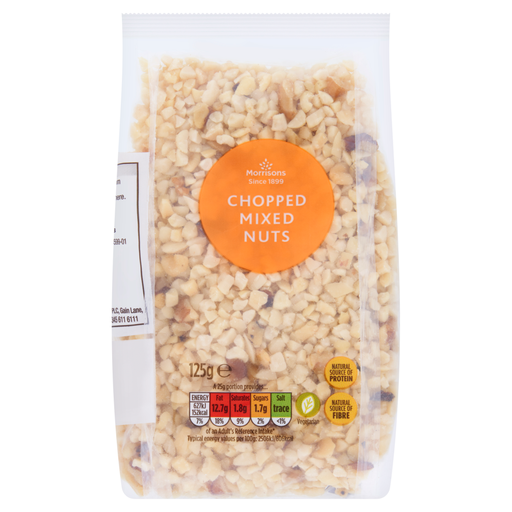 Image unavailable
Morrisons Chopped Mixed Nuts 125g
Consider this chopped nut mix if you want a ready-to-eat texture rather than chestnuts or a powder to mix. The 125g pack can be divided into portions; check its current nutrition and ingredient label when comparing fat, salt and sugars.
View on Joybuy
Common questions
Are unsalted nuts lower in fat?
“Unsalted” does not establish a lower fat content. Tesco Groceries lists its Unsalted Mixed Nuts at 55g fat per 100g, and Sainsbury's lists KP Unsalted Roasted Peanuts at 51g per 100g. Compare the fat figure itself if that is your main reason for choosing.
Does dry roasting make peanuts lower in fat?
The preparation name alone cannot answer that. Tesco Groceries lists KP Dry Roasted Peanuts at 48g fat and 1.6g salt per 100g; Sainsbury's lists KP Unsalted Roasted Peanuts at 51g fat and less than 0.5g salt per 100g. Check both fat and salt for the specific products.
When does peanut powder make more sense than whole nuts?
Peanut powder is worth comparing when total fat matters more to you than ready-to-eat crunch. Tesco Marketplace lists PBfit Pure Peanut Powder at 13g fat per 100g and describes pressing the peanuts to remove most of their fat. You will need to mix or reconstitute the powder and check the current pack's preparation instructions.
Should I choose honey-roast nuts because their fat figure is lower?
Not on that figure alone. Sainsbury's lists its honey-roast maple peanuts and cashews at 42.6g fat per 100g, compared with Tesco Groceries' 55g for Unsalted Mixed Nuts. The honey-roast mix also lists 17.6g sugars per 100g and contains sugar, honey and glucose syrup, so compare both labels against the snack you want.
Are peanuts and tree nuts the same allergen?
No. The Food Standards Agency distinguishes tree nuts from peanuts, which are legumes. Check the current product pack for its ingredients and any precautionary allergen statements if either is relevant to your household.


