Who these choices suit
For a mid-morning snack, the useful distinction is whether you need something ready to eat, a measured portion or a peanut ingredient with fat removed.
People planning a desk snack
If you would rather not eat from a large bag throughout the morning, measure out a portion of plain or unsalted nuts before taking it to your desk. The British Heart Foundation uses a small handful of about 30g as a portion reference.
Shoppers avoiding added salt
Plain or explicitly unsalted nuts offer a ready-to-eat option. Check both the ingredients and the salt figure on the pack: a low salt figure does not tell you how much fat the nuts contain.
Shoppers looking to reduce peanut fat
Pressed peanut powder is worth considering if you can mix it into porridge, yoghurt or a drink. It serves a different purpose from crunchy whole peanuts eaten straight from the pack.
What to check before buying
Plain or unsalted whole nuts
Choose when: You want a ready-to-eat snack and are chiefly avoiding added salt or coatings.
Trade-off: Unsalted whole nuts still contain substantial fat, so compare the portion you intend to eat.
Pressed peanut powder
Choose when: Reducing peanut fat takes priority over eating whole nuts straight from the pack.
Trade-off: It is an ingredient to mix into another food or drink, not a crunchy handful of peanuts.
Compare fat on the same per-100g basis first, then check what a realistic mid-morning serving and the ingredient list mean for your choice.
| Priority |
What to check |
Your needs |
| Fat and format |
Compare fat per 100g, then per intended serving. Check whether the product is whole nuts or a powder made from pressed peanuts; an unsalted label alone does not establish a fat reduction. |
If I want to eat nuts straight from the pack, whole nuts suit that routine. If reducing peanut fat is the deciding factor, I can use a powder mixed into something else. |
| Portion and energy |
Read the stated serving weight and energy per serving; compare equal weights if packs use different servings. The British Heart Foundation says a 30g handful of nuts can contain 180–225kcal, depending on the nut. |
A measured portion would help me plan a desk snack rather than keep reaching into a large bag. |
| Salt and coatings |
Check salt, sugars and saturates on the nutrition panel, alongside ingredients such as added salt, sweet coatings or flavourings. The British Heart Foundation advises choosing whole, plain nuts rather than coated or salted varieties. |
I want a straightforward savoury snack, so I would compare an unsalted pack with any flavoured option I am considering. |
| Allergens |
Read the pack’s declared allergens and any ‘may contain’ statement. Check the particular mix: peanuts and different tree nuts need not appear in the same product. |
Before sharing a snack, I need to know which nuts it contains and whether the pack lists other possible allergens. |
Relevant brand and retailer examples
These product examples show why a salt claim, nut mix or smaller pack should be assessed separately from fat content. They are not a ranking of brands.
KP
KP Unsalted Peanuts 250g are a ready-to-eat peanut option for shoppers avoiding added salt.
- Sainsbury’s lists peanuts and sunflower oil as ingredients, with 0.03g salt per 100g.
- The same listing gives 51g fat and 619kcal per 100g. It also lists possible presence of other nuts, milk, soya and gluten.
Tesco
Tesco Mixed Nuts 200g combine cashews, almonds, hazelnuts and walnuts without a flavoured coating in the listed ingredients.
- Tesco Groceries lists less than 0.01g salt per 25g serving.
- The product has 53.5g fat per 100g; its listing also warns that it may contain peanuts and other nuts.
Sainsbury’s
Sainsbury’s Mixed Nuts 300g combine almonds, walnuts, cashews and Brazil nuts in a larger bag.
- Sainsbury’s lists less than 0.01g salt per 30g serving.
- It lists 58.2g fat per 100g and warns that the product is unsuitable for customers allergic to other nuts or sesame because of manufacturing methods.
Asda
Asda Nut Mix 200g is another mixed-nut option, listing almonds, walnuts, cashews and hazelnuts.
- The Asda Groceries listing identifies the nuts in the mix, which helps when checking the ingredients against your preferences.
- Its allergen advice also lists possible presence of peanuts and several other nuts; check the pack’s nutrition panel before making a fat comparison.
M&S
M&S Nut Collection is a 75g pack containing almonds, Brazil nuts, cashews and hazelnuts.
- The smaller pack may suit someone who would rather carry one pack than a large pantry bag.
- Check the pack’s fat, salt and allergen information before comparing it with other mixes.
Joybuy snack options
These Joybuy options are ready-to-eat chestnuts, peanuts and nut mixes for a mid-morning snack. They differ in pack format and ingredients; they are not a selection of pressed peanut powders, and an unsalted or mixed-nut name does not establish reduced fat.
 No image available
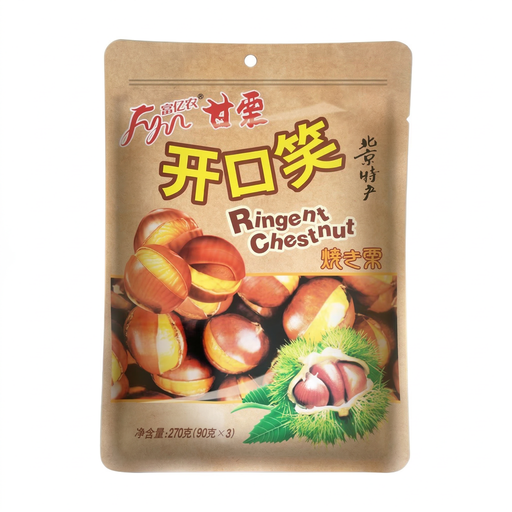
Fu Yi Nong Split-Shell Chestnuts 270g, 3 packs
Three packs offer a way to separate a mid-morning chestnut snack from the rest of the 270g purchase. Chestnuts are a different choice from peanuts or mixed tree nuts; compare the pack’s fat and energy figures if those are central to your decision.
View on Joybuy
 No image available
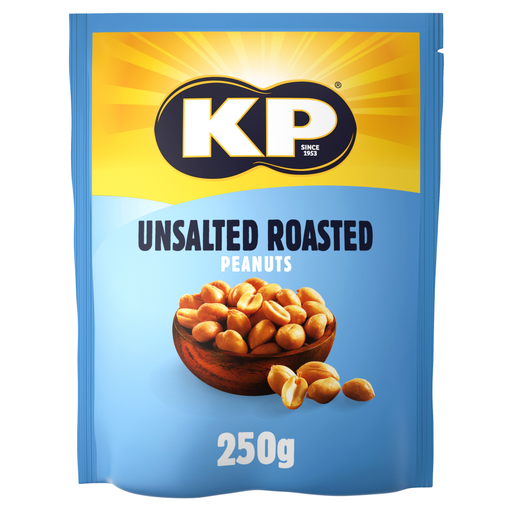
KP Snacks Unsalted Roasted Peanuts 250g
A ready-to-eat choice when avoiding added salt matters more than reducing fat. Sainsbury’s lists 51g fat and 0.03g salt per 100g for KP Unsalted Peanuts; its allergen information also lists possible presence of other nuts, milk, soya and gluten.
View on Joybuy
 No image available
Three Squirrels Daily Nuts Mixed Nuts & Seeds 750g
A mixed snack rather than a pack of plain whole nuts. If avoiding added sugar is part of your choice, check the ingredients of any dried fruit in the mix; use the nutrition panel to compare fat on the same basis as other snacks.
View on Joybuy
 No image available
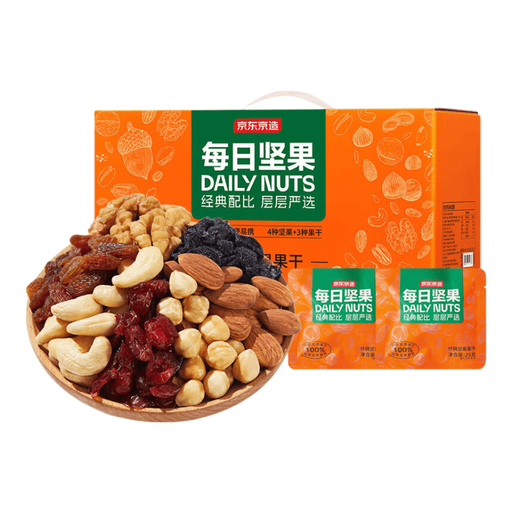
J.ZAO Classic Daily-Nut Mix 750g, 30 sachets
The separate sachets may be convenient for taking a planned snack to work. This is a nuts-and-dried-fruit mix, so check the fruit ingredients for added sugar and compare the pack’s fat figure with any plain-nut option you are considering.
View on Joybuy
 No image available
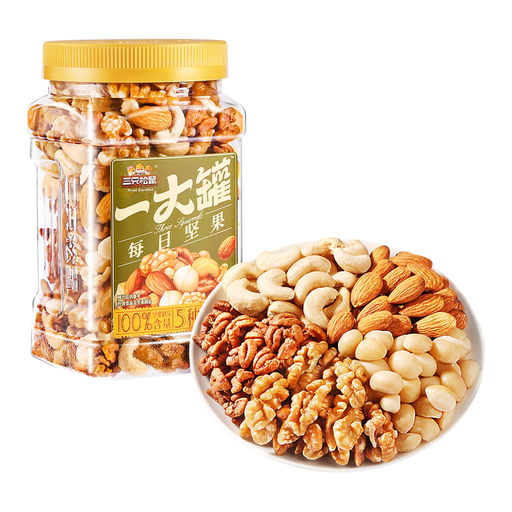
Three Squirrels Daily Nuts All-Nut Pure Enjoyment Edition 500g
An all-nut mix for someone who does not want dried fruit in their snack. The pecans are seasoned with sugar and salt, so it is not the same choice as a plain, unsalted mix; check the nutrition panel if reducing fat is your priority.
View on Joybuy
Questions about nut snacks
Are unsalted nuts reduced fat?
No: ‘unsalted’ refers to salt, not fat. Sainsbury’s lists 51g fat per 100g for KP Unsalted Peanuts and 58.2g for Sainsbury’s Mixed Nuts; Tesco Groceries lists 53.5g for Tesco Mixed Nuts. Compare fat per 100g and the amount you plan to eat.
How much is a small serving of whole nuts?
The British Heart Foundation uses a small handful of about 30g as a portion reference and says that amount can contain 180–225kcal, depending on the nut. Measuring a serving is more precise than repeatedly taking nuts from a large bag.
When does peanut powder make more sense than whole nuts?
Consider it when reducing peanut fat is your main aim and you want an ingredient to mix into food or a drink. Tesco Groceries describes PBfit Pure Peanut Powder as made from roasted peanuts pressed to remove most of their fat; it does not replace the experience of eating crunchy whole nuts.
What allergen information matters on a mixed-nut pack?
Check both the declared ingredients and any ‘may contain’ statement on the pack you are buying. A mix can contain several tree nuts and warn of possible contact with peanuts or other allergens; do not assume one mixed-nut product has the same allergen profile as another.
Are whole nuts an appropriate snack for small children?
Do not assume they are: the product information for KP Unsalted Peanuts and Tesco Mixed Nuts includes choking warnings for small children. Check the warning on the particular pack and choose an age-appropriate snack instead.


