Who is each option for?

Families prioritising lower fat

Ready-to-eat chestnuts are worth considering when total fat matters more than keeping the familiar texture of peanuts or mixed nuts. Waitrose & Partners lists 1.3g fat per 100g for Merchant Gourmet Whole Chestnuts; Sainsbury's lists 51g for KP unsalted peanuts and 59.7g for its unsalted mixed nuts on the same basis.

Families choosing conventional nuts for their salt content

If the pupil wants peanuts or mixed nuts and the school permits them, an unsalted product may fit a preference for little listed salt. It is a separate choice from reducing fat: Sainsbury's lists KP Unsalted Roasted Peanuts at 51g fat per 100g.

Families checking allergy arrangements

Check what the individual school allows before putting chestnuts, peanuts or mixed nuts in a packed lunch. In England, the Department for Education says schools must publish an allergy safety policy; the Food Standards Agency also distinguishes peanuts from tree nuts, so read the school's wording and the product label carefully.

What should you check before choosing?

Start with the school's policy, then compare fat on the same per-100g basis. Salt, portion size and storage matter when deciding which permitted product is practical to pack.

PriorityWhat to checkYour needs
Fat content Compare fat per 100g before looking at portion sizes. Waitrose & Partners lists Merchant Gourmet chestnuts at 1.3g; Sainsbury's lists KP unsalted peanuts at 51g and its unsalted mixed nuts at 59.7g. If reducing fat is the point of this lunchbox choice, I need to distinguish chestnuts from conventional unsalted nuts.
School and allergens Read the individual school's packed-lunch and allergy policy alongside the current pack's ingredients and allergen statement. The Food Standards Agency distinguishes peanuts from tree nuts; a school policy may address either. Before I pack this snack, I need to know that its ingredients are suitable for the pupil and allowed by the school.
Salt Check the declared salt amount and the serving basis. Sainsbury's lists less than 0.01g salt per 30g serving for KP Unsalted Roasted Peanuts, but also lists 51g fat per 100g. I might prefer a conventional peanut snack with very little listed salt, without mistaking that for a lower-fat choice.
Portions and storage Decide how much to pack from a larger pouch. KP lists a 30g serving; the instructions for Merchant Gourmet chestnuts say to refrigerate unused contents after opening and use them within 3 days. A separate lunch portion is easier for me to pack than an open share pouch, and I need a plan for any chestnuts left over.

What can go wrong?

  • Reading “unsalted” as “reduced fat”

    These terms describe different things. Sainsbury's lists 51g fat per 100g for KP Unsalted Roasted Peanuts and 59.7g for its Unsalted Mixed Nuts, despite their unsalted names.

    Compare the fat figures per 100g if lowering fat is the aim, then check the amount you intend to pack.

  • Assuming a prepacked snack is allowed at school

    The school's allergy arrangements may affect what can be brought from home. Peanuts and tree nuts are distinct allergen terms, according to the Food Standards Agency, and a mixed product can contain several nut types.

    Check the school's current policy and the pack's allergen statement. If the policy is unclear, ask the school before packing the product.

  • Opening a pouch without planning the portions

    A larger pack needs portioning for lunch. Opened Merchant Gourmet chestnuts also have specific storage instructions for what remains in the pouch.

    Pack the intended portion separately; refrigerate unused Merchant Gourmet chestnuts after opening and use them within 3 days.

  • Checking a listing but not the pack

    The physical pack lets you check the ingredients and allergen statement against the pupil's needs and the school's policy before lunch is prepared.

    Read its current label, date and storage instructions when packing, rather than relying only on an online description.

Which brands are relevant?

Merchant Gourmet

Its ready-to-eat Whole Chestnuts provide a different format from conventional peanut or mixed-nut snacks when lower fat is the priority.

  • Waitrose & Partners lists 1.3g fat per 100g for Merchant Gourmet Whole Chestnuts.
  • Opened pouches require refrigeration, with unused contents to be eaten within 3 days.

KP

KP Unsalted Roasted Peanuts are a conventional peanut option for a pupil whose school permits them and whose priority is little listed salt rather than lower fat.

  • Sainsbury's lists less than 0.01g salt per 30g serving.
  • The same listing gives 51g fat per 100g, so this is not the lower-fat option in this comparison.

Sainsbury's

Its Unsalted Mixed Nuts offer a mix of almonds, peanuts, hazelnuts and walnuts where each ingredient is suitable and permitted.

  • The listed ingredients make the types of nuts in this particular mix clear.
  • Sainsbury's lists 59.7g fat per 100g, so the mix does not serve this article's lower-fat aim.

M&S

The M&S nuts-and-seeds range includes natural, mixed and roasted formats. Compare a particular pack's label before treating it as a lower-fat choice.

  • The M&S catalogue lists several nut-and-seed formats to compare.
  • A range category alone does not establish the fat content or ingredients of an individual product.

Chestnuts on Joybuy

This chestnut option addresses the lower-fat packed-lunch choice. Check the school's policy and the pack label before deciding whether it belongs in the pupil's lunch.
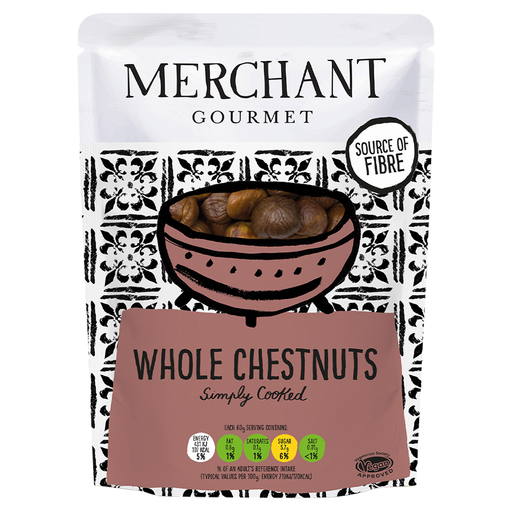
Merchant Gourmet Whole Chestnuts 180g pouch

Merchant Gourmet Whole Chestnuts 180g

Ready-to-eat whole chestnuts are an option for a packed lunch where the school's policy permits them. Joybuy's listing states 1.3g fat per 100g; after opening, refrigerate unused contents and use them within 3 days.

View on Joybuy

Packed-lunch questions

Are unsalted peanuts lower in fat?

Not on the basis of the KP example: Sainsbury's lists KP Unsalted Roasted Peanuts at 51g fat per 100g, despite their unsalted name. It lists less than 0.01g salt per 30g serving, so compare fat separately if that is the figure you want to reduce.

How do chestnuts compare with conventional nuts for this lunch?

For the products compared here, ready-to-eat chestnuts have the lower declared fat figure. Waitrose & Partners lists Merchant Gourmet Whole Chestnuts at 1.3g fat per 100g, compared with Sainsbury's figures of 51g for KP unsalted peanuts and 59.7g for its unsalted mixed nuts. Chestnuts are a different snack format, and an opened pouch needs refrigerated storage.

Can a pupil take nuts or peanuts to a secondary school in England?

Check the individual school's packed-lunch and allergy policy before sending them. The Department for Education says schools in England must publish an allergy safety policy setting out arrangements to reduce contact with known allergens; that guidance does not tell you what a particular school permits in a packed lunch.

Are peanuts and tree nuts the same allergen?

No. The Food Standards Agency distinguishes peanuts, which are legumes, from tree nuts. Check the school's exact policy wording and the product's current allergen statement, particularly for a mix containing both peanuts and tree nuts.

What should I do with an opened chestnut pouch?

For Merchant Gourmet Whole Chestnuts, refrigerate unused contents after opening and eat them within 3 days. Pack the lunch portion separately and follow the current pack's storage instructions.