For a train snack, compare total fat per 100g and the amount you plan to take, rather than assuming a particular nut or roast style is reduced in fat. Among three peanut listings compared by ASDA Groceries, ASDA Peanuts 200g declares 46g fat per 100g, KP Dry Roasted Peanuts 415g declares 48g and KP Unsalted Peanuts 250g declares 51g. That limited comparison does not identify a market-wide choice, and the dry-roasted KP product has considerably more declared salt than the unsalted one.
Who is this for?
Travellers comparing total fat
If reducing total fat is your main consideration, compare the nutrition figures on the same per-100g basis, then look at the portion you will actually carry. ASDA Groceries lists 46g to 51g fat per 100g across the three peanut products compared here; a small difference between them does not make any one of them a low-fat snack.
Travellers also watching salt
A lower fat figure can come with a different salt figure. ASDA Groceries lists 0.48g salt per 30g serving for KP Dry Roasted Peanuts 415g, against less than 0.01g for a 30g serving of KP Unsalted Peanuts 250g.
Commuters planning a portion
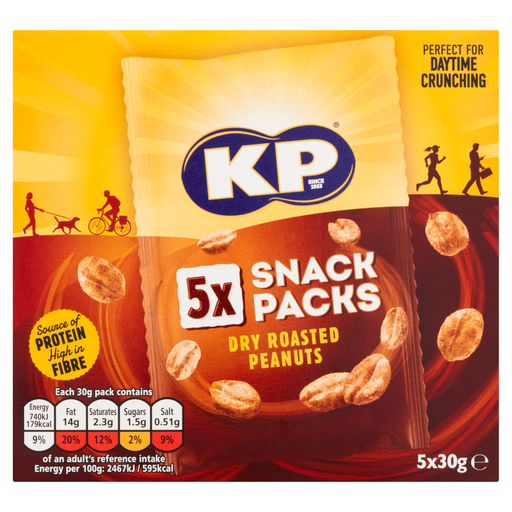
An individual pack makes the amount you take easier to define than an open bag. Joybuy lists KP Snacks Dry Roasted Peanuts in 5 × 30g packs; its stated 30g pack contains 14g fat and 0.51g salt, so pack format and nutrition are separate decisions.
What should you check before choosing?
Start with comparable nutrition figures, then decide how much to pack and check the label of the product you will take. A plain peanut, a seasoned peanut and a chestnut snack should not be treated as interchangeable just because each fits in a travel bag.
| Priority |
What to check |
Your needs |
| Total fat |
Compare total fat per 100g between products, then calculate what the stated serving represents for the amount you intend to take. Check the current pack rather than relying on the words “plain” or “dry roasted”. |
I want to compare the amount of fat in similar-sized portions, not choose by the style of nut alone. |
| Salt |
Read salt per 100g and per serving alongside total fat. In ASDA Groceries’ KP listings, the dry-roasted 415g product declares 1.6g salt per 100g, while the unsalted 250g product declares less than 0.01g per 30g serving; those are different measurement bases. |
If I am also trying to reduce salt, a slightly lower fat figure is not enough to settle the choice. |
| Pack size |
Check whether the pack is a single portion, individually wrapped portions or a larger bag. For a larger bag, separate the amount you intend to take before travelling. |
I would rather carry a defined amount than work out my portion from an open bag on the train. |
| Label details |
Use the nutrition table for the figures you are comparing. Where present, a traffic-light label indicates whether fat, saturated fat, sugars and salt are high, medium or low, as explained by GOV.UK. |
I want a quick way to read the pack without mistaking the front label for a full product comparison. In the Food Standards Agency and Ipsos Northern Ireland’s 2024 survey of 611 Northern Ireland adults, 49% reported actively using traffic-light labelling when shopping for food. |
| Allergens |
Read the contains and may-contain statements on the current physical pack before eating or sharing. Check the exact product for peanuts and any other allergens relevant to you. |
I need to know whether this particular pack meets my allergy requirements before I take it on a journey. |
What is easy to overlook?
-
Calling the lowest-fat peanut “reduced fat”
ASDA Groceries lists 46g total fat per 100g for ASDA Peanuts 200g, the lowest figure among the three peanut listings compared here. Its position in that small comparison does not establish a reduced-fat claim.
Compare the per-100g figures and your intended serving; do not use a small difference between products as a substitute for reading the label.
-
Checking fat but overlooking salt
ASDA Groceries lists 14g fat and 0.48g salt per 30g for KP Dry Roasted Peanuts 415g, compared with 15g fat and less than 0.01g salt per 30g for KP Unsalted Peanuts 250g.
If both nutrients matter to your choice, compare both lines for the same serving size before deciding.
-
Taking a large bag when you planned a small snack
A multi-serving bag does not define how much you will eat during the journey. An individual pack defines the amount carried, but its nutrition still needs checking.
Portion a larger bag before leaving, or choose an individual pack whose stated serving suits your plans.
-
Skipping the allergen statement
The peanut products compared by ASDA Groceries contain peanuts, and may-contain statements can differ between products.
Check the physical pack for all allergens relevant to you before eating or sharing it, even if you have bought a similar product before.
Which brands offer relevant options?
KP
KP has unsalted and dry-roasted peanut formats relevant to the fat-versus-salt decision, as well as individually packed dry-roasted peanuts.
- ASDA Groceries lists less than 0.01g salt per 30g serving for KP Unsalted Peanuts 250g.
- Its KP Dry Roasted Peanuts 415g listing declares slightly less fat per 30g serving, but 0.48g salt for that serving.
ASDA
ASDA Peanuts 200g are a plain-peanut reference for comparing declared fat and salt.
- ASDA Groceries declares 46g fat and less than 0.01g salt per 100g for this product.
- The 200g bag contains multiple servings, so set aside a journey portion if the amount carried matters to you.
Tesco
Tesco Groceries lists own-label salted, dry-roasted and unsalted peanuts alongside KP options.
- The range gives shoppers several seasoning styles to consider.
- Compare the nutrition panel of the particular pack you choose; the style name alone does not establish its fat or salt content.
Sainsbury's
Sainsbury's Mixed Nuts 300g provide a mixed-nut alternative to a peanut-only snack.
- Sainsbury's lists less than 0.01g salt per 30g serving for this mix.
- The same listing declares 17.5g fat per 30g serving; choosing a mix does not itself reduce the fat in a serving.
M&S
The M&S natural-nuts range includes almonds, cashews, walnuts, pistachios and mixed nuts.
- There are single-nut and mixed-nut types to consider if you do not want peanuts alone.
- Use the nutrition and allergen information for the exact M&S product when comparing it with another snack.
Joybuy options for a train snack
These options include chestnut snacks and peanut packs in different sizes. Chestnuts offer a different taste and texture from peanuts; for any of these products, check the current nutrition and allergen label before deciding whether its serving suits your journey.
 No image available
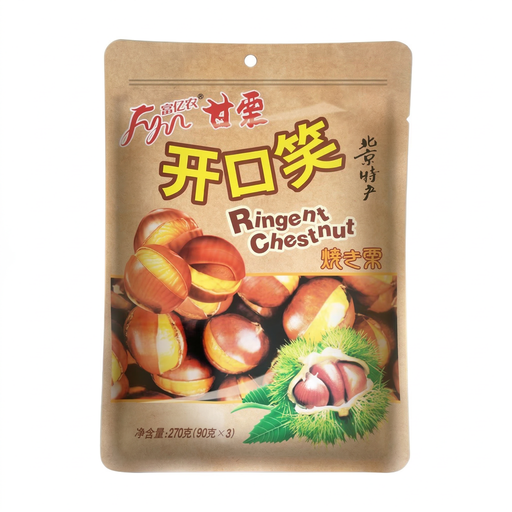
Fu Yi Nong Split-Shell Chestnuts 270g, 3 packs
Three packs let you take part of the 270g product on a journey rather than carrying it all. These are chestnuts, not the peanuts used in the nutrition comparison above; check the pack for the fat figure and allergen information relevant to you.
View on Joybuy
 No image available
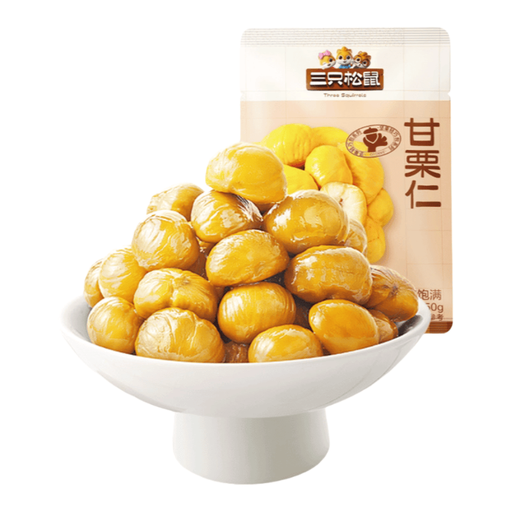
Three Squirrels Light Pack Sweet Chestnut Kernels 50 g
The 50 g pack is a defined amount to take on one journey. If you are comparing it with peanuts for total fat, use the current per-100g nutrition figures rather than assuming the two types have the same composition; check the pack’s allergen information too.
View on Joybuy
 No image available
KP Snacks Dry Roasted Peanuts 5 × 30g
Five individual 30g packs make it straightforward to take one pack on a journey. These are dry-roasted peanuts; if salt as well as fat affects your decision, compare both figures on this product’s current pack with those of an unsalted option.
View on Joybuy
 No image available
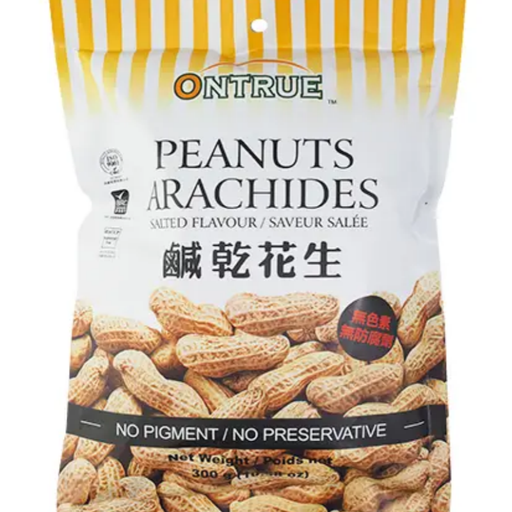
ONTRUE Roasted Salted Peanuts 300g
This 300g bag is a larger format, so separate the amount you want to carry before boarding. Because the peanuts are salted, check both fat and salt on the current label when comparing them with plain or unsalted products.
View on Joybuy
 No image available
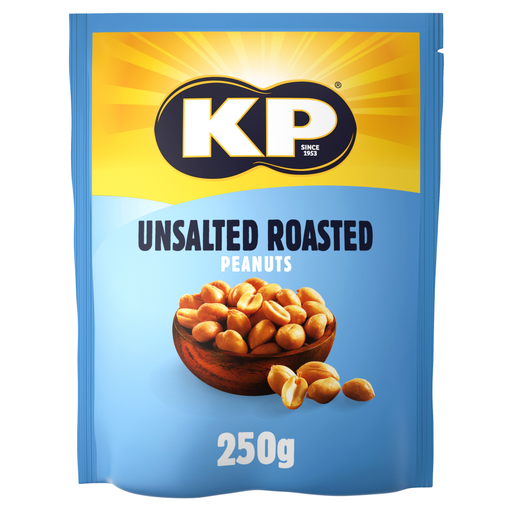
KP Snacks Unsalted Roasted Peanuts 250g
The unsalted format is relevant if you are comparing seasoned and unseasoned peanuts, but “unsalted” does not describe total fat. Check both figures on this 250g pack and portion out the amount you intend to take.
View on Joybuy
Common questions
Are nuts automatically a low-fat train snack?
No. The peanut listings compared by ASDA Groceries declare 46g to 51g total fat per 100g, while Sainsbury's lists 17.5g fat per 30g serving for its Mixed Nuts 300g. Compare like-for-like per-100g figures first, then check the portion you will take.
Does dry roasted mean lower fat than unsalted?
Not as a general rule. In ASDA Groceries’ specific KP listings, Dry Roasted Peanuts 415g declare 48g fat per 100g versus 51g for Unsalted Peanuts 250g, but the dry-roasted product declares 1.6g salt per 100g. Check the current labels of the products you are choosing rather than treating roast style as a nutrition claim.
Should I take individual packs or portion a larger bag?
Either can give you a defined amount for the journey: take one individual pack or separate a serving from a larger bag before leaving. Pack size does not establish its nutrition; Joybuy lists 14g fat and 0.51g salt for a 30g KP dry-roasted peanut pack.
What allergen information should I check before travelling?
Read the contains and may-contain statements on the current physical pack before eating or sharing nuts. The peanut products compared here contain peanuts, while additional may-contain statements differ, so check the exact product against your own allergy requirements.


