Vegan cooks using whole ingredients
Chestnuts can go into soups, stuffing, baking and savoury dishes. For an explicitly vegan option, Sainsbury’s lists Merchant Gourmet Whole Chestnuts as Vegetarian Society Approved – Vegan, with 1.6g fat per 100g.


Choose whole chestnuts if you need an explicitly vegan ingredient for cooking: Sainsbury’s lists Merchant Gourmet Whole Chestnuts as vegan, with 1.6g fat per 100g. If peanut flavour matters more, Tesco lists PBfit peanut powder at 13g fat per 100g, but check the current pack for vegan suitability; a reduced-fat peanut butter keeps the spread format, yet Tesco’s version has 35.1g fat per 100g, so its claim should not be read as a comparison with chestnuts or powder.
Chestnuts can go into soups, stuffing, baking and savoury dishes. For an explicitly vegan option, Sainsbury’s lists Merchant Gourmet Whole Chestnuts as Vegetarian Society Approved – Vegan, with 1.6g fat per 100g.
Peanut powder offers a different format from a ready-made spread. Tesco lists PBfit Pure Peanut Powder at 13g fat per 100g; compare its preparation instructions and check the current pack for vegan suitability. If you need a spread straight from the jar, compare peanut butters separately.
Vegan suitability does not establish that animal-origin allergens are absent through cross-contact. Read the ingredients and any precautionary allergen statement on the specific pack, rather than relying on a vegan label alone.
Start with the format your recipe needs, then compare fat on the same per-100g basis and check vegan and allergen information separately.
| Priority | What to check | Your needs |
|---|---|---|
| Fat and format | Compare fat per 100g and note whether the figure is for the product as sold or prepared. Sainsbury’s lists Merchant Gourmet chestnuts at 1.6g per 100g; Tesco lists PBfit powder at 13g and its Reduced Fat Peanut Butter at 35.1g per 100g. | I need pieces for cooking, peanut powder for mixing, or a spread for using straight from the jar. A lower fat figure is useful only if that format works for my food. |
| Reduced-fat claims | Find the product named as the comparator. Tesco says its Reduced Fat Peanut Butter has 30% less fat than Tesco smooth peanut butter; that claim does not compare it with chestnuts or peanut powder. | If I choose peanut butter, I want to know what its reduced-fat claim actually compares, rather than assume it is low in fat beside other nut products. |
| Vegan suitability | Read the current ingredients and look for an explicit vegan statement or approval. Sainsbury’s identifies Merchant Gourmet Whole Chestnuts as vegan; Tesco identifies its Reduced Fat Peanut Butter as suitable for vegetarians, which is not the same claim. | I want a product whose vegan suitability I can check without treating a vegetarian label or a reduced-fat claim as confirmation. |
| Allergen information | Check declared ingredients and any precautionary allergen wording on each pack. UK government allergen-labelling guidance identifies peanuts and nuts among the allergens that must be declared when used as ingredients in prepacked food. | When shopping for someone with an allergy, I need to check both ingredients and stated cross-contact risks; a vegan label alone cannot answer that question. |
Tesco’s Reduced Fat Peanut Butter has 30% less fat than its own smooth peanut butter, but Tesco still lists 35.1g fat per 100g. It is also a different format from whole chestnuts or peanut powder.
Compare the per-100g figures, then decide whether the recipe calls for pieces, powder or a spread.
A vegetarian designation does not make an explicit vegan claim. Tesco’s listing for its Reduced Fat Peanut Butter uses the former designation.
Check the current ingredients and look for an explicit vegan statement or approval if you need that confirmation.
Vegan suitability and allergen cross-contact are separate questions. A product may be intended for vegans while still carrying a precautionary warning relevant to someone with an animal-origin food allergy.
Read the specific pack’s allergen and precautionary statements, and ask the manufacturer if the information needed for an allergy decision is unclear.
Tesco lists KP Original Salted Peanuts at 51g fat per 100g, or 15g per 30g serving. Their familiar snack format should not be confused with the lower-fat chestnut and pressed-peanut-powder options described here.
Use the nutrition panel and serving size to compare the products you are considering.
These references concern specific products and formats, not every nut product sold under each name.
Its Whole Chestnuts 180g offer a whole-ingredient option for vegan cooking.
Its Pure Peanut Powder is a pressed-peanut format for recipes where powder can be mixed in.
Tesco Reduced Fat Peanut Butter retains the smooth-spread format.
KP Original Salted Peanuts provide a conventional peanut-snack point of comparison, rather than a reduced-fat product.
These are whole-chestnut options for cooking, not peanut powders or reduced-fat spreads. Check the preparation instructions and the pack’s vegan and allergen information for the product you choose.
 No image available
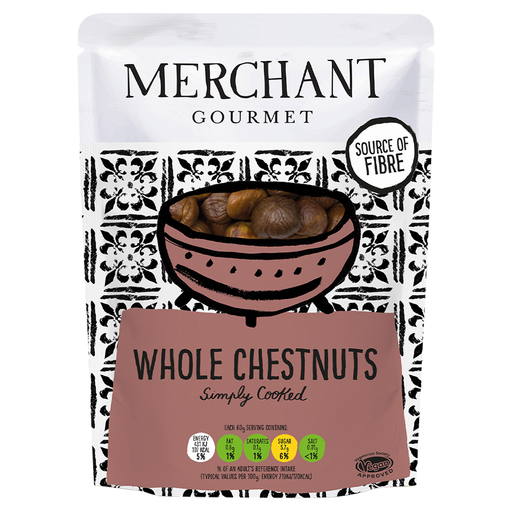
Whole chestnuts suit dishes that need pieces rather than a peanut spread. Sainsbury’s lists this product as 100% chestnuts and Vegetarian Society Approved – Vegan, with 1.6g fat per 100g; Joybuy’s figure of 1.3g per 100g is stated for the drained product, so check the basis when comparing labels. Check the pack’s precautionary milk and egg allergen wording if relevant.
 No image available
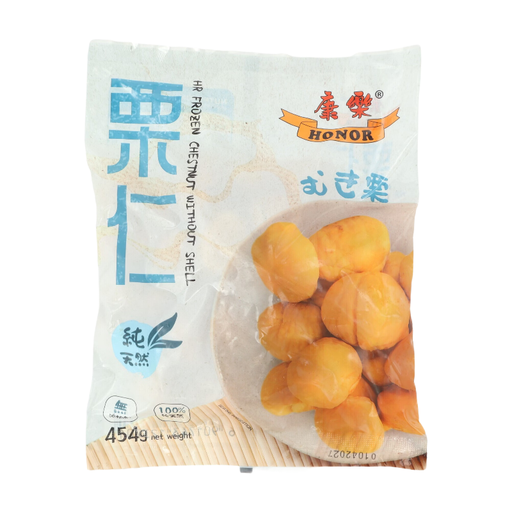
These chestnuts are an option for recipes where you can cook the ingredient before serving. The product requires cooking and frozen storage at −18°C; check the current ingredients, vegan suitability and allergen information on the pack before buying for a vegan household.
No. Vegan suitability does not guarantee the absence of animal-origin allergens through cross-contact. If an allergy is relevant, check the specific pack’s ingredients and precautionary allergen statement separately.
Yes. UK government allergen-labelling guidance identifies peanuts and nuts among the allergens that must be declared when used as ingredients in prepacked food. Read the ingredients and allergen information for each product, particularly mixed or flavoured varieties.
No. “Reduced fat” describes a comparison with another product, not vegan suitability. Tesco’s Reduced Fat Peanut Butter listing says suitable for vegetarians rather than explicitly vegan, so check the current pack before choosing it for a vegan shop.
Choose whole chestnuts when the dish needs pieces, such as in stuffing or a savoury recipe. Peanut powder fits recipes where peanut flavour can be mixed in, but it will not provide the texture of whole chestnuts; check the powder’s current pack for vegan suitability.