Fat-conscious afternoon snackers
If fat per bar is your deciding measure, compare the whole serving rather than choosing by a high-protein or low-sugar message.


For an afternoon snack where fat per bar is the priority, start with the exact flavour’s nutrition panel: Myprotein UK lists 3.4g fat, 15g protein and 138 kcal per 40g Lean Layered White Chocolate & Raspberry bar. If a larger protein serving matters more, PhD lists 21g protein in its 64g Smart Chocolate Peanut Butter bar, alongside 8.6g fat and 245 kcal. Low sugar or high protein alone does not establish that a bar is lower in fat.
If fat per bar is your deciding measure, compare the whole serving rather than choosing by a high-protein or low-sugar message.
If you want a larger protein serving, check what comes with it in the same bar, particularly fat, energy and serving size.
Dietary suitability may narrow the choice before nutrition values do. Check the exact flavour’s ingredients and allergen statements, including any precautionary warnings.
For an afternoon snack, compare values per whole bar first, then check whether its ingredients suit you. Serving weights differ, so keep the weight alongside any figures you compare.
| Priority | What to check | Your needs |
|---|---|---|
| Fat per bar | Read the fat value for the whole bar and its serving weight. Myprotein UK lists 3.4g per 40g Lean Layered White Chocolate & Raspberry bar; Tesco lists 7.2g per 44g TREK Choc Caramel bar. | I’m choosing an afternoon snack with less fat, so I need the figure for the flavour and portion I would actually eat. |
| Protein and energy | Compare protein and kcal alongside fat. PhD lists 21g protein, 8.6g fat and 245 kcal per 64g Chocolate Peanut Butter Smart Bar; Myprotein UK lists 15g protein, 3.4g fat and 138 kcal per 40g Lean Layered White Chocolate & Raspberry bar. | A larger protein serving might matter more to me than a lower fat figure, but I want to see the whole-bar trade-off. |
| Sugars and flavour | Check sugars separately from fat and use the exact flavour’s panel. PhD lists 2.0g sugars and 8.6g fat per Chocolate Peanut Butter bar; Myprotein UK lists 1.3g sugars and 3.4g fat per Lean Layered White Chocolate & Raspberry bar. | I may prefer a particular flavour or a lower-sugar bar without assuming either choice reduces fat. |
| Ingredients and allergens | Read the current ingredients and precautionary allergen statements. Barebells UK lists wheat and soy in Vegan Fudge Brownie and warns of possible traces of milk, peanuts, tree nuts and sesame. | A bar needs to fit my ingredient requirements before its protein or fat figures are useful to me. |
PhD lists 2.0g sugars but 8.6g fat in its 64g Smart Chocolate Peanut Butter bar. Those figures describe different nutrients.
Compare fat per whole bar first if that is your priority, then check protein, sugars and energy.
A relative claim does not tell you that a bar contains no fat or how its serving compares with every other bar.
Look for the stated comparison and read the current flavour’s fat value per bar.
Barebells UK lists 9.0g fat per 55g Vegan Fudge Brownie bar, while Myprotein UK lists 3.4g per 40g Lean Layered White Chocolate & Raspberry bar. The serving sizes also differ.
Use vegan status to check ingredient suitability, then compare nutrition among the bars that meet that requirement.
Ingredients and precautionary allergen statements differ between products. Grenade lists milk and soy in White Chocolate Cookie and warns that it may contain several other allergens.
Read the label for the flavour you are buying, particularly when choosing a multipack or buying after a recipe change.
These examples show why the product and flavour matter more than a brand-wide description; a brand’s inclusion here does not establish that every bar in its range meets a lower-fat preference.
Its Lean Layered range includes a White Chocolate & Raspberry bar with a published flavour-specific nutrition panel.
Smart Bars offer a protein-focused example for shoppers weighing protein against fat per serving.
Its White Chocolate Cookie bar provides a separate protein-and-sugars example, rather than a basis for judging fat across the range.
Vegan Fudge Brownie illustrates a plant-based option whose nutrition and allergens still need checking individually.
Quest describes protein and dietary characteristics on its global protein-bar pages.
Its grocery listings provide product-specific nutrition information for bars from other brands, including TREK.
These Grenade multipacks are afternoon-snack options to assess by their individual flavour labels. Do not treat their protein-bar or low-sugar descriptions as a lower-fat claim.
 No image available
If Double Chocolate appeals as an afternoon snack, compare the current bar’s fat and protein figures before choosing it for a lower-fat preference. This pack contains twelve 50g bars.
 No image available
For a Golden Caramel afternoon snack, check the exact flavour’s fat per bar alongside its sugars rather than treating either figure as a substitute for the other. The pack contains twelve 50g bars.
 No image available
If you are considering Peanut Butter for an afternoon snack, read its current allergen statement as well as the per-bar nutrition panel. This is a pack of twelve 50g bars.
 No image available
This 60g-bar format is worth comparing per whole bar with smaller afternoon-snack options, particularly when fat is your main criterion. The pack contains twelve bars; check the exact flavour’s ingredient and allergen statements.
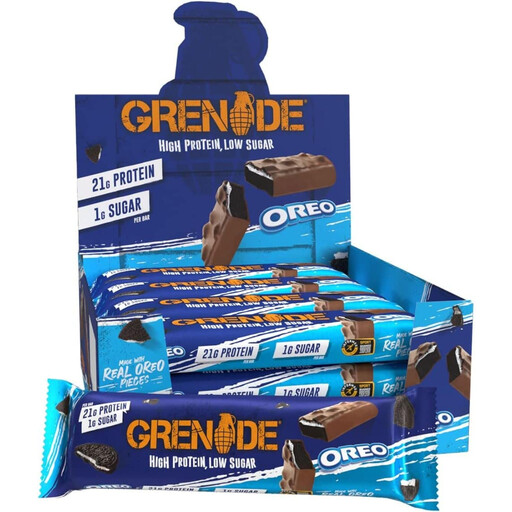 No image available
If its low-sugar description catches your eye, check fat separately on the Oreo flavour’s current panel before choosing it for an afternoon snack. This pack contains twelve 60g bars.
Check what similar product it is compared with, then read the fat value for the whole bar you plan to eat. “Reduced fat” does not mean fat-free, and a low-sugar or high-protein description answers a different question.
Start with each whole bar’s fat, protein, energy and weight, because that is the portion you would be choosing. Myprotein UK lists 3.4g fat, 15g protein and 138 kcal per 40g Lean Layered White Chocolate & Raspberry bar; PhD lists 8.6g fat, 21g protein and 245 kcal per 64g Smart Chocolate Peanut Butter bar.
Yes. PhD lists 2.0g sugars and 8.6g fat per Smart Chocolate Peanut Butter bar, while Tesco lists 1.8g sugars and 7.2g fat per TREK Choc Caramel bar. Read the separate sugars and fat entries for the exact product.
Check the exact pack’s ingredients and precautionary allergen statements before comparing nutrition. Barebells UK describes Vegan Fudge Brownie as vegan but lists wheat and soy, with possible traces of milk, peanuts, tree nuts and sesame.
Read the warning on the particular pack and follow its storage and best-before instructions. PhD’s Smart Bar information warns that excessive consumption may have laxative effects; do not assume every flavour has the same ingredients or warnings.