Campers comparing fat per bar
If fat is your main selection criterion, the amount in the bar you will actually eat is more useful for packing than a low-sugar claim. Check the per-100g figure separately when assessing label wording.


Compare fat per bar on the exact flavour you plan to pack, rather than relying on wording such as ‘lean’ or ‘low sugar’. Among the named UK-labelled examples, Myprotein UK lists 4.6g fat and 18g protein per Lean Cookie Dough bar, while PhD lists 9.2g fat for Smart Choc Brownie and Barebells UK lists 9.0g for Vegan Fudge Brownie. Protein, ingredients and storage directions also matter when choosing a bar for a camping food bag.
If fat is your main selection criterion, the amount in the bar you will actually eat is more useful for packing than a low-sugar claim. Check the per-100g figure separately when assessing label wording.
If you want to carry a particular amount of protein, read its per-bar figure alongside fat. The named bars differ on both measures, so choosing by protein alone may change which one suits you.
If allergens, dietary preferences or sweeteners affect your choice, read the declaration on the exact flavour before leaving. Check its storage instructions as part of deciding what to pack.
Start with the nutrition panel for the flavour you will carry, then check whether its ingredients and storage directions work for your trip.
| Priority | What to check | Your needs |
|---|---|---|
| Fat | Compare fat per bar on the exact flavour. Myprotein UK lists 4.6g per 45g Lean Cookie Dough bar; PhD lists 9.2g per 64g Smart Choc Brownie bar; Barebells UK lists 9.0g per 55g Vegan Fudge Brownie bar. Use the per-100g figure when assessing label claims. | I want to know how much fat one bar adds to the food I am packing, rather than assuming ‘low sugar’ means lower fat. |
| Protein | Read protein per bar alongside its serving size and fat figure. The manufacturers list 18g for Myprotein Lean Cookie Dough, 21g for PhD Smart Choc Brownie and 15g for Barebells Vegan Fudge Brownie. | Protein matters to me, but I do not want to choose a bar on that figure without checking its fat content too. |
| Ingredients | Check the exact wrapper for allergens, dietary suitability, sweeteners and any polyol warning. These details can differ between products and flavours. | I need to know whether I can eat the bar and whether its ingredients suit me before it becomes part of my camping food. |
| Storage | Follow the pack’s storage directions and check its best-before date. The checked Myprotein Lean product specifies a cool, dry place away from direct sunlight; Barebells Vegan Fudge Brownie specifies room-temperature storage. | I want a bar whose stated storage instructions I can follow during the trip. |
Sugar and fat are separate entries on a nutrition panel. For example, PhD’s checked Smart Choc Brownie bar lists 9.2g fat per bar.
Compare total fat for the exact flavour and serving size. Do not treat a comparatively lower per-bar figure as proof that the pack makes a ‘low-fat’ claim.
The protein and fat amounts differ across the named bars. PhD’s Smart Choc Brownie lists 21g protein and 9.2g fat per bar; Myprotein Lean Cookie Dough lists 18g protein and 4.6g fat per bar, according to their manufacturers.
Decide how much each measure matters to your choice, then compare both figures on the flavour you intend to buy.
The researched products have different allergen declarations, and several carry manufacturer warnings that excessive consumption may cause laxative effects. Those differences matter if you are relying on bars away from your usual food options.
Read the current wrapper before departure and consider packing an alternative you already know suits your requirements.
These examples refer to particular products or retail listings, not every bar made or sold under each name.
Myprotein UK lists 4.6g fat and 18g protein per 45g Lean Protein Bar in Cookie Dough flavour.
PhD lists 21g protein and 9.2g fat per 64g Smart Bar in Choc Brownie flavour.
Barebells UK lists its Vegan Fudge Brownie as a plant-based 55g bar with 15g protein and 9.0g fat.
Grenade UK lists 20g protein and 1.4g sugar per 60g Chocolate Chip Salted Caramel Carb Killa bar.
An iHerb UK listing identifies Quest Nutrition Chocolate Peanut Butter as a 60g protein bar.
Tesco Groceries lists protein bars as a retail category, including a Barebells product.
These Joybuy listings are PhD Smart and Grenade bars in the stated flavours and pack sizes. If reducing fat is your priority, compare the nutrition panel for the exact listed flavour before choosing; a low-sugar description is not a fat comparison.
 No image available
For a camping food bag where this flavour appeals, check its own per-bar fat and protein figures, allergens and storage directions before packing.
 No image available
If you are considering this Double Chocolate pack for a trip, use its exact flavour’s nutrition panel to judge fat per bar alongside protein and ingredients.
 No image available
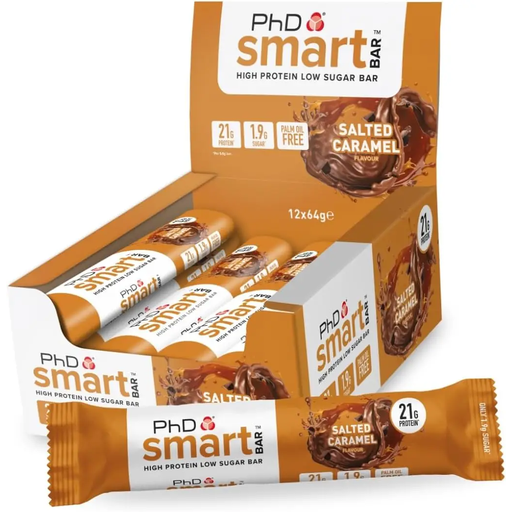
Choose between this Salted Caramel flavour and other PhD Smart bars using each flavour’s own fat, protein and ingredient information; their figures need not match.
 No image available
For this four-bar pack, check the Oreo flavour’s fat per 60g bar rather than using ‘low sugar’ in the listing as a guide to fat content.
 No image available
If Golden Caramel is the flavour you would pack, compare its own per-bar fat and protein figures with the other options and read its ingredient declaration.
No. Sugar and total fat are separate nutrition figures. PhD lists 9.2g fat per bar for its Smart Choc Brownie flavour, so read the total-fat line for whichever flavour you intend to pack.
No. Being lower than another bar in this comparison does not itself establish a ‘low-fat’ label claim. Check the exact pack’s per-100g nutrition and its stated claims separately from the amount of fat in one bar.
Do not assume a protein bar is a complete meal. Treat the bars discussed here as snacks and plan the other food and fluids you will need for the trip.
Keep the wrapper intact and follow the directions on the bar you buy. The checked Myprotein Lean product specifies a cool, dry place away from direct sunlight, while Barebells Vegan Fudge Brownie specifies room-temperature storage. Check the best-before date on the pack as well.
Read the current wrapper for the exact product and flavour before relying on it during a trip. For example, Myprotein Lean Cookie Dough includes milk, soy and wheat ingredients; the iHerb UK listing for Quest Chocolate Peanut Butter identifies milk, peanuts, almonds and soya. A brand name alone cannot establish suitability.